Off-Road Secrets

Lucas Schneider
| 22-12-2025
 · Automobile team
Lykkers, imagine a place where the pavement ends and raw nature begins. Off-road driving is more than just handling a vehicle—it’s a combination of skill, strategy, and understanding how our vehicle reacts to different terrains.
Whether we are beginners or experienced drivers, mastering off-road techniques allows us to explore rivers, hills, deserts, and muddy trails safely and confidently.
In this guide, we’ll dive into practical tips and technologies that can help us handle steep climbs, water crossings, sandy stretches, and muddy roads.
Climbing Hills: Balance Power and Momentum
Climbing steep slopes requires careful planning. Blindly pressing the accelerator can lead to wheel spin, loss of control, or even getting stuck. Here’s how we can approach it safely:
- Zigzag Approach: When facing a slope steeper than 30°, avoid driving straight uphill. Instead, take a diagonal path to reduce the effective slope.
- Throttle Control: Keep the engine around 2000-2500 rpm and use a “press-release-press” rhythm to prevent wheel spin and maintain traction.
- Shift the Load Forward: Moving luggage or heavier items to the front helps increase traction on the front wheels, which is crucial for uphill control.
Modern vehicles have features that support these techniques:
- Power Distribution Systems: Some vehicles can adjust torque to each wheel in real time, giving extra power to wheels that slip.
- Hill Descent Assistance: Activating this function maintains a steady speed downhill, allowing us to focus solely on steering without worrying about brakes.
By combining these approaches, we can climb steep hills efficiently and safely, while reducing stress on both the car and ourselves.
Water Crossings: Precision Matters
Crossing water may seem intimidating, but with the right knowledge, it can be manageable. One simple rule helps us gauge safety:
Safe water depth = air intake height - 15 cm
Before entering water, we engage low-speed four-wheel drive and maintain moderate engine speed to create positive pressure in the exhaust system, preventing water from entering.
- Maintain Steady Speed: 8-12 km/h is ideal for creating a small wave in front of the vehicle, reducing water pressure on the engine.
- Brake After Exit: Performing three short stops heats the brake pads, evaporating any trapped water and ensuring braking efficiency.
- Observe the Terrain: Even shallow water can hide rocks or sudden drops. Walking through or using a stick to test depth can save us from surprises.
Advanced off-road technologies make this process safer. Some vehicles use sensors to measure water depth, automatically raising the chassis or sealing air intakes if the water is too deep. These features allow us to focus on steering without worrying about engine damage.
Driving on Sand: The Science of Tire Pressure
Sand is tricky because it shifts under pressure, making traction unpredictable. Tire pressure adjustments and momentum are key. For example:
- Fine sand (0.5-1 mm) → slightly higher pressure to maintain stability
- Coarser sand (1-2 mm) → slightly lower pressure to increase contact area and reduce sinking
Tips for driving in sand:
- Step 1: Full Throttle Start: Accelerate steadily to gain momentum.
- Step 2: Glide: Maintain a consistent speed without sudden braking.
- Step 3: Avoid Braking: Stopping abruptly can cause wheels to sink, making it harder to restart.
If we get stuck, gently rocking the car back and forth can help regain momentum. Vehicles with adaptive suspension can lower the body slightly in sandy terrain, improving stability and reducing the risk of rolling.
Mud Driving: Master Differential Locks
Mud is where skill and technology truly combine. Our approach involves a sequence of steps:
- Turn off electronic stability systems to allow controlled wheel spin.
- Engage differential locks in order: rear → front → center.
- Use a “pendulum motion”: swing the vehicle left and right ±30° to generate momentum.
- Place anti-slip boards, branches, or rocks under wheels if available to increase traction.
Some vehicles are equipped with systems that detect wheel slip and apply micro-brakes to spinning wheels, instantly redistributing power to improve grip. These systems save energy and prevent prolonged stuck situations.
Let Technology and Skill Work Together
Off-road driving is a combination of human skill, preparation, and smart use of technology. Even beginners can tackle challenging terrain by mastering basic techniques and using vehicle features wisely.
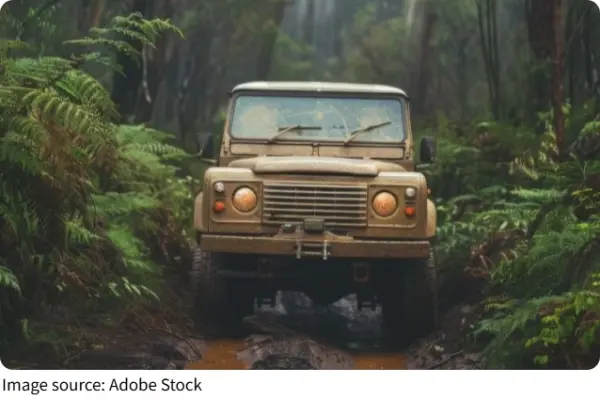
Before heading out, we recommend spending a few minutes setting the off-road modes, adjusting tire pressure, and understanding terrain-specific strategies. Thousands of hours of engineering testing go into these features, so using them properly makes a big difference.
Lykkers, which off-road technique or technology do you rely on the most? Share your experiences in the comments—we can all learn from each other and become better off-road drivers together.