The Mindful Machine
Malcolm
| 15-01-2026
 · Automobile team
I was stuck. Not in traffic, but in my own head, cycling through the same work problems on my evening drive home. Then, at a red light, I watched a motorcyclist glide past. His posture was calm, entirely present.
It struck me: on two wheels, you don't have the luxury of distraction. That observation led me to my first long-distance ride, and I discovered that a motorcycle is less a vehicle and more a teacher of a rare form of modern mindfulness.
The Forced Focus of the Ride
Operating a motorcycle demands a complete, undivided presence that modern life rarely requires. This is not optional; it's foundational to safety and control. Your mind cannot wander to a looming deadline or a personal worry. It must be fully engaged with a flowing stream of sensory input and micro-decisions.
You are consciously scanning the road surface for hazards, monitoring the behavior of vehicles three cars ahead, feeling the pressure of the wind against your chest, and listening to the engine's tone for the perfect shift point. This state of hyper-awareness, sustained over miles, creates a powerful mental reset.
The constant chatter of anxiety is silenced, replaced by a singular, immediate purpose: the ride itself. You return from a journey not just having traveled, but having truly cleared your head.
The Physical Dialogue with the Landscape
In a car, you observe the landscape. On a motorcycle, you converse with it. Every change in the environment is a direct, physical experience. You feel the chill of descending into a valley long before you see the river at its bottom.
You lean into a mountain curve and feel the changing forces of gravity and momentum in your muscles. The smell of rain on hot asphalt, the dry heat radiating from a canyon wall, the sudden cool of a forest—these are not background details; they are integral parts of the journey. This constant, tactile feedback creates a profound connection to the geography you're passing through.
The map comes alive. You develop a body memory of the route: that left-hander where the sun glares, the straightaway where the crosswinds pick up. You're not just passing through places; you're feeling your way across the country.
The Philosophy of Self-Reliance
A motorcycle trip inherently cultivates a quiet, steady form of self-reliance. With limited space, you learn to distinguish between what is essential and what is merely convenient. A small toolkit, a knowledge of basic mechanical checks, and the understanding that you are your own first responder change your relationship to the journey.
This self-reliance extends beyond gear. It's in the decision-making: knowing when to push on and when to stop for fuel, reading the weather to decide if you need to suit up, and trusting your own judgment on an unfamiliar road. This responsibility is empowering.
Each problem solved—a loose luggage strap secured, a route recalculated after a closure—builds confidence. The journey becomes a series of small, managed challenges that prove your own capability, fostering a resilience that translates far beyond the road.
The Unfiltered Encounters
Traveling by motorcycle removes the typical barriers between you and the world. You are approachable, visibly a traveler, not just another anonymous occupant of a sealed box. This leads to connections that are more genuine and spontaneous. Stopping for a rest often prompts a conversation—a local recommending a hidden diner, a fellow rider comparing routes over a coffee, a curious pedestrian asking about your trip.
These interactions are rooted in shared curiosity and the immediate reality of the road. Furthermore, you connect with other riders through the simple, universal nod of acknowledgement when you pass. It's a silent recognition of shared experience, a brief moment of community that underscores the human element of the adventure. The journey becomes as much about these fleeting, authentic exchanges as it is about the scenery.
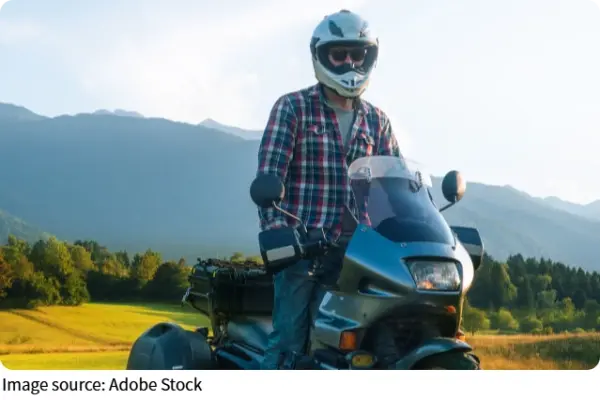
A car delivers you to a destination. A motorcycle delivers you to a state of mind. It teaches you to be where you are, to trust your own judgment, and to engage with the world in a direct, unmediated way. The miles become a measure of focus, not just distance.
So, the next time you feel stuck in the noise of daily life, consider that the answer might not be a louder distraction, but the focused, quiet hum of an engine and the open road ahead. The real destination is a clearer, more present version of yourself.