Bangkok Bridges Uncovered

Arjun
| 04-02-2026
 · Travel team
Bangkok’s bridges are not just crossings. They structure daily movement, shape river views, and quietly decide how easy or frustrating a day in the city becomes. This guide is written for Lykkers who want practical clarity, not abstract admiration. You will learn which bridges are worth planning around, when they function best, how to reach them efficiently, and when to skip them entirely.
The focus stays tight on two decision critical aspects: timing and movement strategy. By the end, you should know whether exploring Bangkok through its bridge architecture fits your schedule, and exactly how to do it without wasted hours.
Choosing the Right Bridges and Timing
This part helps decide which bridges are actually worth visiting and when. Bangkok has many crossings, but only a few reward focused time on foot. Choosing poorly leads to heat stress, blocked views, or long detours that add little value.
Bhumibol Bridge: Functional Scale, Not Walkable
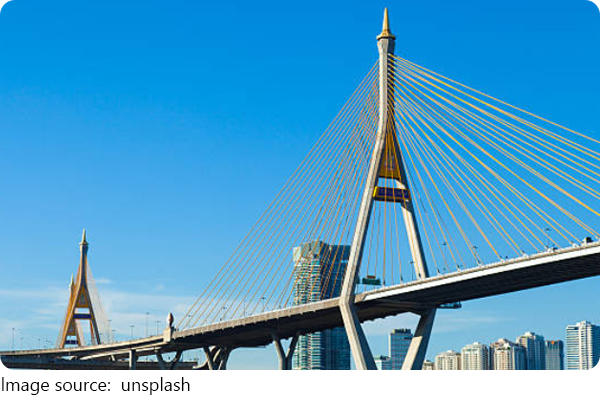
The Bhumibol Bridge consists of twin cable-stayed spans forming part of the Industrial Ring Road. It is visually impressive but not pedestrian-friendly.
This bridge works as a drive-through experience only. Visiting on foot is not recommended due to safety limits and lack of viewing zones. Best time to pass is late evening after 20:00 when traffic thins and city lighting defines the span.
Using a taxi loop from Na to Phra Pradaeng costs roughly 250 to 320 THB and takes about 35 minutes without congestion. This is worth doing only if transport engineering interests outweigh the lack of stopping points.
Common pitfall involves attempting to reach it via river transport. That approach adds distance without improving access.
Movement Strategy Along the River
This part explains how to connect bridge visits into a workable route. Movement decisions determine whether the experience feels fluid or fragmented.
Memorial Bridge and Old Town Flow
The Memorial Bridge connects the old districts on both sides of the river. It lacks dramatic height but excels in context. Markets, ferry piers, and street life converge naturally here.
Arrive between 8:00 and 10:00. After that, vehicle density rises and pedestrian crossings become slower. River ferry services nearby cost about 5 THB per crossing and run every few minutes, making exit options flexible.
This bridge fits well into a half-day loop that starts in old town, crosses once on foot, and exits via ferry downstream. Physical difficulty remains low, with flat walking surfaces and frequent shade breaks from nearby buildings.
Mistake to avoid involves midday exposure. The metal deck reflects heat strongly and shortens tolerable walking time.
Exploring Bangkok through its bridges works only with selective planning. Not every structure deserves attention, and timing determines comfort more than curiosity. Bhumibol Bridge suits controlled drive-through observation, not walking. Memorial Bridge integrates best into an old town route with flexible exits.