First Flight Thrills

Lucas Schneider
| 01-06-2026
 · Travel team
The moment you step onto the launch hill, the wind brushing your face, your stomach does a little flip. It's not fear—it's anticipation, that electric mix of excitement and awe.
You're about to take flight like a bird, and for someone who's never paraglide before, every step feels monumental. Knowing what to expect can make that first flight smoother, safer, and unforgettable.
Understanding the Gear
Before you even run toward the edge, get familiar with your equipment. The main components are the wing (canopy), harness, helmet, and reserve parachute.
1. Inspect the canopy carefully – Look for tears, loose stitching, or tangled lines. Even a small snag can affect your flight.
2. Harness check – Make sure all straps click securely, and the harness fits snugly but comfortably. You should be able to move your legs freely.
3. Helmet and safety gear – Helmets aren't optional. Some schools also provide gloves and radio communication devices to stay in touch with instructors.
A simple pre-flight checklist can make all the difference. For example, one first-timer I know wrote down each item on a small card and checked off as he got ready—it kept nerves from causing a missed buckle or tangled line.
Choosing Your First Launch Site
Not every hill or mountain is suitable for beginners. The key is gentle slopes, consistent wind, and a clear landing area.
1. Look for certified schools – They provide controlled environments and instructors who guide your first flights.
2. Check wind conditions – Ideal wind speed for first-timers is around 10-15 km/h. Too strong or gusty, and it can be overwhelming.
3. Observe other flights – Watch how experienced pilots handle takeoff and landing. It gives you a sense of timing and body positioning.
For a practical tip, arrive early in the day. Morning winds are usually calmer, making the lift more predictable and reducing the chance of sudden turbulence during your first flight.
Learning the Takeoff Technique
Running off a hill may sound scary, but the right technique turns it into a controlled, thrilling glide.
1. Positioning – Stand with your back to the wing, lines untangled, arms extended to hold the risers.
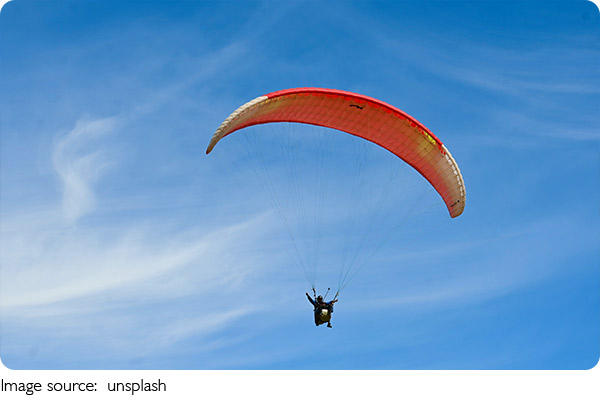
2. Inflation – Pull the wing forward using a smooth, firm motion. Watch it rise above your head steadily. A properly inflated wing is a flat, arc-like shape without sagging corners.
3. The run – Begin walking or jogging toward the edge, letting the wing lift you. Keep your eyes forward, not on your feet. Timing is crucial; too slow and you stall, too fast and you might feel abrupt lift.
An actionable tip: try a short practice run with the wing partially inflated on flat ground before heading to the launch. It trains your muscles and helps you feel how the canopy reacts.
In-Flight Awareness
Once airborne, the sensation is liberating—but staying alert is key.
1. Body posture – Lean back slightly, legs extended, and hands gently holding the brakes. Avoid stiff movements; small corrections keep you stable.
2. Steering – Pulling the left or right brake turns the wing. Smooth, gradual inputs prevent sudden drops.
3. Altitude management – Keep an eye on terrain and landing zones. Listen to your instructor's radio instructions, and anticipate gentle corrections rather than overreacting.
Example: A beginner pilot learned to circle above a hill to gain altitude before moving toward the landing area. This simple strategy prevents rushing toward unfamiliar terrain and increases flight confidence.
Landing with Confidence
Touching down is as critical as the takeoff. Many first-timers focus on the thrill and forget landing practice.
1. Approach – Plan a straight line to the landing zone, accounting for wind direction.
2. Flare technique – Pull both brakes smoothly just before touching the ground. This slows descent and allows feet to meet the ground gently.
3. Roll or run out – Depending on your landing, a small run or controlled roll dissipates momentum safely.
Tip: Practice a simulated landing on a slope with a partially inflated wing under instructor supervision. Feeling the flare and rollout sequence before real flight builds muscle memory and confidence.
Embracing the Experience
Your first flight isn't about perfection; it's about discovery. The rush of wind, the changing perspective, and that fleeting sense of flying freely leave a lasting memory. Take mental notes of your sensations, celebrate each step, and don't rush to perfection.
Many beginners return to the same hill just to relive the feeling of glide and calm in the air. The first flight is less a lesson and more a doorway into a lifelong hobby. Once you've taken that leap, the sky no longer feels like the limit—it feels like home.
Flying for the first time is a mixture of nervous anticipation and pure exhilaration. By understanding the gear, choosing the right site, practicing takeoff and landing, and staying aware during flight, you set yourself up for a safe, unforgettable experience. That moment when your feet leave the ground and the wind carries you—suddenly, the world below seems smaller, and the possibilities above, infinite.