Strawberry Coulis Cheesecake

Mason O'Donnell
| 14-02-2026
 · Cate team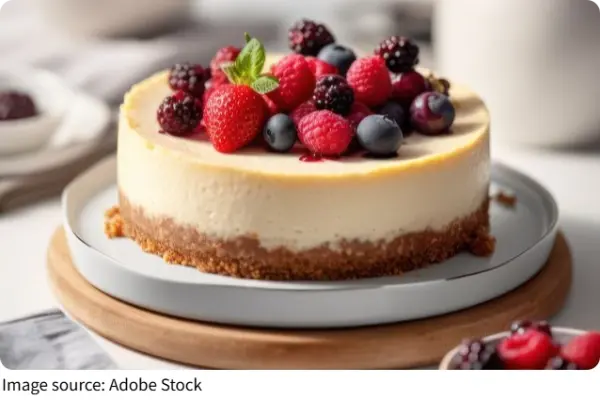
The moment a chilled cheesecake meets a spoon, everything slows down.
The surface is smooth, the center soft, and a ribbon of red berry sauce slides gently across the plate. It's the kind of dessert that feels special without needing a celebration.
Making it at home turns an ordinary afternoon into something quietly memorable.
This version pairs creamy cheesecake with macerated strawberries and a simple coulis. Each layer adds contrast—rich, fresh, and lightly tangy—so every bite feels balanced instead of heavy. With a clear plan and a few careful steps, you can create a dessert that looks refined yet feels comforting and familiar.
Ingredients
Crust
150 g digestive biscuits or graham-style crackers, finely crushed
75 g unsalted butter, melted
Cheesecake filling
500 g full-fat cream cheese, softened
150 g granulated sugar
3 large eggs (room temperature)
100 ml heavy cream
1 tsp vanilla extract
Macerated strawberries
200 g fresh strawberries, sliced
1–2 tbsp sugar
1 tsp lemon juice
Strawberry coulis
200 g strawberries (fresh or frozen)
2–3 tbsp sugar
1 tbsp lemon juice
1–2 tbsp water (only if needed)
Step-by-step Preparation
1 - Prep the pan and oven
Preheat oven to 160°C (320°F). Line the base of an 8-inch (20 cm) springform pan with parchment. Wrap the outside of the pan with foil for water-bath protection.
2 - Make the crust
Mix crushed biscuits with melted butter until the texture resembles wet sand. Press firmly into the pan base in an even layer. Bake for 10 minutes, then cool completely.
3 - Make the filling
Beat softened cream cheese and sugar until smooth. Add eggs one at a time, mixing gently after each addition. Stir in heavy cream and vanilla until just combined.
4 - Fill the pan
Pour the batter over the cooled crust and level the top with a spatula.
5 - Bake in a water bath
Place the springform pan in a larger baking dish. Add hot water to the outer dish until it reaches about halfway up the cheesecake pan. Bake for 50–60 minutes, until the edges are set and the center still slightly jiggles.
6 - Cool gradually
Turn off the oven, leave the door slightly ajar, and let the cheesecake rest inside for 15 minutes. Remove, cool to room temperature, then refrigerate for at least 4 hours (overnight is best).
7 - Prepare macerated strawberries
Toss sliced strawberries with sugar and lemon juice. Let sit for 20 minutes, then chill until serving.
8 - Make the coulis
Simmer strawberries, sugar, and lemon juice over gentle heat for 5–7 minutes until soft. Blend until smooth, then strain through a fine sieve for a silky texture. Cool to room temperature, then chill briefly.
9 - Serve
Serve the cheesecake in tidy portions. Add coulis to the plate (or over each portion), then finish with macerated strawberries.
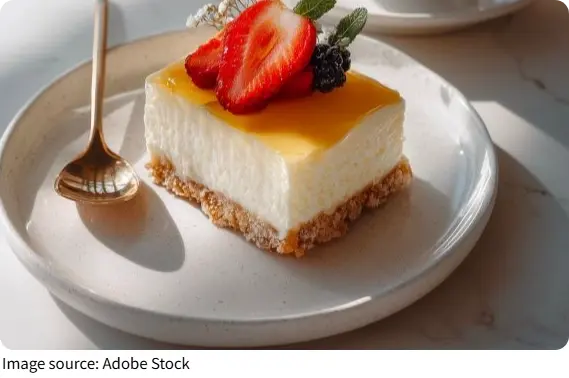
A homemade cheesecake doesn't need complicated decoration or rare ingredients. What makes it memorable is the balance between creamy filling, bright berries, and smooth sauce. Each careful step—from pressing the crust to cooling the coulis—quietly builds toward that final spoonful.
When shared at a small gathering or enjoyed during a peaceful evening, this dessert creates a gentle pause in the day. The plate empties slowly, conversation softens, and the last streak of strawberry sauce reminds you that simple baking can bring surprising joy.