Color Shape Emotion

Santosh Jha
| 07-02-2026
 · Travel team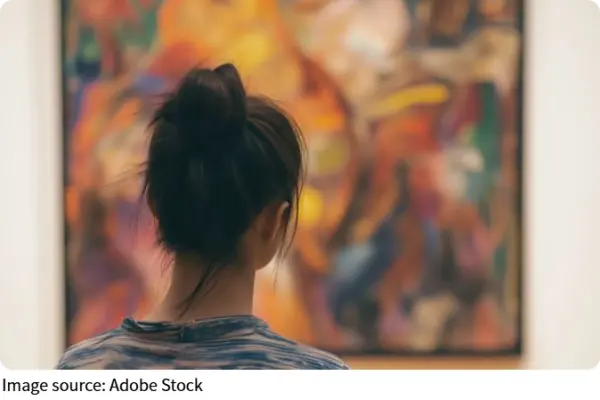
Have you ever stood in front of a painting and thought, “What am I even looking at?” That’s exactly the charm of abstract art. Unlike traditional art, which aims to capture reality in detail, abstract art focuses on shapes, colors, lines, and forms to create feelings and ideas.
When we look at it, we aren’t bound by reality—we’re invited to think, imagine, and feel freely. Each piece can speak differently to each of us, letting our minds explore possibilities beyond what we see in the real world.
The Shift from Realism
For centuries, Western art emphasized realism. Artists carefully captured perspective, light, and proportion to reproduce what the eye sees. Landscapes, portraits, and still lifes aimed to mirror life as accurately as possible. But by the late 19th century, the world was changing rapidly. Technology, science, and philosophy introduced new ways of thinking, and many artists felt that reproducing reality alone could not express modern life. We were looking for something more—a way to reflect emotion, energy, and the changing times. Abstract art became that new language.
Understanding Abstraction
When we say a painting is abstract, it means the artist has moved away from strict representation. This can happen in degrees. Some works are partially abstract: perhaps the colors are exaggerated, or the forms altered, but we can still recognize objects. Other works are fully abstract, leaving no direct reference to reality. For example, geometric abstraction, popularized by artists like Kazimir Malevich, uses simple shapes and precise lines to convey ideas without depicting anything recognizable. Here, we focus on visual and emotional impact rather than literal storytelling.
Partially Abstract Styles
Partial abstraction appears in movements like Fauvism and Cubism. Fauvist artists, such as Henri Matisse, used wild, unexpected colors to express feelings rather than depict reality. Cubist painters, like Pablo Picasso, broke down forms into geometric fragments, transforming how we perceive familiar objects. When we view these works, we can still identify elements of reality, but the presentation surprises and challenges us, encouraging us to see the world in new ways. We might notice shapes, shadows, or color contrasts that feel entirely fresh.
Fully Abstract Styles
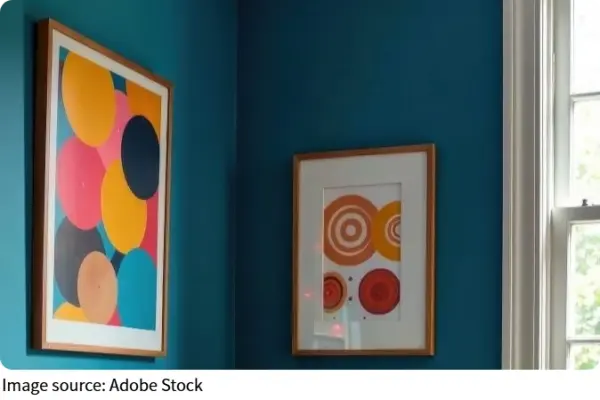
On the other end, movements like lyrical abstraction and pure geometric abstraction remove all recognizable objects. Artists such as Wassily Kandinsky focused on color, line, and composition alone. When we see a swirl of vibrant color or a jagged line, the painting doesn’t tell a story directly. Instead, it can trigger our own emotions, thoughts, or memories. This is why abstract art feels so personal: each of us experiences it differently, and every viewing can reveal something new.
Why We Connect with Abstract Art
One of the most fascinating aspects of abstract art is how it connects with our emotions. Two people can look at the same painting and feel completely different things. By removing literal representation, we are free to explore movement, tension, rhythm, and harmony. A soft curve might calm us, a bright contrast might energize us, and a sharp line might make us think. Abstract art becomes a mirror for our thoughts and feelings, inviting us to reflect on both the artwork and ourselves.
Learning to Appreciate Abstract Art
We don’t need to know the artist’s intentions to enjoy abstract art. Sometimes, simply observing carefully—how colors interact, how lines guide our eyes, or how shapes create rhythm—is enough to spark curiosity and wonder. Reading about movements like Fauvism, Cubism, or Abstract Expressionism can provide helpful context, but the most important experience happens when we engage directly and let ourselves react naturally. We can move closer to notice brush strokes or step back to see the full composition—each perspective offers something different.
Seeing the World Differently
Abstract art teaches us that the world doesn’t have to be represented literally to be meaningful. By exploring colors, shapes, and forms, we discover new ways to feel, think, and imagine. When we visit a gallery or explore art online, let’s take a moment to pause, observe, and reflect. Even a single curve, splash of color, or geometric pattern can spark thoughts or emotions that reveal something deeper about our perception of the world.
Lykkers, abstract art isn’t just about what we see—it’s about how we feel, imagine, and connect. Next time we encounter a painting, let’s allow ourselves to step into its shapes, colors, and energy. We might discover a whole new way of seeing the world and ourselves.
Creating Warmth with a Subtle Glow! - Orange Abstract Art
Video by Fiona's Creative Canvas