Why the Ocean Looks Blue

Mukesh Kumar
| 09-02-2026
 · Travel team
Standing at the edge of a vast ocean, it's impossible not to notice the deep, endless blue stretching to the horizon.
But why exactly does water look blue? It's a question that combines science, light, and even a little bit of magic.
The answer is more than just “the sky reflects on the water”—though that plays a part.
The Role of Light in Ocean Color
Sunlight is made up of a spectrum of colors, each with its own wavelength. When sunlight hits the ocean, the water absorbs some wavelengths and scatters others.
Key points:
Water absorbs longer wavelengths, like red, orange, and yellow, more effectively. This means these colors fade quickly as sunlight penetrates deeper.
Shorter wavelengths, like blue, scatter more easily and travel farther in water, giving the ocean its characteristic blue tint.
Even in a swimming pool, water can appear blue because of this selective absorption, though it's less intense than in open seas.
Actionable example: Try this at home—fill a clear glass with water and shine a white flashlight through it. Notice how the light that passes through seems slightly bluish, especially if you use a deeper container.
Depth and Purity Affect the Shade
The exact color of the ocean changes depending on how deep and clean the water is.
Key points:
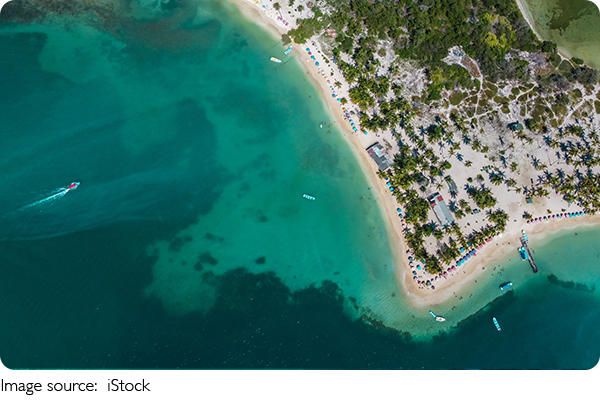
Shallow areas over sandy or coral bottoms often appear turquoise or green due to sunlight reflecting off the seabed.
Deeper areas absorb almost all colors except blue, producing the deep navy or sapphire seen in open waters.
Impurities like algae or sediments can alter the hue, giving the sea greenish, brownish, or even gray shades in certain locations.
Actionable example: If you're snorkeling, observe how water near the shore looks different from areas just a few meters deeper. Take note of how sand, plants, and depth change the color dramatically.
The Influence of the Sky
While water itself is blue, the sky also contributes to the ocean's color, especially near the surface.
Key points:
On clear, sunny days, the sky reflects on the water, making it appear brighter or more vibrant.
Cloudy or stormy skies can make even deep, blue water look gray or muted.
The angle of the sun affects reflection and scattering, which is why early morning or late afternoon can produce stunning gradients of blue.
Actionable example: Take photos of the same ocean spot at different times of day. You'll notice the color shifts depending on sunlight intensity, cloud cover, and reflection angle.
Why Some Oceans Look Green
Not all seas are deep blue. Some appear green due to a combination of factors.
Key points:
High concentrations of plankton or algae scatter green light, making the water appear emerald.
Coastal waters often carry sediments that enhance the green tint by scattering shorter wavelengths differently.
Seasonal changes, rainfall, and temperature shifts can temporarily change water color from blue to green.
Actionable example: Visit a coastal lagoon or river mouth and compare its color to the open ocean. Notice how natural elements like algae or sand influence the greenish shades.
Blue Is More Than Just Pretty
The ocean's blue isn't just a visual delight; it's also a sign of environmental factors.
Key points:
Clear blue water often indicates low concentrations of particles and pollutants, making it healthier for marine life.
Scientists monitor ocean color using satellites to track algae blooms, sediment levels, and changes in water quality.
Changes in ocean color over time can indicate shifts in ecosystems, helping researchers protect marine habitats.
Actionable example: Next time you see a particularly clear blue ocean, consider the health of that water. Observing water color can be an informal way to gauge environmental conditions.
The blue of the ocean is the result of light, water molecules, depth, and purity all working together. Each glance at the sea offers a lesson in physics, chemistry, and nature's subtle artistry. Next time you're at the beach, take a moment to watch how the shades change as sunlight moves and waves ripple—the color of the sea tells a story that's constantly evolving.