Everyday Table Florals

Santosh Jha
| 05-03-2026
 · Plants team
A weekday dinner often happens quickly. Plates are set down, conversations revolve around schedules, and the table clears almost as soon as it fills.
Yet place a small vase of fresh flowers at the center, and the atmosphere shifts. The meal slows slightly. The lighting feels softer. Even simple dishes seem more intentional.
A dining table does not require elaborate centerpieces to feel special. In fact, daily floral styling works best when it is modest in scale and practical in function. The goal is not spectacle, but subtle elevation.
Choosing Flowers That Suit Daily Life
Large, dramatic arrangements can obstruct conversation and demand maintenance. Everyday table florals succeed when they respect the rhythm of home life.
1. Select long-lasting blooms
For daily use, durability matters. Carnations, chrysanthemums, alstroemeria, and spray roses often remain fresh for five to seven days with proper care. Their reliability reduces waste and maintenance effort.
2. Prioritize scent moderation
Strongly fragrant flowers can interfere with meals. Mildly scented or neutral blooms ensure that aromas from food remain distinct.
3. Keep scale proportional
A useful rule: the arrangement should not exceed one-third of the table's width or block eye contact across the table. For most dining tables, a height between 15 and 25 centimeters keeps sightlines clear.
Practical choices support consistency. When flowers fit seamlessly into routine, they become sustainable habits rather than occasional indulgences.
Designing for Simplicity and Function
Daily arrangements should be easy to assemble and maintain. Complexity often discourages repetition.
1. Use compact containers
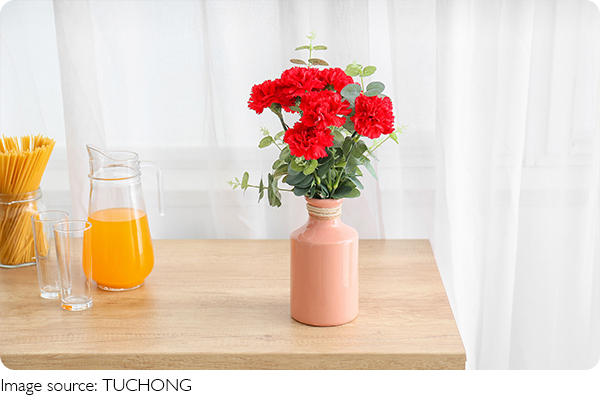
Small ceramic cups, low glass jars, or narrow-neck bottles provide natural stem support. A compact vessel reduces the need for elaborate mechanics and keeps the footprint minimal.
2. Work with fewer stems
Three to five stems are often sufficient. A trio of tulips or a cluster of daisies can feel complete when spaced thoughtfully. Restraint enhances elegance.
3. Allow breathing space
Avoid overcrowding. Negative space between stems creates visual clarity and ensures each bloom is visible. A small arrangement gains sophistication when it does not attempt to fill every gap.
The objective is effortless assembly. If preparation takes more than ten minutes, the design may be overly complex for everyday use.
Integrating Flowers into Real Meals
A table arrangement should coexist with dishes, serving bowls, and utensils without creating inconvenience.
1. Position thoughtfully
For rectangular tables, placing the arrangement slightly off-center leaves room for shared plates. On round tables, a single low vase works well in the middle.
2. Adjust for lighting
Natural daylight highlights subtle color shifts, while evening lighting softens tones. Pale blooms reflect candlelight beautifully, whereas darker hues absorb it. Consider the time of day when selecting flowers.
3. Refresh water regularly
Changing water every two days and trimming stems by one centimeter can significantly extend longevity. Clean water prevents cloudiness and maintains freshness.
When flowers integrate smoothly into meal routines, they enhance rather than complicate daily life.
The impact of small table florals lies in repetition. A single arrangement may seem minor, but the consistent presence of fresh stems reshapes how the space feels. Over time, the dining table becomes more than a functional surface; it becomes a place of intention.
There is something grounding about cutting stems on a quiet afternoon and placing them in a small vase before dinner. It signals care—not extravagance, but attention. The next time you prepare a simple meal, consider adding just three flowers. The shift in atmosphere might be subtle, but it will be unmistakable.