Birds and UV Vision

Naveen Kumar
| 25-03-2026
 · Animal team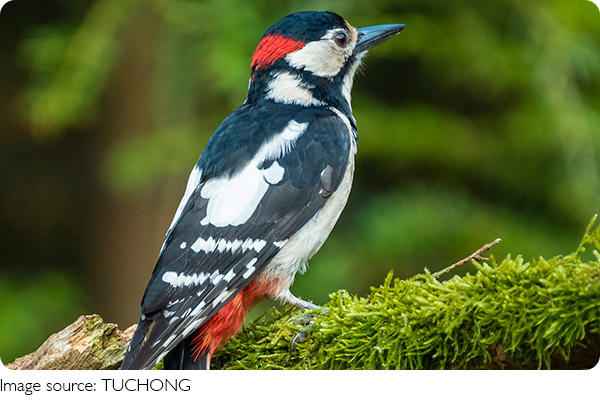
On a bright morning, a flash of color catches your attention. To you, it looks like a typical feather pattern, but to a bird, it's a vibrant display invisible to humans.
Birds perceive ultraviolet (UV) light, revealing a secret layer of their world that affects mating, foraging, and navigation.
Understanding how they detect UV light offers a fascinating glimpse into their sensory universe and the ways evolution fine-tuned their vision.
Specialized Eye Structures
Birds' eyes are uniquely designed to detect wavelengths beyond human perception.
UV-Sensitive Cones
Bird retinas contain photoreceptor cells called cones that absorb UV light. While humans have three types of cones for red, green, and blue, many birds have a fourth type sensitive to UV, allowing them to see colors invisible to us.
Actionable Example
You can experiment with UV-sensitive materials, like flowers or feathers under a UV flashlight. Observing which patterns become visible demonstrates what a bird might see when scanning its environment.
Role in Mating and Communication
UV vision plays a critical role in social and reproductive behaviors.
Plumage Signals
Many bird species have UV-reflective feathers that indicate health or genetic quality. A male's UV-rich feathers can attract females, signaling strength and vitality in ways humans can't detect.
Actionable Example
Birdwatchers can compare feather colors under normal and UV light. Noting how certain patterns appear only under UV highlights the role these signals play in mating rituals.
Foraging Advantages
UV perception helps birds locate food with higher efficiency.
Detecting Prey
Some insects and fruits reflect UV light, making them easier for birds to spot. UV vision allows birds to differentiate ripe fruit from unripe or to detect insects camouflaged against leaves.
Actionable Example
Observing birds feeding in a garden can show preferences for UV-reflective fruits or flowers. Placing UV markers on objects helps illustrate how birds might prioritize food sources visually.
Navigation and Orientation
Beyond foraging and mating, UV light aids spatial awareness and migration.
Sun Position and Landmarks
UV-sensitive vision enhances contrast in the sky, allowing birds to gauge the sun's position even on cloudy days. Reflections from water or certain surfaces may also serve as natural navigational cues.
Actionable Example
Tracking migratory patterns with binoculars during daylight can demonstrate birds' ability to travel accurately. Observing their flight paths relative to light conditions shows how visual cues guide navigation.
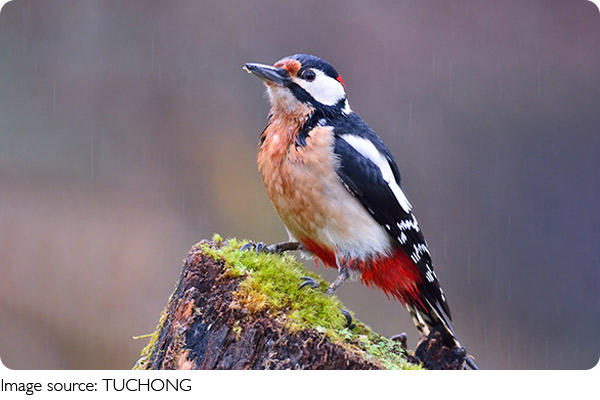
Evolutionary Benefits
The ability to see UV light provides multiple survival advantages.
Predator and Prey Detection
UV vision can help birds spot camouflaged prey or detect predators sooner, improving their chances of survival. It also enables them to interpret subtle environmental cues invisible to other animals.
Actionable Example
Field studies documenting hunting efficiency or feeding behavior in birds can show how UV perception impacts success rates, reinforcing the evolutionary importance of this trait.
Birds' perception of ultraviolet light reveals a hidden dimension of nature. From vibrant mating displays to precise foraging and navigation, UV vision shapes behaviors that humans can only imagine. Observing or experimenting with UV patterns reminds us that the world is far richer than what meets our eyes—and that evolution often works in ways that expand perception beyond our own senses.