Iceland's Jökulsá River

Amina Hassan
| 14-04-2026
 · Travel team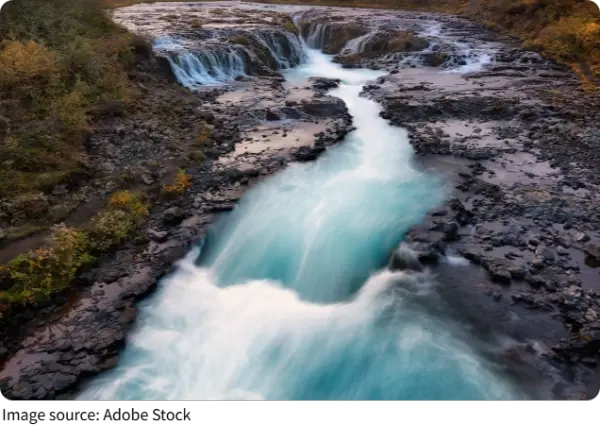
Some rivers exist primarily as geography — a line on a map connecting two points of elevation. The Jökulsá á Fjöllum is not that kind of river. Flowing approximately 206 kilometers from beneath the Vatnajökull ice cap, Europe's largest glacier, northward to the Arctic Ocean.
It carries meltwater of a color so saturated and so specific that aerial views of it consistently produce the same reaction from people encountering them for the first time: disbelief that something this blue exists in nature without human intervention.
The color is real, the river is real, and the landscape it flows through — volcanic black rock, braided channels splitting and rejoining around dark sediment islands, the whole composition shifting in every image depending on light and season — is one of the most visually extraordinary freshwater environments on the planet. Have you been to Iceland's interior highlands, or has the country meant the Ring Road and the south coast for most of your planning? Either way, here is what the Jökulsá á Fjöllum actually offers.
Jökulsá á Fjöllum
Why the River Runs This Color?
The electric turquoise of the Jökulsá á Fjöllum is produced by glacial rock flour — an ultra-fine sediment created when the Vatnajökull glacier grinds against the volcanic basalt bedrock beneath it as it moves. The grinding process reduces rock to particles so fine they remain permanently suspended in the meltwater rather than settling to the riverbed.
This suspended sediment scatters light in a specific way — absorbing the longer red wavelengths while reflecting the shorter blue and green wavelengths back toward the observer. Against Iceland's dark volcanic basalt, which provides one of the strongest possible tonal contrasts, the effect is amplified to the point where the color reads as almost artificially saturated. The braided channel pattern — where the river divides across a wide floodplain around deposited sediment islands — forms because glacial rivers carry more material than a single channel can transport, spreading the flow across a broad outwash plain in the shifting, complex patterns that make aerial views of this river so compelling.
The color is most vivid during peak melt season in late spring and early summer, when glacial input is highest and rock flour concentration in the water reaches its maximum.
Getting There
The Jökulsá á Fjöllum flows through Iceland's northeastern interior, with the most accessible and visually dramatic sections located within and around Vatnajökull National Park. Keflavík International Airport near Reykjavík is the primary entry point for international visitors, with direct flights from numerous European and North American cities. Tickets from London start from approximately $250 to $400 each way. From New York, expect approximately $400 to $600 each way depending on season and booking timing.
From Reykjavík, the drive to the northeastern section of the river along Route 1 and then Route 864 takes approximately five to six hours. A four-wheel drive vehicle with high clearance is essential — Route 864, which follows the eastern bank of the river through the Jökulsárgljúfur canyon section, is an unpaved highland road that standard vehicles cannot safely navigate. Four-wheel drive rental starts from approximately $120 to $180 per day in Reykjavík, with advance booking strongly recommended during summer peak season.
Alternatively, domestic flights from Reykjavík's Domestic Airport to Akureyri in northern Iceland take approximately 45 minutes with tickets from approximately $80 to $150 each way, placing visitors within approximately two hours of the northern river sections by road.
Key Experiences Along the River
The Jökulsá á Fjöllum passes through dramatically different landscape zones along its 206-kilometer length, each offering distinct experiences.
1. Dettifoss waterfall — located within Vatnajökull National Park, Dettifoss carries more water volume than any other waterfall in Europe, with the Jökulsá á Fjöllum dropping 44 meters into a canyon carved entirely by the river's own force over thousands of years. Entry to the viewing area is free. Parking costs approximately $7 per vehicle. Accessible from both the eastern Route 864 unpaved road and the western Route 862 paved road.
2. Ásbyrgi canyon — a horseshoe-shaped glacial canyon at the river's northern end, approximately 3.5 kilometers long and up to 100 meters deep, formed by catastrophic glacial flooding events. Entry is free as part of Vatnajökull National Park. A visitor center at the canyon entrance provides geological context and trail maps.
3. Jökulsárgljúfur canyon — the 25-kilometer gorge carved by the river between Dettifoss and Ásbyrgi, containing several significant waterfalls and accessible via hiking trails ranging from two hours to a full day. Trail access is free within the national park.
4. Vatnajökull glacier access — the river's source glacier is accessible via guided tours departing from the park's southern entrances. Introductory glacier walks with certified guides cost approximately $60 to $80 per person for a two to three hour experience. Ice cave tours during winter months cost approximately $80 to $120 per person.
Where to Stay
Accommodation near the Jökulsá á Fjöllum concentrates in two areas — the town of Akureyri to the northwest and the smaller communities near the park's northern and eastern entrances.
Hotel Kea in Akureyri is the most established property in northern Iceland, offering comfortable rooms with mountain and fjord views from approximately $160 to $240 per night. The hotel's central location makes it a practical base for day trips to the river's northern canyon sections.
Closer to the park, Guesthouse Dettifoss near the waterfall access roads offers basic but well-positioned accommodation from approximately $100 to $150 per night. For visitors wanting complete immersion in the highland environment, several farmstay properties in the surrounding area provide simple rooms from approximately $80 to $120 per night with breakfast included.
Camping within Vatnajökull National Park is available at designated sites near Ásbyrgi and Dettifoss from approximately $15 to $25 per person per night — the most practical option for visitors planning multi-day exploration of the river corridor who want immediate access to the landscape at dawn and dusk when the light on the water is at its most extraordinary.
The Jökulsá á Fjöllum has been carving its way from glacier to ocean for thousands of years, moving rock, depositing sediment, and producing that specific shade of blue in the process. The landscape it flows through — volcanic, raw, and largely unchanged by human presence — is one of the few places in Europe where the ground still feels genuinely new. Have you explored Iceland's northeastern highlands, or has the country meant only the south coast and the famous waterfalls for most of your visit? Either way, the river will be running that color whenever you arrive — patient, electric, and entirely worth the drive into the interior.