Ria Formosa Uncovered

Ethan Sullivan
| 14-04-2026
 · Travel team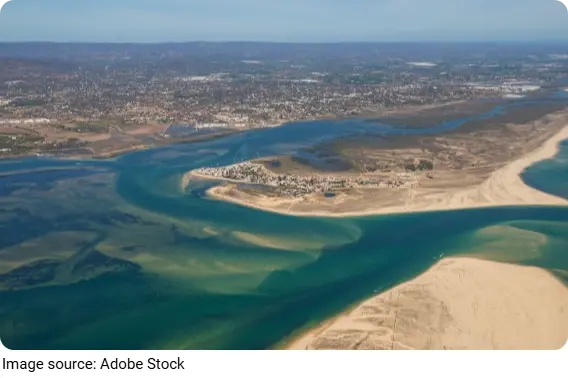
At low tide on the Ria Formosa lagoon system, the water retreats to reveal something that takes a moment to process.
A vast expanse of pale sand threaded with winding shallow channels that catch the last light of the day in shades of blue and rose, the whole landscape stretching to a horizon where the sky grades from deep orange down through pink to the cool blue of the water.
No buildings. No crowds. Just sand, water, and light found nowhere else. Ria Formosa is a protected natural park along Portugal's southern coast. Most visitors stick to the ocean beaches. The lagoon side, accessible only by boat, offers something quieter. Have you explored it? Here is what the lagoon actually contains.
Ria Formosa
What Ria Formosa Actually Is
Ria Formosa is a coastal lagoon system designated as a Natural Park and recognized as one of the seven natural wonders of Portugal. The park covers approximately 18,000 hectares and includes five barrier islands — Ilha da Culatra, Ilha da Armona, Ilha de Tavira, Ilha do Farol, and Ilha Deserta — separated from the mainland by the tidal lagoon that gives the park its name.
The tidal range within the lagoon is significant — approximately two meters between high and low tide — which produces the dramatic transformation visible at low tide when the water retreats to reveal the extensive sand and channel system. The channels that wind through the exposed sand follow the same paths the tide takes twice daily, carving the sinuous curves into the lagoon floor over thousands of years of tidal movement.
The lagoon supports one of the largest populations of migratory and resident waterbirds in southwestern Europe, including flamingos, spoonbills, little egrets, and the charismatic purple gallinule — a bird found in very few locations in Europe.
The park also contains the most significant seahorse population in Portugal and one of the largest clam harvesting operations in the country, with local fishermen working the lagoon using traditional methods that have changed minimally over generations.
Getting There
Faro, the capital of the Algarve region, is the primary gateway to Ria Formosa and sits directly within the park boundaries — the lagoon wraps around the city's eastern and southern edges.
Faro Airport receives direct flights from numerous European cities, with tickets from London starting from approximately $40 to $100 each way depending on season and booking timing. From Lisbon, the train journey to Faro takes approximately two and a half hours with tickets starting from approximately $20 to $35 each way.
Car rental from Faro Airport starts from approximately $25 to $50 per day during shoulder season and is useful for exploring the mainland towns bordering the park. However, access to the barrier islands and the lagoon interior requires boat transport — cars are not permitted on the islands.
Ferry services connect the mainland to the barrier islands from several departure points. The most frequent services operate from Faro's old town pier to Ilha da Culatra and Ilha Deserta, with return tickets costing approximately $5 to $8 per person. Ferries from Olhão — a fishing town 8 kilometers east of Faro — serve Ilha da Culatra and Ilha da Armona with similar pricing. The journey takes approximately 15 to 25 minutes depending on destination.
Key Experiences and Practical Costs
The Ria Formosa rewards slow exploration rather than a single destination visit, with different experiences available depending on tide timing and island choice.
1. Ilha Deserta — the most remote and least developed of the barrier islands, with no permanent residents and a single restaurant at its northern tip. The island's southern end, a 45-minute walk from the ferry landing, produces the most dramatic low-tide sand and channel landscapes. Ferry return from Faro approximately $8 per person.
2. Ilha de Tavira — the largest barrier island, accessible by ferry from the town of Tavira approximately 30 kilometers east of Faro. The island has a small seasonal community and excellent ocean-facing beaches. Ferry return approximately $3 per person from Tavira's riverside pier.
3. Kayak tours through the lagoon channels — guided kayak excursions departing from Faro and Olhão cover the interior channel system at water level, passing through salt marshes and clam beds. Half-day tours cost approximately $35 to $50 per person including equipment and guide.
4. Birdwatching tours — guided morning tours focusing on the lagoon's waterbird populations depart from Faro and run approximately three hours. Cost approximately $25 to $40 per person.
Where to Stay
Faro and the surrounding Algarve towns offer the widest range of accommodation for Ria Formosa visitors.
Hotel Faro sits directly on the lagoon waterfront in Faro's historic center with rooms overlooking the tidal channels from approximately $120 to $200 per night during peak summer season and from $80 to $130 during shoulder months. The location allows walking access to the ferry pier for island excursions.
In Tavira — considered by many visitors the most charming town in the eastern Algarve — the Pousada de Tavira occupies a converted convent in the town center with rooms from approximately $150 to $250 per night. A range of guesthouses and apartment rentals in Tavira's historic center start from approximately $60 to $100 per night.
For visitors wanting to stay on the barrier islands themselves, Ilha da Culatra has a small number of privately rented houses available through vacation rental platforms from approximately $80 to $150 per night — placing guests directly within the lagoon landscape for sunrise and sunset light that mainland accommodation cannot provide.
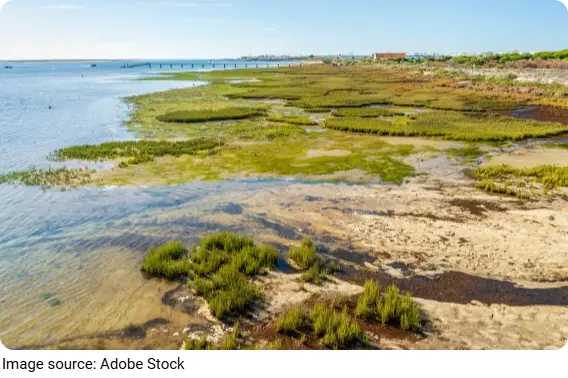
Ria Formosa is the kind of place that reveals itself gradually rather than announcing itself immediately. The low-tide channels catch the evening light in ways that change by the minute as the sun descends. The water shifts from blue to rose to gold and back again within an hour. The birds move through the shallows on their own schedule, indifferent to the visitor watching from the sand.
Have you explored the lagoon side of the Algarve, or has Portugal's south coast meant ocean beaches and clifftop walks for every trip you have taken there? Either way, the tide will pull back on schedule twice today, and the channels will be exactly where they always are — winding, luminous, and entirely worth the ferry crossing to reach them.