Perfect Earrings & Necklaces

Declan Kennedy
| 28-04-2026
 · Fashion team
You're almost out the door when you catch your reflection. The outfit works, but something feels off. It's usually not the clothes—it's the jewelry.
Earrings and necklaces interact, and when they don't coordinate, the whole look feels noisy. The right jewelry can transform a simple outfit into a polished, confident statement, making you feel put-together before you even step outside.
The good news is that matching them isn't about rules or trends. It's about balance, proportion, and a few repeatable habits you can use every day.
1. Choose Your Hero Piece First
Every good pairing begins with a decision: which piece takes the lead.
Pick the item that feels strongest today. Large hoops, long drops, or bold shapes usually work best as the hero piece. Let the other piece complement it instead of competing. If the earrings are dramatic, the necklace should stay quiet. If your necklace is the statement, keep earrings small and close to the ear.
Example: Wearing shoulder-length earrings? Choose a thin chain that sits near the collarbone with no pendant. The earrings get the spotlight without visual clutter.
2. Match Necklace Length to Your Neckline
Necklines change how jewelry appears, even when the pieces stay the same. Open necklines work well with shorter necklaces and visible earrings. High necklines pair better with long chains and minimal earrings. Avoid stacking visual weight in the same zone. If both items sit at mid-chest level, they'll clash.
Example: With a crew-neck top, skip medium-length necklaces. Go either very short or clearly long, then add small studs to keep the focus clean.
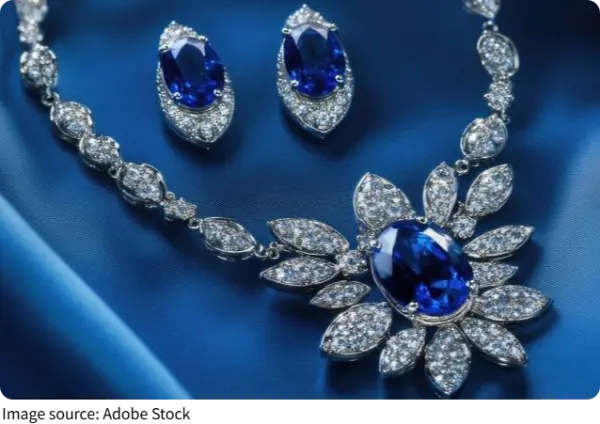
3. Keep Metals Consistent
Metal tone is one of the fastest ways to look put together. Matching tones creates instant cohesion, even if styles differ. Mixing tones works best when one metal clearly dominates. Matte and shiny finishes can mix, but only when shapes stay simple.
Example: If your earrings are warm-toned metal, choose a necklace in the same tone but a different texture, like a fine chain instead of a smooth bar.
4. Balance Sizes Between Pieces
Focus on size balance rather than copying styles. One large piece needs one small companion. Two medium pieces often look heavier than one bold and one minimal.
Example: Chunky earrings with a tiny pendant look intentional. Chunky earrings with a chunky necklace usually feel overwhelming unless the outfit is very simple.
5. Use Shape Echoes
Repeating shapes helps jewelry feel related without being identical. Circles, lines, or soft curves can echo across pieces. Avoid exact matches unless it's a deliberate set. Let one piece interpret the shape more loosely.
Example: Round stud earrings pair well with a necklace that has a curved pendant rather than another perfect circle.
6. Adjust for Hair and Face Framing
Hair changes how earrings behave, which affects necklace choice. Hair worn up makes earrings more visible, so keep necklaces simpler. Hair worn down softens bold earrings, allowing slightly stronger necklaces. Moving hair adds motion, so static jewelry should stay minimal.
Example: With hair tied back, wear slim drop earrings and a smooth chain. With loose waves, switch to studs and a pendant that adds interest.
7. Match the Mood of Your Outfit
Jewelry should support the feeling of your clothes. Relaxed outfits work best with softer shapes and lighter pieces. Clean, structured clothing pairs well with sharper lines and symmetry. Mixing moods can work, but only if one stays clearly dominant.
Example: A loose sweater looks better with simple hoops and a chain than with precise geometric pieces that feel too formal.
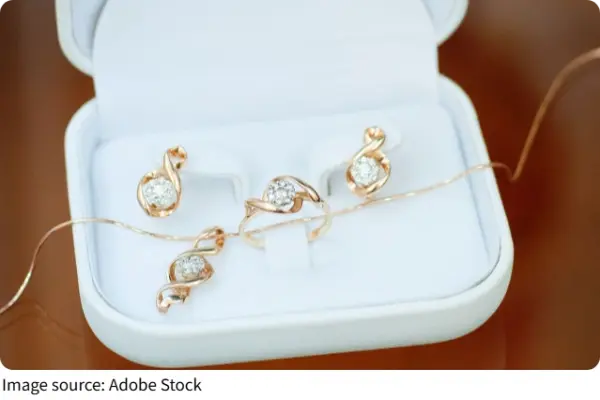
Matching earrings and necklaces isn't about memorizing combinations. It's about noticing what already works together. When one piece leads, sizes stay balanced, and shapes quietly echo each other, the result feels effortless. By choosing jewelry with intention, you can elevate your look, express your style, and feel confident in every outfit before you even step outside.