Low Cars, High Performance

Naveen Kumar
| 18-05-2026
 · Automobile team
When you look at high-performance machines, one thing immediately stands out—they sit extremely low to the ground. This isn’t just for aggressive styling.
A low centre of gravity is one of the most important engineering choices that defines how a sports car behaves at speed, especially when pushed to its limits. It affects everything from cornering precision to braking stability, driven by fundamental physics rather than visual appeal.
Sharper Cornering Through Balanced Mass
A lower centre of gravity reduces the distance between the car’s mass and the road surface. This directly limits the amount of weight transfer that occurs when the car changes direction. In practical terms, that means the car stays flatter when cornering, allowing all four tires to maintain more consistent contact with the road.
Weight distribution plays an equally important role. Performance-focused cars aim for a near 50:50 front-to-rear balance because it allows predictable handling. If too much weight sits over the front axle, the front tires become overloaded during turns, causing understeer, where the car resists turning and pushes wide.
On the other hand, excessive rear bias can make the car prone to oversteer, where the rear steps out unexpectedly. Manufacturers carefully position heavy components—engines, transmissions, and even fuel tanks—to achieve this equilibrium. Mid-engine layouts, commonly seen in supercars, are a direct result of this philosophy.
Traction Isn’t Just About Tires
Grip is often misunderstood as something determined purely by tire quality, but vehicle dynamics play a major role. A lower centre of gravity reduces pitch movement—the forward and backward shift of weight during braking and acceleration. When a car accelerates, weight naturally transfers to the rear. During braking, it shifts forward. In cars with a higher centre of gravity, this transfer is more dramatic, forcing the suspension to compress and rebound significantly.

That momentary movement reduces the efficiency of tire contact. By keeping the mass lower, sports cars minimize this motion. Combined with stiffer suspension setups, the tires maintain more consistent pressure against the road surface. The result is sharper acceleration, shorter braking distances, and a more immediate response to driver inputs. This is why performance cars feel “planted”—not because they have infinite grip, but because they waste less time stabilizing themselves between inputs.
Controlling Body Roll at High Speeds
Body roll is one of the biggest enemies of high-speed stability. In taller vehicles like SUVs, the elevated centre of gravity creates a longer lever arm during cornering. This causes the body to lean significantly, unsettling the chassis and reducing tire effectiveness.
Sports cars counter this by staying low and wide. The reduced leverage minimizes lateral weight transfer, keeping the chassis composed even during aggressive maneuvers. This is especially critical at high speeds, where even small instabilities can lead to loss of control.
Race cars take this principle even further. Aerodynamic elements like splitters and diffusers work alongside the low centre of gravity to push the car down onto the track, increasing stability without relying solely on mechanical grip. This is how professional race cars maintain control through corners at speeds exceeding 200 km/h without rolling or losing traction.
The Trade-Off: Everyday Usability
While the benefits are undeniable, low ground clearance comes with real-world compromises. Urban environments are not designed with sports cars in mind. Speed bumps, steep driveways, uneven roads, and flooding can all become serious obstacles. Even minor misjudgments can lead to scraping the underbody or damaging expensive components like front splitters.
Suspension systems in these cars are also typically stiffer, which improves handling but reduces comfort on rough surfaces. This is why many owners treat high-performance cars as occasional machines rather than daily drivers. For routine use—commuting, errands, or long-distance travel—vehicles with higher ground clearance and softer suspension setups are far more practical.
Engineering Intent vs Real-World Reality
It’s important to understand that sports cars are not built to handle every situation—they are designed to excel in specific conditions. Their low centre of gravity is part of a broader engineering strategy focused on maximizing control, precision, and speed.
Manufacturers prioritize performance metrics such as lap times, cornering forces, and braking efficiency over convenience. Every millimeter closer to the ground is a deliberate choice, not a design trend.
A low centre of gravity is one of the defining traits that separates a true sports car from an ordinary vehicle. It sharpens handling, enhances traction, and keeps the car stable when it matters most. But like all performance-focused decisions, it comes at a cost.
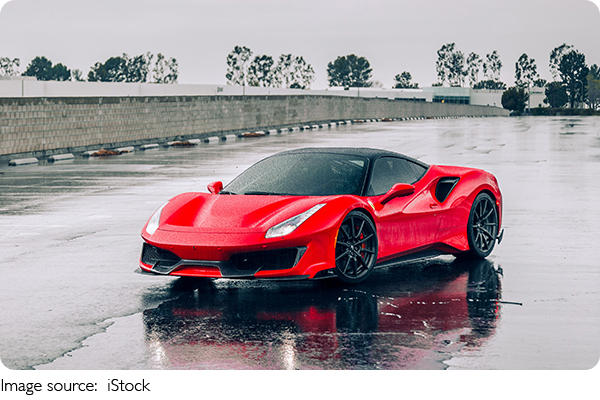
In the world of high-performance cars, low ground clearance is far more than a design choice—it is a key engineering strategy. By lowering the centre of gravity, engineers enhance handling, traction, and stability, creating machines that excel on the road and track. While everyday practicality may suffer, the benefits in control and precision clearly define what makes a true sports car.