Autumn on Bernina

Mariana Silva
| 13-05-2026
 · Travel team
Friends, some rail journeys are famous in every season, yet the Bernina Express feels especially alive in autumn. Lakes cool toward winter, glacier views look cleaner in the clear air, and larch forests turn gold across the slopes.
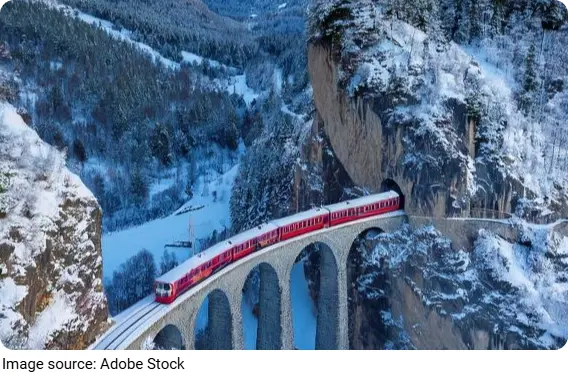
Instead of feeling like ordinary transport between Switzerland and Italy, the route becomes a moving mountain viewpoint that gains color and atmosphere at the same time.
The Route
At its most classic, the Bernina Express links Chur with Tirano in about 4.5 hours, crossing one of the Alps' most dramatic rail corridors. Travelers who start at St. Moritz get a shorter ride, but they still cover the famous pass section and the descent into Italy. That flexibility matters in autumn, when weather windows can shape the smartest starting point.
The scenery never waits for a single grand finale. Lakes appear near Ospizio Bernina, glaciers and snowfields take over at higher points, and then vineyards and softer Italian light arrive on the southern descent. Autumn strengthens those transitions because the route gains yellow slopes and usually loses some of summer's haze, making the landscape feel cleaner and more defined.
Ospizio Bernina
Ticket Math
The Bernina Express is really two prices, not one. Current RhB sales material lists the standard Chur to Tirano fare at CHF 66 in second class, about $84, before any rail-pass discounts. On top of that, panoramic-car seat reservations for the long route in peak season cost CHF 44, around $56, so budgeting early helps avoid surprises at checkout.
Travelers riding only the St. Moritz to Tirano core section pay less for the supplement. Current RhB material lists that short-route panoramic reservation at CHF 32, about $41, in peak season. That makes the shorter option very appealing for travelers who want the most famous mountain scenery without committing to the longest version of the trip.
Cheap Option
The best money-saving trick is remembering that the Bernina line is not limited to the panoramic coaches. Regional trains run on the same UNESCO-listed route and often provide equally strong views with more freedom to stop along the way. RhB's Bernina line reservation page also highlights a much smaller CHF 5 reservation, about $6, for certain reserved scenic seating options.
That creates a useful choice. Travelers who want a seamless, iconic, one-seat experience may still prefer the panoramic train, while photographers and slower travelers often do better on regional services. Autumn especially rewards the second style because the season invites longer pauses at lakes, villages, and viewpoints instead of treating the ride as a single unbroken transfer.
Best Timing
Late September through October is the sweet spot for many visitors because the larches turn and the light sits lower in the sky. The contrast between white ice, dark rock, and yellow trees becomes more vivid than it often is in midsummer. The trade-off is shorter daylight, so the day's timing matters more than it does during the longest summer weeks.
Starting early is the safer move whenever the forecast looks clear. A morning departure keeps the pass section bright and leaves margin for delays or extra time in Tirano. It also makes luggage, seating, and station connections feel less rushed. This route is best enjoyed deliberately, not squeezed into a narrow afternoon window between two hotel check-ins.
Best Stops
Even travelers staying on the direct panoramic train should know the names of the major highlights. Ospizio Bernina and Lago Bianco deliver the stark high-alpine mood many travelers picture before the trip. Alp Grum opens one of the great downhill views on the line, while the Brusio spiral viaduct near the Italian side adds a striking piece of rail engineering to the scenery.
Travelers using regional trains can go further by breaking the route. Pontresina makes an excellent overnight base before the pass, Poschiavo is a pleasant place to slow the day down, and Tirano works well as a finishing town if the journey continues into northern Italy the next morning. That stop-and-go style often suits autumn better than a rushed single sweep.
Stay Smart
For a classic Swiss start, sleep in Chur or St. Moritz and board early while the day is still fresh. For a scenery-first setup, Pontresina is often the better base because it sits closer to the core mountain section and makes an early departure easier. Travelers heading south will find Tirano practical, comfortable, and well placed for onward rail connections.
Food planning matters more than many travelers expect on scenic train days. Station bakeries, takeaway snacks, and water bought before departure are usually the easiest solution, especially when the route will be split into shorter segments. Much of the comfort on this journey comes from simple preparation before the train leaves, not from trying to improvise once the scenic section is underway.

Fall Window
The Bernina Express in autumn is more than a famous train ride with brighter trees. It is a route where lakes, glaciers, clean mountain light, and seasonal color all strengthen one another over a few hours. With the right ticket choice and enough time to enjoy the pass properly, would you ride the whole line in one sweep, or break the journey where the larches look strongest?