Fruits Worth Trying

Caleb Ryan
| 18-05-2026
 · Cate team
The produce aisle tends to look the same everywhere. Apples, bananas, oranges, grapes — on rotation, week after week.
Nothing wrong with those. But there's an entire category of fruits that most people walk past without a second look, and they're worth the curiosity.
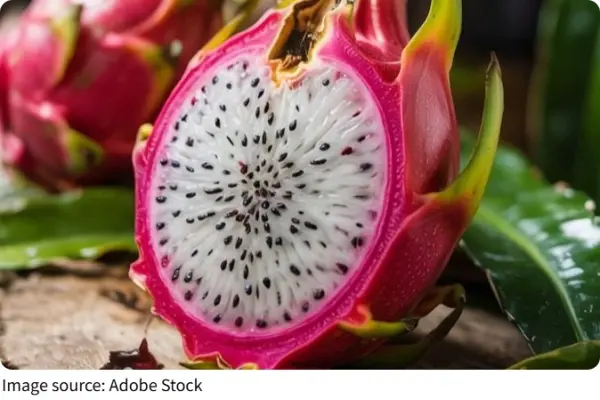
Dragon Fruit: More Than Just a Pretty Face
Dragon fruit — with its vivid pink skin and green-tipped scales — is low in calories, high in fiber, and rich in vitamin C, B vitamins, and omega-3 and omega-6 fatty acids (from its tiny black seeds). The flavor is mild and slightly sweet, somewhere between kiwi and pear. To eat it, simply slice in half and scoop out the white or red flesh with a spoon. It works beautifully as a topping for yogurt, in smoothie bowls, or just eaten plain. Look for one that yields slightly when pressed — that's how you know it's ripe.
Passion Fruit: Small, Intense, and Genuinely Impressive
The wrinkled skin is not a sign it's gone bad — that's actually how you know passion fruit is ripe and ready. Smooth skin means it needs more time. Inside is a seedy, jelly-like pulp that's tart and intensely aromatic. It's rich in antioxidants including vitamin C, beta-carotene, and polyphenols. The seeds are edible and add a crunch. Scoop the pulp into yogurt, mix into a dressing, or squeeze it over a fruit salad.
Cherimoya: The Custard Apple
Often described as tasting like a cross between pineapple, banana, strawberry, and papaya, cherimoya is one of those fruits that's hard to explain until you try it. It's creamy, almost custard-like in texture, and packs significant amounts of vitamin C, fiber, iron, and copper. Eat it chilled, scooped straight from the skin — but avoid the seeds, which are not edible.
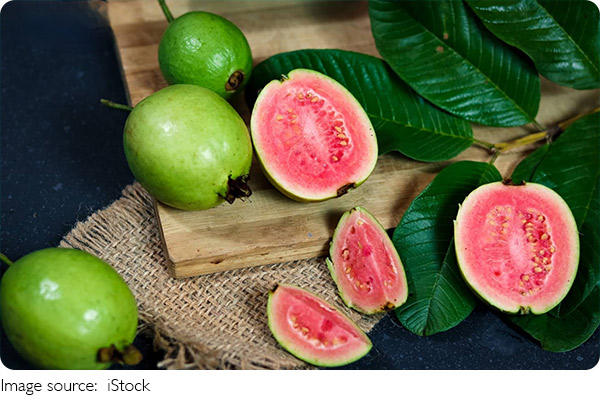
Guava: Four Times the Vitamin C of an Orange
Guava is exceptionally rich in vitamin C and also provides vitamin A and dietary fiber. According to the United States Department of Agriculture, guava contains notably higher levels of vitamin C than many common citrus fruits, making it a nutrient-dense addition to the diet.
Widely available in Asian and international markets, guava is also becoming more common in mainstream grocery stores. Its flavor is sweet and aromatic, with floral notes and a slightly musky finish. It can be enjoyed fresh with the skin on, sliced into salads, or blended into juice.
Finding one new fruit to try each shopping trip is a low-effort way to genuinely broaden your nutrition and break the routine.