Fruit & Veggie Combos

Caroll Alvarado
| 18-05-2026
 · Cate team
Most people eat fruit and vegetables. Fewer people think about what happens when you combine the right ones together.
Certain pairings create nutritional effects that neither ingredient could produce alone — better absorption, stronger antioxidant action, and more complete coverage of vitamins and minerals.
Spinach + Mango: Iron Meets Vitamin C
Spinach is rich in non-heme iron — the kind found in plant sources — but the body doesn't absorb it especially well on its own. Mango is high in vitamin C, which dramatically increases how much iron the body can actually pull from plant sources. Together in a salad or smoothie, this combination actively improves iron absorption. A handful of spinach and some diced mango is genuinely one of the smarter nutritional pairings available.

Carrot + Orange: Double Down on Vitamin A
Carrots and oranges offer complementary nutritional benefits. Carrots are rich in beta-carotene, a carotenoid that the body converts into vitamin A, while oranges are best known for their high vitamin C content and also provide smaller amounts of beneficial plant compounds, including carotenoids. According to the National Institutes of Health, these nutrients play important roles in supporting eye health, immune function, and skin health.
Their nutritional profiles pair well together, as vitamin C supports antioxidant protection while beta-carotene contributes to vitamin A production. They also complement each other in flavor—the natural sweetness of carrot balances the bright citrus notes of orange—which helps explain why they have become a popular juice combination.
Tomato + Healthy Oils: Lycopene Needs a Ride
Lycopene — the antioxidant in tomatoes that research links to reduced risk of certain cancers — is lipid-soluble. Eating tomatoes with olive oil, avocado, or other healthy oils significantly increases how much lycopene the body absorbs. A tomato salad drizzled with olive oil isn't just delicious; it's genuinely more nutritious than eating tomatoes plain.
Berries + Leafy Greens: Antioxidant Overload (In a Good Way)
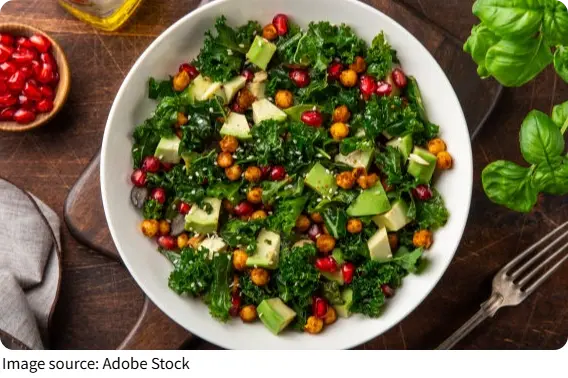
A Harvard study following over 110,000 people found that those eating eight or more daily servings of fruits and vegetables were 30% less likely to suffer cardiovascular events. Green leafy vegetables and citrus fruits were highlighted as the most protective. Berries and leafy greens together — in a smoothie, bowl, or salad — combine anthocyanins and flavonoids from the berries with vitamins A, C, and K from the greens. A straightforward combination with serious long-term benefit.
The key insight isn't complexity. It's pairing ingredients that complement each other nutritionally, not just in flavor.