Tiny Space, Big Life

Mukesh Kumar
| 14-05-2026
 · Lifestyle team
Living in a small apartment is a challenge that millions of people navigate every day, and the honest truth is most people make it harder than it needs to be.
Two giant sofas, a dining table for six, and every shelf covered in stuff — it's the fastest route to a space that feels like it's closing in.
The good news? With a bit of strategic thinking, even the most compact apartment can feel spacious, organized, and genuinely enjoyable to come home to.
Furniture That Does Double Duty
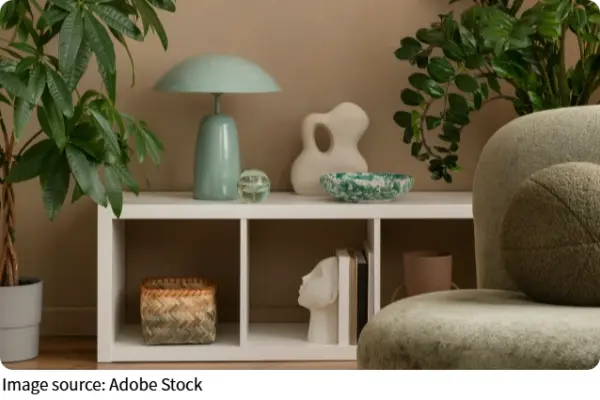
In a small apartment, every square inch counts, so every piece of furniture should earn its place. This means moving away from single-purpose pieces and toward furniture that pulls double duty. A sofa bed handles overnight guests without needing a dedicated spare room.
A storage bench works as a coffee table, extra seating, and a place to stash throw blankets — all in one footprint. A dining table with foldable leaves stays compact on regular days and opens up for gatherings. These aren't compromises; they're just smarter choices that free up the floor space you'd otherwise be crowding with extra furniture.
Go Vertical, Not Horizontal
When square footage is limited, the natural instinct is to think horizontally. But the walls go all the way up — and that's where a lot of the best storage potential lives. Floating shelves keep things off the floor and draw the eye upward, which makes ceilings feel higher.
Floor-to-ceiling wardrobes or tall bookcases do the same while providing serious storage capacity. Even the backs of doors are useful: over-door racks and organizers handle everything from coats to kitchen extras without taking any floor space at all. Thinking vertically isn't just practical — it actually changes the perceived scale of the room.
Light Is Your Best Friend
Natural light is genuinely a small apartment's best asset. Heavy drapes that pool on the floor look cozy in a larger space, but in a small one they make the room feel like a cave. Sheer curtains or simple blinds let light move through the space freely while still offering privacy.
Mirrors placed to reflect natural light — ideally opposite or near windows — bounce that brightness around the room and create a sense of depth that no amount of rearranging furniture can replicate. Even lighter-colored walls help: soft neutrals like white, cream, and light grey reflect light rather than absorbing it, which is the single most effective trick for making a room feel bigger than it is.
Keep Colors Light and Decor Minimal
Small spaces reward restraint. A few carefully chosen pieces that you genuinely love will always look better than surfaces crowded with objects. This isn't about being boring — it's about letting the space breathe.
Stick to a neutral base for walls and large furniture, then add personality through accent cushions, artwork, or a rug with some pattern. Pops of color work beautifully in small spaces as long as they stay controlled. A rich blue throw, a terracotta planter, a single statement art piece — these kinds of choices give the room character without visual noise.
Define Zones With Rugs and Layout
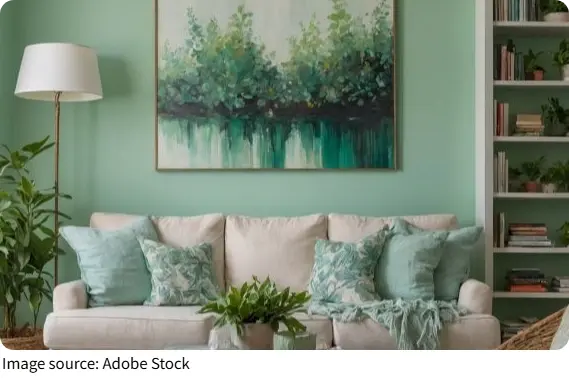
In an open-plan studio or single-room apartment, the layout becomes the architecture. An area rug anchors a seating area and signals "living room" even when the bedroom is just a few feet away. A rug under the dining table does the same.
These defined zones create a sense of order and function — making the space feel more like several purposeful areas than one cluttered room. Rugs with lighter tones or interesting patterns tend to visually expand the floor rather than divide it.
Hidden Storage, Every Chance You Get
Storage is the constant challenge in small apartments, and winning it is mostly about creativity. Under-bed drawers are the most underutilized space in most homes — a storage bench or two can handle linens, extra pillows, or off-season items without taking any additional floor space. Wall-mounted shelving with concealed bins keeps surfaces clean.
Closet organizers — stackable boxes, hanging shelves, door racks — can double the effective capacity of a standard wardrobe. The goal isn't to find places to hide more things; it's to keep the visible space as clear and calm as possible.