Keep Pearls Lustrous

Owen Murphy
| 14-05-2026
 · Fashion team
Pearls sit at just 2.5–4.5 on the Mohs hardness scale, which makes them significantly softer than most other gemstones most people own.
That softness means scratches are permanent — pearls can't be re-polished the way harder stones can. It also means that the wrong cleaning approach causes real, irreversible damage. The good news is that proper pearl care is genuinely simple once the few key rules are understood.
Daily Pearl Care: Simple Habits That Prevent Damage
Put pearls on last, take them off first. This single habit prevents the majority of pearl damage. Cosmetics, hairspray, perfume, and lotion all contain chemicals that attack nacre — the thin, luminous layer coating each pearl — and accelerate discoloration and surface degradation.
Once those products are fully applied and dry, the pearls can go on. At the end of the day, they come off before any skincare routine. After every wear, wipe each pearl individually with a soft, dry cloth to remove perspiration, skin oils, and any residue from the day. This step takes about thirty seconds and is the single most effective daily maintenance habit for pearls.
How to Do a Deeper Clean
For visible dirt or buildup, the cleaning method is simple but requires specific attention to temperature and technique. Mix a small amount of perfume-free soap — Ivory soap or Castile soap work well — with warm, not hot, water. Dip a soft cloth into the solution, wring it out until it's barely damp, and wipe each pearl individually along the strand. Hot water is a real risk: it can cause nacre to split or weaken the organic adhesive that holds the pearl's layers together. After cleaning with the soapy cloth, follow with a second clean cloth dampened with water only to remove any soap residue.
Soap left on pearl surfaces dries them out over time. Then lay the strand flat — never hang it — and let it dry completely before storing. A damp silk thread stretches and weakens if the piece is stored before it's fully dry.
What to Absolutely Avoid
Never submerge a pearl necklace in water. The silk thread that strands the pearls absorbs water, weakens with prolonged soaking, and takes a very long time to dry completely. Never use ultrasonic cleaners or steam cleaners on pearls — both methods damage nacre. Bleach, vinegar, ammonia, and hydrogen peroxide are all damaging and should never contact pearls. Even toothpaste, sometimes recommended in outdated guides, is abrasive enough to scratch the nacre surface.
Airtight plastic bags and safety deposit boxes dry pearls out — pearls are porous organic gems that need some ambient moisture to maintain structural integrity. Storage in a soft cloth pouch or fabric-lined box away from other jewelry is correct.
Wearing Them Is Actually Good for Them
Pearls benefit from contact with skin. The natural moisture from skin helps keep them hydrated and prevents the drying that leads to yellowing over time. A pearl that sits in a box unworn dries out faster than one worn regularly. Pearl necklaces should be restrung on silk thread once a year for frequently worn pieces, and every two to three years otherwise — the knots between pearls become frayed and dirty with wear, and a broken strand risks losing individual pearls. A professional jeweler can handle restringing and inspect the hardware at the same time.
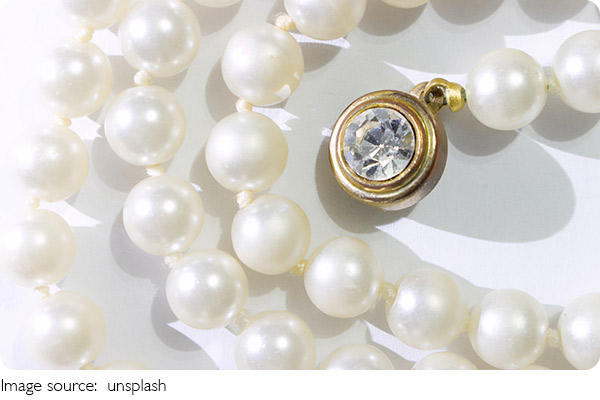
Pearls are delicate, organic gems that require gentle handling and consistent care rather than complex cleaning methods. By following simple habits like wiping after wear, avoiding harsh chemicals, and storing them properly, pearls can retain their natural glow for many years. With mindful maintenance, they remain elegant, soft, and timeless across generations.