Ride Safe in the City
Hiro
| 14-05-2026
 · Automobile team
City riding and highway riding feel like completely different activities.
On the highway, traffic flows. In the city, it's a constant stream of surprises — rideshare cars pulling over without warning, pedestrians stepping off curbs, delivery vans blocking lanes, traffic lights catching you off guard.
For someone still building their riding skills, urban environments are genuinely demanding. The good news is that they're also very learnable. The biggest shift that helps new riders in city traffic isn't a technical skill. It's a mindset. Riding defensively doesn't mean riding scared — it means staying one step ahead rather than reacting at the last second.
Assume Nobody Sees You
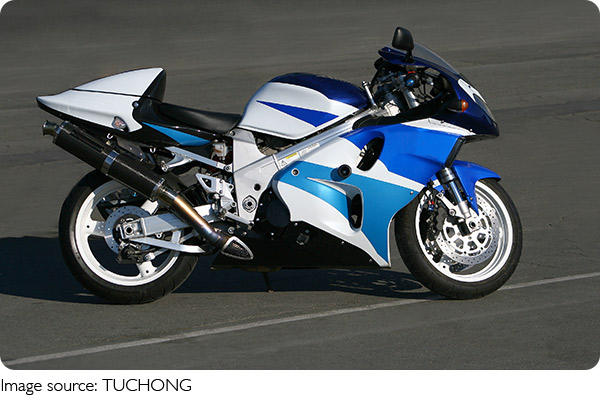
Motorcycles are smaller than cars, which means they disappear into blind spots easily. Most drivers are scanning for other cars, not for a motorcycle that fits between two vehicles they already noticed. This isn't carelessness — it's just how human attention works.
The practical response is to stop expecting to be seen and start positioning yourself so you're harder to miss. Ride where drivers can spot you in their mirrors. Avoid lingering beside another vehicle's rear quarter panel. If you can't see the driver's eyes in their mirror, there's a real chance they can't see you either.
Lane Position Is Your Safety Tool
Unlike cars, motorcycles have flexibility within a lane — you can ride left-of-center, right-of-center, or anywhere in between. The center is actually one of the worst positions in stop-and-go urban traffic, because that's exactly where oil and fluid drips from cars tend to accumulate over time, reducing traction.
Instead, pick the part of the lane that puts you in view of the most surrounding drivers and gives you an escape route if something happens. Toward the left side of the lane often keeps you visible in the mirrors of vehicles ahead, while still leaving room to move right if needed.
Intersections Deserve Extra Attention
The Motorcycle Safety Foundation and most accident research point to the same thing: intersections are where a large proportion of motorcycle crashes happen. The most common scenario is a car turning left across oncoming traffic, not seeing the approaching motorcycle.
Every time you approach an intersection — even one with a green light — cover your brakes, scan for turning vehicles, and be ready to react. That extra second of preparation has ended countless close calls.
Watch for pedestrians stepping into crosswalks, cyclists appearing from bike lanes, and vehicles emerging from side streets. Approach intersections as the most unpredictable points on any urban route, because statistically, they are.
Maintain a Real Following Distance
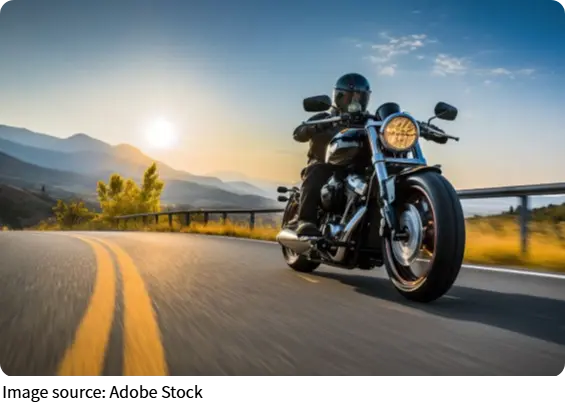
City traffic makes it tempting to follow close — that's just how traffic moves. But motorcycles can stop quickly, and so can the car in front of you. A two-to-three-second gap in normal conditions gives you time to react to a sudden stop, spot a hazard in the lane ahead, and have somewhere to go.
In heavy traffic or wet conditions, open it up further. The extra space also improves your sightlines down the road, which is the real reason experienced riders maintain it even when it feels unnecessary.
Build Confidence Gradually
New riders don't have to throw themselves into the thick of rush hour traffic from day one. Start with quieter streets, off-peak hours, routes you already know. As the basics become automatic — smooth braking, clean lane changes, reading traffic ahead — the busier roads become less overwhelming. Riding is a skill that develops with exposure. Give it the space to develop without forcing yourself into situations that feel beyond your current level.