Gear Up or Go Home

Kenji
| 14-05-2026
 · Automobile team
Picture riding without any protective gear for a second. Wind in your face, open road, feels great — right up until it doesn't.
A motorcycle doesn't have seatbelts, crumple zones, or a metal cage around you. What you're wearing is the only thing between your body and the pavement if something goes wrong.
That doesn't mean you need to spend a fortune before your first ride. But it does mean knowing what actually matters, and in what order.

The Helmet — No Debate Here
Head injuries are a leading cause of death and permanent disability in motorcycle crashes. Research consistently shows that quality helmets reduce the risk of fatal head injuries by around 37% and non-fatal head injuries by nearly 70%. Those are significant numbers. Yet some riders still try to cut costs here, which is exactly the wrong place to do it.
When buying a helmet, fit is everything. It should sit snug on your head without any pressure points, and shouldn't shift when you shake your head. Look for DOT or ECE certification — these mean the helmet has actually been tested to safety standards. Full-face helmets offer the most protection.
Modular (flip-up) styles are a reasonable compromise. Half helmets look cool, but leave too much exposed to be recommended for anything beyond very slow riding.
A Riding Jacket — Not Just Any Jacket
A regular leather jacket looks right, but most aren't built to survive road contact at speed. A proper motorcycle jacket is made from abrasion-resistant materials — leather or reinforced textile — and comes with protective padding in the elbows, shoulders, and usually a pocket for a back protector. That padding absorbs impact energy. Without it, even a low-speed fall onto pavement can cause serious damage to joints and bones.
Modern riding jackets range from traditional leather to mesh styles designed for hot weather. Match the jacket to where and when you ride, but don't skip the protective padding.
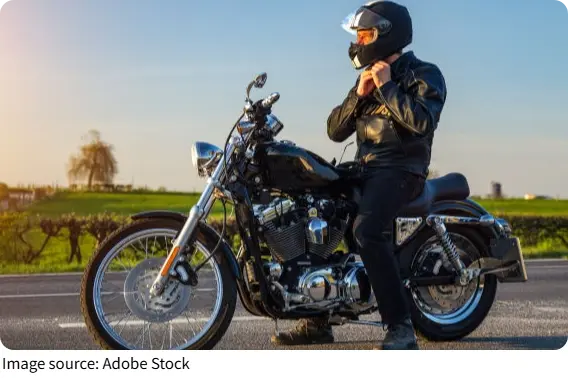
Gloves — Because Your Hands Hit First
It's instinctive: when you fall, you put your hands out. Every time. Riding without gloves means your palms and knuckles hit asphalt at speed with nothing between them and the road. CE-rated gloves with reinforced palms and knuckle protection handle that kind of impact in a way bare skin simply cannot. They also improve grip on the bars and keep your hands comfortable in changing temperatures.
Boots and Pants
Regular sneakers offer zero ankle protection — and ankles are extremely vulnerable in crashes, where a foot can get trapped under a bike. Motorcycle boots don't need to look like astronaut gear; there are plenty of styles that look casual but have reinforced construction and ankle support built in. Entry-level riding boots start around $80 and are worth every cent.
Riding pants — whether leather, textile, or Kevlar jeans — protect your legs from road rash and have padding at the knees and hips. They're often the last piece of gear new riders buy, but they cover a lot of skin that regular jeans really don't protect at all.
Buy the Best You Can Wear Every Ride
A $1,000 jacket that stays home because it's heavy or uncomfortable won't protect you. A $200 jacket you wear every single time you ride absolutely will. The goal is to wear gear consistently, not just when it's convenient.
Start with a helmet that fits, add a jacket with padding, gloves that protect your palms, and boots that support your ankles. Riding pants come next. You don’t need a thousand-dollar setup overnight. Buy what meets safety standards and fits your budget. Then wear it every single time — not just on highways or long trips. The short ride to a friend’s house can be the one where you need protection most. Gear works only when you put it on.