Desert Depth

Pankaj Singh
| 19-05-2026
 · Travel team
Red rock dropping over a mile straight down. Silence so thick it almost feels loud. The Grand Canyon hits different in person — photos simply don't prepare you for how absurdly big it actually is.
At 278 river miles long and up to 18 miles wide, this place isn't just a viewpoint. It's a whole landscape carved over millions of years by the Colorado River, layer by layer, right through the Colorado Plateau.
Pick Your Rim Before You Pack
Not all rims are the same, and that choice shapes your entire trip.
The South Rim is open year-round and handles the bulk of visitors — it's where you'll find the most viewpoints, lodges, restaurants, and shuttle routes. Mather Point and Yavapai Observation Station are classic stops. For something quieter, the North Rim is open only from mid-May through mid-October, sits at a higher elevation, and draws a fraction of the crowd. Expect alpine meadows and fewer selfie sticks. The West Rim, managed by the Hualapai Tribe, is the closest to Las Vegas — about 2.5 hours by car — and is home to the famous Skywalk, a glass-bottomed horseshoe bridge hanging 4,000 feet above the canyon floor. Admission to the Skywalk is around $30 per person, on top of the entry package.
Grand Canyon National Park
Getting There & Getting Around
Most people drive in. The park entrance fee is $35 per vehicle, valid for seven days. Once inside the South Rim, skip the parking headache entirely — the free shuttle system runs multiple color-coded routes covering all the major viewpoints. The Hermit Road (Red) route alone hits eight scenic overlooks. There's also a Hiker's Express shuttle that runs early morning directly to the South Kaibab Trailhead.
Prefer something more scenic than a car? The Grand Canyon Railway runs daily round trips from Williams, Arizona — about 65 miles south — through pine forests straight to the Grand Canyon Depot. Tickets start around $67 per person.
Trails Worth Knowing
Hiking into the canyon is not like a regular trail. It goes down first, then back up in full sun. Heat builds fast at the lower elevations.
For something manageable, the Ooh Aah Point hike off South Kaibab Trailhead is just under two miles round trip with a 685-foot elevation change — genuinely doable for most people and the views are ridiculous. Shoshone Point is even flatter, just over two miles with almost no elevation gain. Both are great for first-timers. Serious hikers can push all the way down to the Colorado River at the bottom, but that's a multi-day commitment with overnight permits required.
Where to Sleep
Inside the park, lodging fills up fast — sometimes a full year in advance during peak summer months. The historic El Tovar Hotel on the South Rim edge has rooms starting around $200–$300/night. Bright Angel Lodge & Cabins is a bit more budget-friendly, starting closer to $100/night for a basic room. If everything's booked, Tusayan is just eight miles from the South Rim and has several hotels ranging from $80–$180/night depending on the season.
When to Show Up
Spring (March–May) and fall (September–November) are the sweet spots. Temperatures are cooler, trails are pleasant, and you're not elbowing through peak-season crowds. Summer brings heat and lines — the rim sits around 7,000 feet elevation so it's not unbearable, but the canyon floor can tip past 100°F. Book everything early if summer is the only option.
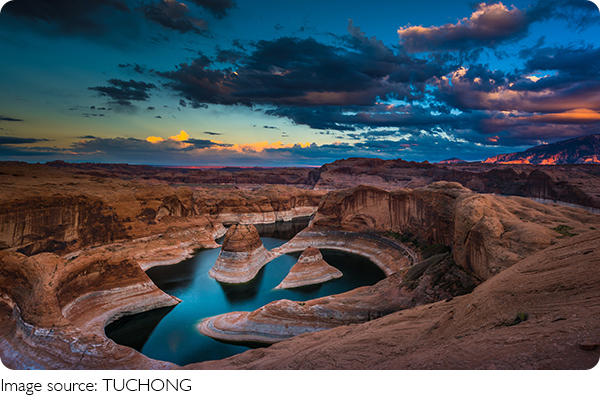
So here's the truth they don't tell you in the photos: the Grand Canyon isn't just something you see—it's something you feel. That first step to the edge stops your breath. The silence, the scale, the layers of rock stretching back millions of years—it all adds up to a moment that stays with you long after you've driven away. Whether you're hiking down the South Kaibab, watching sunrise from Mather Point, or simply sitting on a rock letting the vastness sink in, the canyon has a way of making everything else feel small. And sometimes, that's exactly what you need. Go see it for real. The pictures will never quite do it justice.