Fix Car Lights Fast

Kai
| 19-05-2026
 · Automobile team
A burned-out tail light doesn't just get you pulled over — in many places it's a moving violation, and in low visibility conditions it's a genuine safety risk for the driver behind you.
The same applies to headlights, brake lights, turn signals, and license plate lights. Most lighting failures are simple bulb replacements that take under ten minutes and cost under $15.
However, a handful of failures trace back to fuses, switches, wiring, or socket corrosion — and knowing how to distinguish between these possibilities saves time and avoids unnecessary parts purchases.
The Monthly Walk-Around Check
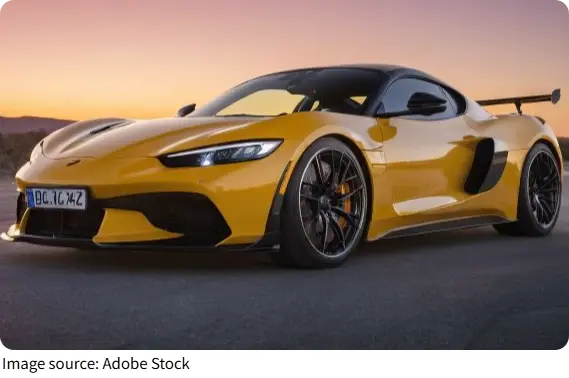
The most effective lighting maintenance is also the quickest: a walk-around inspection once a month. Park in front of a flat wall or garage door, turn on the headlights and running lights, and walk around the vehicle. Check both headlights, both tail lights, and the license plate light.
For brake lights, press the pedal while watching the reflection in the wall or garage door, or ask someone to stand behind the vehicle. Enable each turn signal and verify front and rear operation on both sides. Step through reverse to confirm backup lights.
Most failures are caught this way before they cause a legal or safety problem. The full list to check regularly includes headlights on both beams, tail lights, brake lights, high-mounted third brake light, front and rear turn signals, backup lights, and license plate light.
Replacing a Burned-Out Bulb
Headlight replacement varies significantly between vehicles — some require only reaching behind the housing in the engine bay, while others require removing part of the wheel liner or the entire headlight assembly. Check the owner's manual first. Always wear nitrile gloves when handling new bulbs: oils from bare skin transfer to the glass and create hot spots when the bulb heats up, significantly shortening lifespan.
Disconnect the electrical connector from the old bulb, release the wire retaining clip, and rotate the bulb counterclockwise to remove it from the housing. Install the new bulb without touching the glass, rotate clockwise until latched, reconnect the electrical connector, and test.
For tail lights and brake lights, access is usually through the trunk. Some assemblies unscrew from outside the vehicle; others require opening the trunk and removing an interior panel to reach the bulb sockets from inside. The socket twists counterclockwise to release from the assembly.
Most tail light bulbs twist in their sockets as well — counterclockwise to release, clockwise to install. When replacing lights that come in pairs, It's can replace both sides simultaneously since if one bulb has reached end of life, the other is typically close behind.
When a New Bulb Doesn't Fix It
If installing a new bulb doesn't restore the light, the fault chain continues beyond the bulb. The next check is the fuse. Every vehicle has a fuse box — typically one under the dashboard and one under the hood — and the fuse chart on the cover or in the owner's manual identifies which fuse corresponds to which circuit.
A blown fuse has a visibly broken wire inside the transparent housing. Pull the suspect fuse, confirm the break, and replace it with a fuse of identical amperage rating. Using a higher-rated fuse to avoid repeated failures is dangerous — fuses protect the wiring, not the bulb.
If the fuse is intact and the bulb is new, the next likely culprits are socket corrosion or a wiring issue. Mobil's troubleshooting guide notes that headlight and tail light sockets are directly exposed to moisture — the front of the vehicle catches road spray, and the trunk area accumulates condensation.
Corrosion at the socket creates resistance that prevents the bulb from getting full voltage, causing dim output rather than complete failure. Cleaning the socket contacts with an electrical contact cleaner and a small wire brush typically restores the connection. If the socket itself is physically damaged or the wiring harness shows fraying or disconnected connectors, professional repair is the appropriate next step.
Foggy Headlight Lenses
Headlight housings are made of polycarbonate plastic that yellows and hazes from UV exposure over time. A clouded headlight lens scatters light rather than directing it, reducing visibility in the beam even when the bulb itself is functioning perfectly.
Headlight restoration kits, typically available for $20 to $30, use wet-sanding abrasives followed by UV-protective sealer to remove the oxidized outer layer and restore optical clarity. The process takes 30 to 45 minutes per headlight and typically restores 80% to 90% of original clarity.
Reapplying UV protective coating every year or two after restoration significantly slows the return of hazing. For severely degraded housings where the damage has penetrated too deeply for sanding to correct, replacement is the only option.
LED Systems and Modern Vehicles
Vehicles with factory-installed LED headlight or taillight assemblies typically do not have user-replaceable individual bulbs — the entire assembly must be replaced when the LEDs fail, since the LED elements are integrated into the unit rather than inserted as separate bulbs.
These assemblies are significantly more expensive than conventional bulb replacements. The tradeoff is that quality LED assemblies last substantially longer — often the life of the vehicle — making replacement much less frequent than with halogen bulbs.
Most lighting problems are simple, cheap, and quick to fix. A ten-minute bulb swap or a thirty-minute headlight restoration can save a traffic stop, prevent a rear-end collision, and make nighttime driving genuinely safer. The walk-around check takes two minutes a month.
The tools cost less than a tank of gas. And the confidence of knowing your lights work when you need them? That is free. Check your lights this weekend. The driver behind you will thank you.