Exotic Fruit Guide

Ethan Sullivan
| 02-06-2026
 · Cate team
Most grocery stores carry the same dozen or so fruits year-round, which is fine — but there's a whole other world of fruit out there that most people have never tasted. Some are sweet in ways that are genuinely surprising.
Some have textures nothing like what you'd expect from their appearance. And a lot of them are easier to find than you'd think, in specialty markets or online.
Dragon Fruit (Pitaya)
Dragon fruit is hard to miss — its bright pink or yellow skin covered in green-tipped scales looks almost cartoonish. Inside, the flesh is white or deep red, dotted with tiny black seeds, and the flavor is mildly sweet, somewhere between a kiwi and a pear. Some people find it underwhelming on its own, but it picks up beautifully in smoothies and fruit bowls, where its visual appeal is as important as the taste. It's also high in fiber, vitamin C, and antioxidants that support gut health and immunity.

Rambutan
Rambutan looks alarming — a golf-ball-sized fruit covered in soft, hair-like red spines. Peel it back and you find a translucent, juicy flesh that tastes like a lychee but slightly creamier and firmer. The flavor is delicately sweet with floral undertones and a mild acidity that keeps it from being too heavy. It pairs beautifully with mango and coconut. Rambutan is a good source of vitamin C and iron and is best enjoyed fresh and chilled.
Cherimoya (Custard Apple)
The cherimoya is often called the custard apple, and the name is accurate. Its green, scaly exterior hides a white, creamy pulp that blends the flavors of banana, pineapple, strawberry, and vanilla simultaneously. The texture is genuinely custard-like — rich and smooth, scooped from the skin with a spoon. It's packed with vitamin C, vitamin B6, fiber, and antioxidants. Native to the Andean mountains of South America, it's now grown in California and Spain and can be found at specialty grocers or ordered online for around $16 per pound.
Jackfruit
Jackfruit is the largest tree fruit in the world, weighing up to 100 pounds. Its yellow flesh, when ripe, has a sweet tropical flavor blending banana, mango, and pineapple. What makes jackfruit genuinely unusual is its unripe form — the stringy, fibrous flesh mimics pulled meat in texture, absorbs flavors well, and works as a popular plant-based substitute in tacos, sandwiches, and curries. Both forms are nutritious: jackfruit is rich in vitamins C, A, and B, as well as potassium and dietary fiber that support heart health and digestion.
Mangosteen
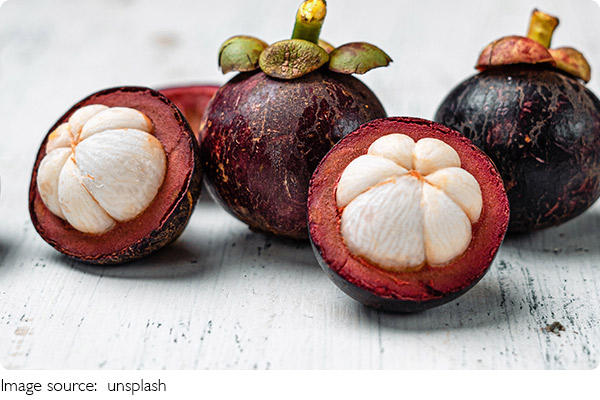
Mangosteen has a deep purple shell that looks almost inedible, but inside are soft white segments with a sweet-tart flavor — floral, delicate, and complex in a way that's genuinely hard to describe. It's often cited as one of the best-tasting fruits by those who've had it fresh. It's also high in antioxidants, particularly xanthones, which have been studied for anti-inflammatory properties. Mangosteen is seasonal, perishable, and worth seeking out when available.
Longan
Longan — nicknamed "dragon's eye" — is small, round, and brown-shelled, with a translucent interior that reveals a dark seed beneath the flesh. The flavor is sweet and floral, somewhere between lychee and muscat grape, with a juicy, slightly chewy texture. It's commonly eaten fresh or dried and shows up frequently in Southeast Asian desserts and drinks. A good source of vitamin C, potassium, and antioxidants, longan is worth trying whenever it's in season at an Asian grocery.
None of these need elaborate preparation. Most are eaten fresh, straight from the peel or shell — which is really the best way to get to know a new fruit anyway.
Exploring exotic fruits is a simple way to experience new flavors, textures, and cultures. Whether enjoyed fresh or added to favorite recipes, these fruits offer a delicious way to expand your palate.