Squirrel Tail Secrets

Chris Isidore
| 05-06-2026
 · Animal team
Have you ever walked through a park and noticed a squirrel moving swiftly across tree branches, its fluffy tail flowing behind it? At first glance, the tail may appear to be a simple, charming feature. In reality, it is a highly specialized survival tool shaped by nature over time.
A squirrel’s tail plays multiple essential roles, including supporting movement, regulating temperature, and aiding communication. Far from being decorative, it is a multifunctional adaptation that helps squirrels survive in changing environments.
Let’s explore the remarkable functions behind this often-overlooked feature.
A Natural Balance Tool for Climbing and Jumping
Squirrels spend most of their lives in elevated environments, moving across narrow branches, climbing trunks, and leaping between trees. These movements require precision and stability, and the tail plays a central role in maintaining both.
When a squirrel moves along a thin branch, its tail shifts gently from side to side, helping to distribute weight and maintain balance—similar to how a tightrope walker uses a balancing pole.
During jumps, the tail becomes even more important. As the squirrel launches into the air, it adjusts the tail’s position to stabilize its body and control direction. This allows for smoother landings and improved accuracy when reaching the next branch.
Observations show that squirrels rely significantly on their tails for coordinated movement. Without it, climbing and jumping would be far less stable and efficient.
A Natural Sunshade in Warm Conditions
During warmer seasons, squirrels often spend long periods foraging for food. Exposure to strong sunlight can increase heat stress during these active hours.
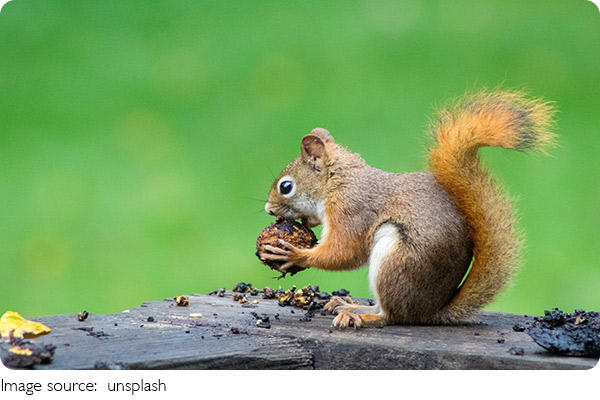
To manage this, squirrels sometimes raise or position their bushy tails over their bodies while resting. The dense fur provides shade and helps reduce direct exposure to sunlight, supporting comfort during heat.
The structure of the tail also allows airflow between the hairs, which helps release excess warmth. This makes it easier for squirrels to remain active even in higher temperatures.
A Protective Cover in Cold Weather
In colder environments, conserving body heat becomes essential for survival.
Squirrels respond by curling their bodies tightly and wrapping their tails around themselves. The thick fur acts as an insulating layer, helping to retain warmth close to the body.
In snowy or wet conditions, the tail also helps shield the body from moisture, reducing heat loss and keeping the animal drier. This adaptation is especially important during cold nights and seasonal temperature drops.
A Communication and Safety Tool
Squirrels also use their tails as part of their behavior in response to environmental threats.
Rapid tail movements can signal alertness and help communicate potential danger to nearby squirrels. These visual signals are effective even when animals are separated by distance or dense branches.
In addition, sudden tail flicking can help distract attention during moments of risk, giving the squirrel a better chance to change direction quickly and escape.
Interesting Facts About Squirrel Tails
1. Tail length is nearly equal to body length
In many species, the tail is almost as long as the body, enhancing balance and agility.
2. Tail condition is important for survival
A healthy tail supports movement, temperature control, and communication. Damage can reduce mobility and efficiency.
3. Regular grooming maintains function
Squirrels frequently clean and arrange their tail fur to keep it smooth, clean, and effective for insulation.
4. Tail structure varies by habitat
Tree-dwelling squirrels tend to have fuller tails for balance, while ground or rocky habitat species may have shorter, sturdier tails adapted to their environment.
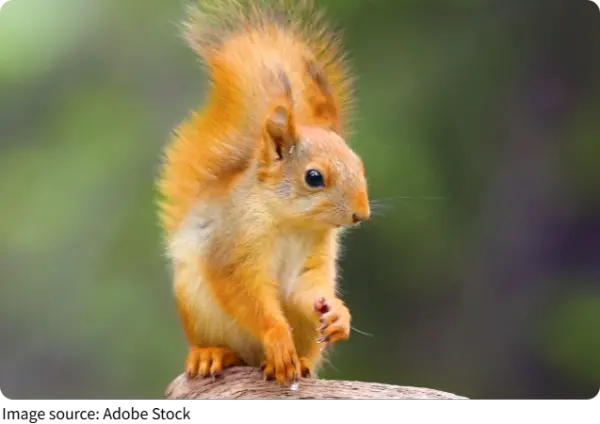
A squirrel’s tail is far more than a visual feature—it is a highly efficient, multifunctional tool that supports survival in multiple ways. From balance and movement to temperature regulation and communication, it plays a vital role in daily life.
Next time you observe a squirrel in nature, take a moment to watch how it uses its tail. You may notice that every movement is purposeful, revealing the intelligence behind this remarkable adaptation.
Nature often hides its most sophisticated designs in the simplest forms, and the squirrel’s tail is a perfect example of this balance between function and beauty.