6 Outdoor Cycling Skills

Kwame Johnson
| 11-06-2026
 · Lifestyle team
Hi, Friends! Getting comfortable on unpredictable terrain takes more than just pedaling hard.
Whether you are new to trail riding or brushing up on fundamentals, these six outdoor cycling techniques will help you ride with more control and confidence. Each skill builds on the next, so practice them in order on easy trails before progressing to tougher routes.
Body Position
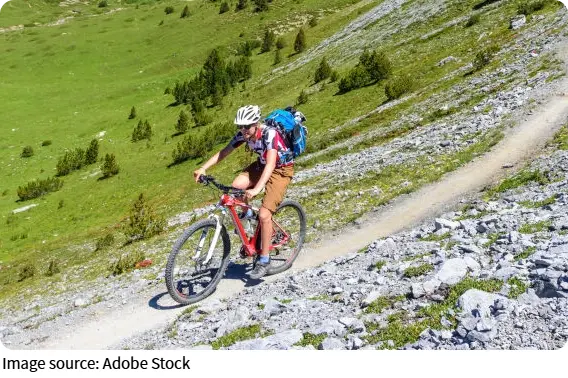
Keep your weight centered over the bike. On flat sections, stand slightly with knees bent and elbows loose. When descending, shift your hips back behind the saddle so your arms can absorb bumps. On climbs, slide forward to keep the front wheel planted. Avoid locking your arms or gripping the bars too tightly.
Braking
Use both brakes together, but apply slightly more force to the front brake for maximum stopping power. Cover your brake levers with one finger each for quick reaction. Brake before the turn, not in the middle of it. On loose gravel or mud, pump the brakes gently to avoid skidding.
Cornering
Look well ahead through the turn, not at your front wheel. Lean the bike into the corner while keeping your body more upright. Place your outside foot down and push weight onto that pedal. For sharp turns, use a flat pedal position and pivot your hips. Practice on wide, flat curves first.
Climbing
Shift to a low gear before the hill steepens. Stay seated to maintain rear wheel traction. Keep your chest low and pull up on the bars slightly on each pedal rotation. If the front wheel lifts, lean forward. On very steep sections, stand up smoothly, but avoid jerky movements that break grip.
Descending
Set up your body low and back before the drop. Keep your chin level with the stem and eyes scanning the trail ahead. Feather both brakes evenly to control speed without skidding. Roll over small obstacles by lifting your front wheel and letting the rear bounce through. Never grab a handful of brake suddenly.
Clearing Obstacles
For logs or rocks up to six inches high, approach perpendicularly, shift weight back, and pull up on the bars to lift the front wheel. As the front clears, shift weight forward and push the bike down to help the rear wheel roll over. For larger obstacles, dismount and carry the bike to avoid damage.
On any trail, start with tire pressure around 30 psi front and 32 psi rear for a balanced grip. Many trail centers offer rentals in the range of 40 to 60 USD per half day, with guided lessons available for around 80 USD. Practice these techniques on green (easy) loops before attempting blue or black rated trails.
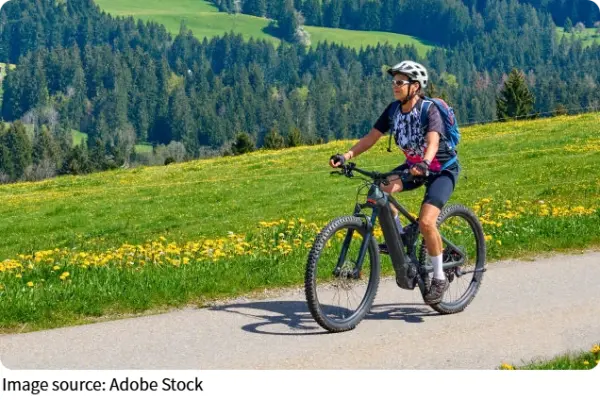
Outdoor cycling skills are essential for riding safely and confidently in real-world conditions. By mastering balance, awareness, and proper road handling, cyclists can navigate different terrains and traffic situations more effectively. With practice, these skills not only improve performance but also make every ride smoother, safer, and more enjoyable.