Highway Motorcycle Mastery

Camille Dubois
| 01-07-2026
 · Automobile team
The first time you roll onto a wide, open highway, everything feels amplified. The wind pushes harder, traffic moves faster, and small mistakes feel bigger.
It's not fear—it's awareness kicking in. Highway riding isn't about being brave. It's about building habits that keep you calm, predictable, and ready for what comes next.
Prepare Before You Merge
Highway safety starts before you touch the on-ramp. Preparation reduces surprises and gives you time to think instead of react.
1. Do a quick body and bike check. Relax your shoulders, keep your grip light, and make sure mirrors are clean and properly angled. A stiff posture leads to fatigue fast.
2. Scan traffic early. Look for gaps well before the merge point. Pick a spot and commit, rather than hesitating at the last second.
3. Match speed smoothly. Accelerate firmly but steadily so you enter traffic at a similar pace.
Actionable example: As you approach the ramp, pick a vehicle two or three lengths ahead in the right lane. Adjust your speed to slide in behind it without forcing others to brake. The goal is Less stress for everyone involved.
Hold a Visible Lane Position
On highways, being seen matters as much as seeing others. Lane position isn't fixed—it's a tool.
1. Stay out of blind spots. If you can't see a driver's face in their mirror, they probably can't see you.
2. Use lane thirds. The left third improves visibility ahead, the center keeps you predictable, and the right third creates space from faster traffic.
3. Adjust for conditions. Shift position when passing large vehicles or when crosswinds pick up.
Actionable example: When riding behind a car, position yourself slightly left of center so your headlight shows clearly in their mirror. That small move often prevents sudden lane changes, leading to Better focus over long distances.
Manage Speed With Intention
Highway riding isn't about pushing limits. It's about choosing a pace that gives you options.
1. Keep a time-based following gap. Aim for at least two seconds in light traffic and more when visibility drops.
2. Roll on, don't snap. Smooth throttle inputs help the bike stay stable and keep your line clean.
3. Use engine braking wisely. It helps control speed without startling drivers behind you.
Actionable example: Pick a roadside marker and count “one-thousand-one, one-thousand-two” as the vehicle ahead passes it. If you reach the marker too soon, ease off slightly. This habit builds Deeper sleep later because you arrive less tense.
Read Traffic Patterns Early
Highways reward riders who think a few seconds ahead. Traffic rarely changes without warning.
1. Watch wheels, not just signals. Tires tell you where a vehicle is about to go.
2. Notice clusters. Tight groups often slow suddenly; open spaces are safer.
3. Expect merges near exits. Vehicles drift before signs appear.
Actionable example: If you see brake lights ripple three cars ahead, cover your controls and ease off early. That buffer often lets you avoid hard braking altogether.
Stay Sharp on Long Rides
Fatigue is subtle and dangerous at speed. Staying sharp is an active process.
1. Take regular breaks. Even five minutes off the bike helps reset your senses.
2. Hydrate consistently. Dry air and wind pull moisture faster than you think.
3. Change posture occasionally. Small shifts keep circulation flowing.
Actionable example: Set a mental timer for every 60–90 minutes. When it rings, plan the next safe stop. You'll ride straighter and react faster afterward.
Handle Weather and Wind Calmly
Highways expose you to the elements. The key is adjustment, not resistance.
1. Lean into gusts gently. Let the bike move instead of fighting it.
2. Increase following distance in rain. Traction and visibility both drop.
3. Avoid painted lines when wet. They're slicker than regular pavement.
Actionable example: When strong wind hits from the side, press lightly on the handlebar toward the wind. This stabilizes the bike without sudden movements.
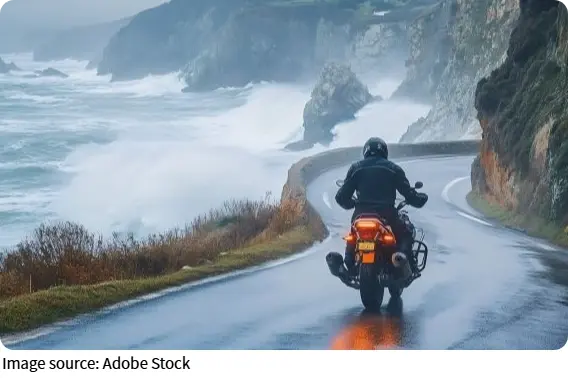
Highway riding becomes enjoyable when it feels predictable. The speed fades into the background, and what's left is flow. Build these habits one ride at a time, and the highway stops feeling like a test. It becomes just another road you know how to handle—calmly, smoothly, and on your own terms.