Pit Stop Speed

Mariana Silva
| 30-06-2026
 · Automobile team
When we watch a Formula 1 race, it often feels like the action is all about speed on the track. But there is a hidden moment that can change everything in just a few seconds—the pit stop.
In this short but intense phase, teamwork, timing, and precision come together in a way that can decide race positions. Let’s explore this fast-moving world and see why tire changes matter so much.
Tires: The Only Contact With the Track
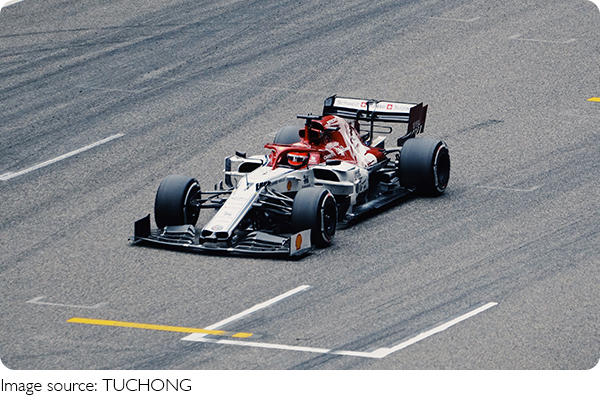
In Formula 1 racing, tires are the only part of the car that touches the road. This small connection carries extreme pressure. Cars can reach speeds of around 350 km/h and handle strong cornering forces up to 4G.
Because of this, tires are not just equipment—they are performance tools. A small change in grip can affect lap times, control, and overall race strategy.
Different Tires for Different Moments
We usually divide Formula 1 tires into two main groups: dry-condition tires and wet-condition tires.
- Dry tires come in several performance levels. Softer versions provide stronger grip but wear out faster. Harder versions last longer but offer slightly less immediate speed.
- Wet-condition tires are designed for rainy surfaces. They help push water away and keep the car stable when the track becomes slippery.
Choosing the right tire is not only about speed—it is about reading the race conditions at the right moment.
Race Tires Compared to Everyday Tires
At first glance, race tires and everyday car tires may look similar, but their goals are very different.
Everyday tires are built for long-lasting use, often covering tens of thousands of kilometers. Formula 1 tires, however, are designed for extreme performance over a very short distance, usually around 200 kilometers or even less.
Some high-performance soft tires may lose peak efficiency much sooner. In a full race distance of about 300 kilometers, tire changes are almost always required to keep performance at the highest level.
Why Tire Wear Shapes Race Strategy
As tires wear down, grip decreases and lap times slowly increase. This creates a key decision point for teams: when is the best moment to switch?
If a team stops too early, they may lose time due to unnecessary tire use. If they stop too late, the car may become slower and lose positions on the track. This timing decision is one of the most important parts of race strategy. A well-planned tire change can create opportunities to pass competitors or defend a position more effectively.
How a Pit Stop Happens Step by Step
A modern Formula 1 pit stop is a highly coordinated operation:
- First, the car enters the pit lane and stops at a precise position.
- Next, the crew prepares lifting tools and wheel equipment in seconds.
- Then, the wheel locks are removed, and worn tires are taken off quickly.
- At the same time, the car is lifted slightly so new tires can be fitted immediately.
- After installation, tire pressure is checked and adjusted based on track conditions.
- Finally, once everything is confirmed, the car is released back onto the track at full speed.
Each movement is carefully timed so that the entire process takes only a few seconds.
From Slow Changes to Lightning Speed
In the early days of motorsport, pit stops were much slower. Teams relied on basic tools and manual effort, and a single tire change could take over a minute. There were no advanced pneumatic tools or highly synchronized systems. Every step depended on physical strength and careful coordination.
Over time, technology, training, and teamwork transformed pit stops into one of the fastest operations in modern sports.
Modern Pit Stops and Strategy Impact
Today, top Formula 1 teams can complete a tire change in around 2 to 3 seconds. This incredible speed has changed how races are planned and executed.
Fast pit stops allow teams to use strategies where a driver gains advantage by stopping at the perfect moment. It can also help a driver return to a clearer track space, avoiding traffic and maintaining better pace. Even fractions of a second can influence race positions, especially on tracks where overtaking is difficult.
Why Every Second Matters on Race Day
In Formula 1, we often think only about lap speed, but pit stop timing is just as important. A small delay or a perfectly executed stop can shift the balance of an entire race.
Teams spend countless hours practicing to make sure every movement is precise. Drivers also rely on these moments to gain or protect positions. It is a reminder that racing is not only about driving—it is about teamwork under extreme pressure.
Precision in Just a Few Seconds
Lykkers, Formula 1 pit stops show us something unique: success can depend on actions completed in just a few seconds. Behind every fast tire change is a team working in perfect rhythm, combining skill, timing, and focus.
As racing continues to evolve, pit stops may become even faster and more refined. But one idea will always remain the same—every second counts.
What do you think plays a bigger role in racing success: the driver’s performance on the track or the team’s precision in the pit lane?