Caramel Pudding Bliss

Raghu Yadav
| 06-07-2026
 · Cate team
Hello, Lykkers! Have you ever wondered why caramel pudding is such a popular dessert around the world? Its silky texture, creamy flavor, and glossy layer of golden caramel make every bite satisfying.
Unlike many desserts that require complicated techniques, caramel pudding uses simple ingredients that are easy to find in most kitchens.
Today, we'll make this classic dessert together from start to finish. We'll begin by preparing the caramel, then make a smooth pudding mixture, bake it gently in a water bath, and finish with a beautifully glossy pudding that melts in your mouth. Follow each step carefully, and you'll have a delicious homemade dessert that's perfect for sharing.
Ingredients (Makes 6 Servings)
For the Caramel
- 45 g granulated sugar
- 30 g hot water
For the Pudding
- 460 g whole milk
- 40 g heavy cream
- 65–70 g granulated sugar
- 1 teaspoon vanilla extract
- 3 large eggs (about 150 g without shells)
- 2 egg yolks (about 40–45 g)
Optional Garnishes
- Fresh strawberries
- Blueberries
- Kiwi slices
- Mango cubes
- Orange segments
- Mint leaves
Equipment
- 6 pudding molds or ramekins (about 200 ml each)
- Fine mesh sieve
- Small saucepan
- Mixing bowl
- Whisk
- Deep baking tray
- Oven
Step 1: Prepare the Caramel
- Place 45 g granulated sugar into a clean small saucepan.
- Heat over medium heat.
- Stir gently only until the sugar begins to melt.
- Once the sugar becomes syrup-like, stop stirring and let it continue cooking naturally.
- Watch the color carefully. When it changes to a rich amber color, reduce the heat.
- Carefully add 30 g hot water while stirring quickly. The caramel will bubble strongly, so pour the water in slowly.
- Continue stirring until the caramel becomes smooth.
- Immediately divide the caramel evenly among the six pudding molds, coating the bottom of each mold.
- Set the molds aside while preparing the pudding mixture.
Tip: Don't cook the caramel until it becomes very dark, or the flavor may become too strong.
Step 2: Prepare the Egg Mixture
- Add 3 large eggs to a mixing bowl.
- Add 2 egg yolks.
- Use a whisk to stir gently until fully combined.
- Avoid whisking too quickly, as this creates bubbles that can affect the pudding's smooth texture.
The goal is to combine the eggs without making the mixture foamy.
Step 3: Heat the Milk Mixture
- Pour 460 g whole milk into a saucepan.
- Add 40 g heavy cream.
- Add 65–70 g granulated sugar.
- Stir in 1 teaspoon vanilla extract.
- Heat over low to medium heat while stirring occasionally.
- Continue heating until all the sugar has dissolved completely.
- Remove from the heat before the mixture begins to boil.
- Let it cool slightly until it reaches about 104°F (40°C). It should feel warm but comfortable to touch.
This temperature helps prevent the eggs from cooking too quickly.
Step 4: Combine Everything
- Slowly pour the warm milk mixture into the egg mixture.
- Pour a little at a time while gently stirring continuously.
- Continue until all the milk has been added.
- Stir slowly until the mixture looks completely smooth and evenly blended.
Taking your time during this step helps create a silky pudding.
Step 5: Strain the Mixture
- Place a fine mesh sieve over a clean bowl.
- Pour the pudding mixture through the sieve.
- Repeat the process a second time.
Double straining removes tiny egg bits and creates an exceptionally smooth texture.
Step 6: Fill the Molds
- Carefully pour the strained pudding mixture into each caramel-lined mold.
- Fill each mold to about 90% full.
- If small bubbles appear on the surface, gently remove them with a spoon or toothpick.
A smooth surface gives the finished pudding a beautiful appearance.
Step 7: Bake Using a Water Bath
- Place all the filled molds inside a deep baking tray.
- Pour warm water into the tray until it reaches about 1.5 cm (0.6 inch) up the sides of the molds.
- Carefully transfer the tray into a preheated oven.
- Bake at 285°F (140°C) for 60–70 minutes.
The pudding is ready when:
- The edges are firm.
- The center still has a slight jiggle when gently shaken.
The water bath keeps the temperature even and helps create the signature creamy texture.
Step 8: Cool and Chill
- Remove the baking tray from the oven.
- Carefully lift the pudding molds out of the warm water.
- Let them cool completely at room temperature.
- Cover each mold with plastic wrap or a lid.
- Refrigerate for at least 4 hours, although overnight chilling gives the best texture.
Cooling slowly allows the pudding to fully set.
Step 9: Unmold and Decorate
- Run a thin spatula or small offset spatula around the edge of the mold.
- Place a serving plate upside down over the mold.
- Hold both firmly and flip them over.
- Lift the mold slowly.
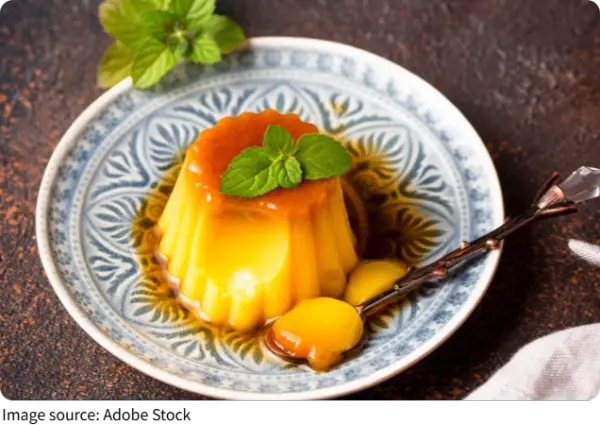
- The caramel sauce will flow naturally over the pudding.
Decorate with fresh strawberries, blueberries, kiwi, mango, orange segments, or mint leaves for extra color and freshness.
Helpful Tips for Success
- Measure every ingredient accurately.
- Mix gently throughout the recipe to reduce bubbles.
- Strain the mixture twice for the smoothest result.
- Avoid boiling the milk mixture.
- Bake with warm water instead of hot water.
- Refrigerate long enough before serving.
- Use pudding molds of similar size so they bake evenly.
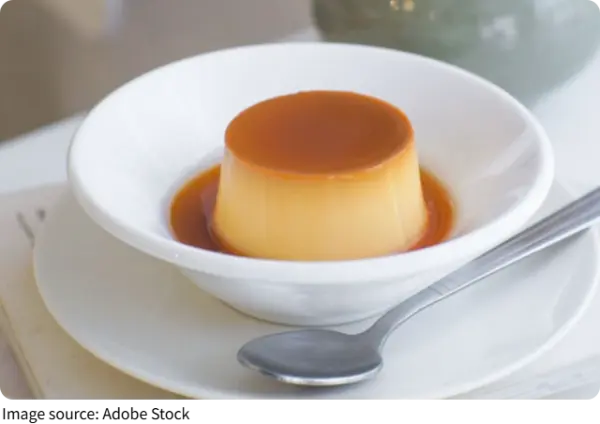
Lykkers, homemade caramel pudding is proof that simple ingredients can become an elegant dessert with just a little care. The rich caramel sauce, creamy custard, and silky texture make every spoonful enjoyable. Once you've mastered this classic recipe, you can also try decorating it with seasonal fruit to create your own version.
Caramel Custard Pudding [Best Recipe]
Video by Nino's Home