AI Drives the Road

Priya
| 21-07-2026
 · Automobile team
Hi, Readers! Cars are no longer just shiny metal boxes with wheels and a steering wheel. They are turning into rolling computers, like smartphones that learned how to wear tires.
Artificial intelligence is changing the car industry from the factory floor to the driver’s seat, and the shift is big enough to make the old-school garage look like a toolbox from another era.
From self-driving systems to smarter manufacturing, AI is helping vehicles see, learn, react, and even predict trouble before it shows up.
Smarter Cars on the Road
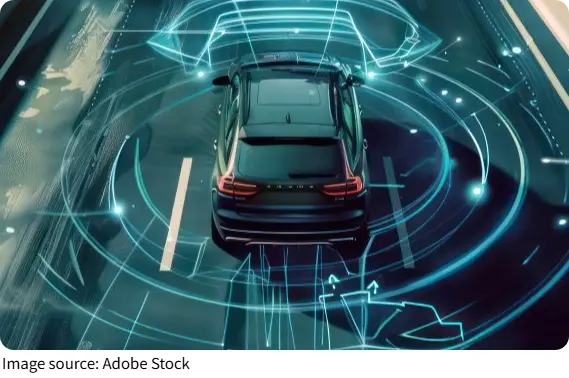
One of the biggest ways AI is changing the automotive world is through autonomous driving technology. Autonomous cars use sensors, cameras, radar, lidar, and software to understand their surroundings. AI processes this flood of information in real time, spotting lanes, traffic signs, other vehicles, and pedestrians.
In simple terms, it is like giving a car a set of eyes, a memory, and a fast-thinking brain all at once. These systems can assist with steering, braking, parking, and maintaining safe distance from other vehicles.
Even in cars that are not fully self-driving, AI already powers features such as lane-keeping assistance, adaptive cruise control, automatic parking, and collision avoidance.
Safety Gets a Major Upgrade
AI is also making cars safer. Traditional safety systems follow fixed rules, but AI-based systems can improve by learning from huge amounts of driving data. That means they can better recognize risky situations and respond more quickly.
Driver monitoring systems can detect signs of drowsiness or distraction by tracking eye movement, head position, and driving behavior. Some systems can warn the driver or take limited action if needed. Predictive maintenance is another useful shift.
AI can analyze data from vehicle parts and detect patterns that suggest a problem may be coming, helping owners fix issues before they become expensive surprises on the side of the road.
Factories Get Brainier Too
The transformation is not only happening on highways. AI is changing how cars are designed and built. In manufacturing, AI helps automate quality checks, optimize supply chains, and improve production efficiency. Computer vision systems can inspect parts for defects with more consistency than manual checks. AI tools can also forecast demand, manage inventory, and reduce delays in production.
It is a bit like having a super-organized assistant in the factory who never loses the clipboard and never forgets what needs to arrive next. This can lower costs, reduce waste, and speed up development cycles.
A More Personal Driving Experience
AI is making cars more personalized as well. Infotainment systems can learn driver preferences for navigation, music, climate control, and seat settings. Voice assistants and smart interfaces make it easier to interact with the vehicle without taking too much attention off the road. Navigation systems powered by AI can analyze traffic patterns and suggest more efficient routes.
In electric vehicles, AI can also help manage battery performance, estimate driving range more accurately, and locate charging stations. All of this turns the car into something less like a machine you operate and more like a travel companion that starts to know your habits.
Big Challenges Still Ride Along
Of course, the road is not perfectly smooth. AI in cars brings challenges related to safety validation, regulation, data privacy, cybersecurity, and public trust. Self-driving systems must handle complex real-world conditions, and even advanced driver assistance features need careful testing and clear limits.
Questions also remain about responsibility when automated systems make mistakes. For manufacturers, developing and maintaining these technologies requires large investments and constant updates. So while AI is exciting, it is not magic glitter sprinkled on a dashboard. It needs careful engineering, reliable data, and thoughtful rules to work well.
AI is changing the automotive industry in ways that touch nearly every corner of it, from how cars are built to how they drive and protect people. The journey is still unfolding, but one thing is clear: vehicles are getting smarter, factories are getting sharper, and the driving experience is being rewritten line by line.
If you look at your car now and feel like it is becoming a tech buddy on wheels, you are not wrong.