Beating The Extremes

Declan Kennedy
| 03-08-2026
 · Animal team
Hi, Readers! Packing an entire winter's worth of gear into one small carry-on sounds impossible right up until a practiced traveler shows you exactly what fits when nothing is wasted.
Animals living through brutal cold or blistering heat manage something similar, evolution has packed remarkably efficient survival tools into bodies with no spare room to waste.
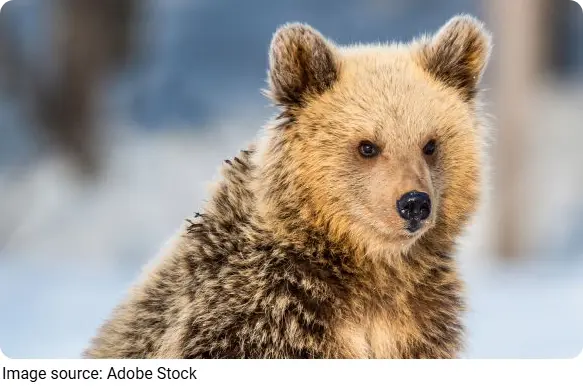
How the cold specialists get through winter
Thick layers of fur or a heavier build provide the most obvious defense, insulating a body against temperatures that would be lethal to an unprotected mammal within hours. Wood frogs take a stranger approach entirely, tolerating the freezing of up to two-thirds of their total body water by producing a natural antifreeze made of glucose and urea that keeps their cells from rupturing as ice forms around them.
Come spring, the frog simply thaws out and resumes normal function, a level of physiological tolerance that would end almost any other vertebrate outright. Many smaller mammals skip the exposure problem altogether by heading underground, meerkats, prairie dogs, and desert tortoises all dig extensive tunnel networks that stay far more stable in temperature than the surface above them ever does.
How the heat specialists avoid overheating instead
Desert-adapted animals face the opposite problem and solve it just as creatively. Some species reabsorb moisture from their own exhaled breath before it escapes, conserving water that would otherwise be lost with every single breath taken in punishing dry heat. Pale coloring helps too, certain desert reptiles have skin that reflects sunlight rather than absorbing it, reducing how much heat their bodies take on in the first place.
Behavioral timing matters just as much as any physical trait, plenty of desert species simply become active at dawn, dusk, or after dark, avoiding the most punishing hours of direct sun entirely rather than trying to physically withstand them.
Migration solves the problem differently again, for animals with the mobility to use it. Arctic terns travel thousands of miles every year specifically to chase favorable weather from one pole to the other, essentially refusing to experience winter at all by staying in daylight and mild temperatures nearly year-round.
What happens when the extremes shift faster than expected
Adaptations built up over countless generations assume the climate stays roughly within a predictable range, and when conditions swing further outside that range than usual, even well-adapted species can be caught off guard. Heatwaves that push temperatures past historical norms have been shown to stress species that normally handle heat fine, since their cooling strategies, panting, seeking shade, reducing activity, have limits that a truly extreme event can push past.
Coastal and mountain species face a particular squeeze, since they often can't simply move further in the direction that would help, a mountain-dwelling species already living near a peak has nowhere higher left to climb as temperatures rise below it. Researchers tracking these shifts have found that behavioral flexibility, a willingness to shift activity to cooler hours or relocate short distances, often matters more for near-term survival than any single physical trait, since evolution itself works far too slowly to keep pace with rapid swings in weather patterns happening within a single generation.
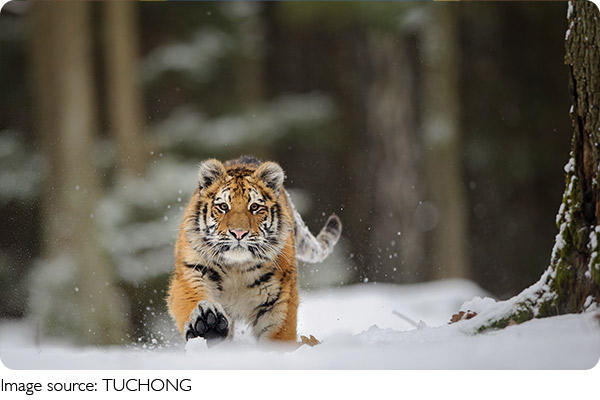
So the next brutal heat wave or cold snap that makes headlines, some creature nearby has almost certainly already solved that exact problem, quietly, using tools that took millions of years to pack into a body built for exactly this kind of extreme.