Smart Driving's Next Leap

Lucas Schneider
| 05-08-2026
 · Automobile team
Hi, Friends! If someone told you ten years ago that cars would drive themselves through city traffic like a pro, you'd have laughed into your coffee.
Well, buckle up, because intelligent driving has officially entered a new phase, and things are moving faster than a sports car on an empty highway.
From Assistance to Autonomy
For years, smart driving features were basically the car equivalent of training wheels. Lane-keeping assist, automatic braking, and adaptive cruise control were helpful, sure, but the human driver was still very much the captain of the ship. Now, the industry is shifting toward higher levels of autonomy, where the vehicle itself handles navigation, obstacle detection, and decision-making with minimal human input.
Think of it less like a helpful co-pilot and more like handing the whole cockpit over to a very calm, very focused robot who has never once tailgated anyone.
China's domestic automakers and tech companies have been racing to push their intelligent driving systems to the next level, with several brands rolling out features that allow hands-free driving on highways and even in complex urban environments. The competition is fierce, the technology is advancing rapidly, and the finish line keeps moving.
The Tech Behind the Wheel
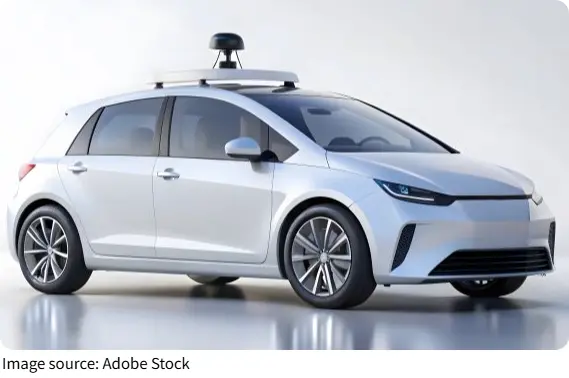
What makes this new phase different from earlier attempts? A lot of it comes down to the brains of the operation. Modern intelligent driving systems are powered by high-performance chips, more sophisticated sensors including LiDAR, cameras, and radar working together like a well-rehearsed band, and artificial intelligence that learns from billions of miles of real-world driving data. It is less about following a rigid set of rules and more about the system developing something that looks suspiciously like judgment.
Large language models and end-to-end AI architectures are also being integrated, allowing vehicles to process complex, unpredictable scenarios in real time. Essentially, the car is getting smarter in the same way a new employee goes from following the manual to actually understanding why the manual exists.
City Roads Are the Real Test
Highway driving is one thing. City driving, with its pedestrians darting out, cyclists doing their own thing, and intersections that seem designed by someone who enjoyed chaos, is a completely different challenge. The new frontier for intelligent driving is navigating urban environments without a human constantly hovering over the controls.
Several companies are now testing and even commercializing fully driverless robotaxi services in select cities, which is both thrilling and the kind of thing that makes traditional cab drivers raise an eyebrow.
The goal is what industry insiders call "city NOA," or city-level Navigate on Autopilot, where the vehicle can handle door-to-door journeys in dense urban settings. Getting there requires not just better technology but also enormous amounts of local map data, real-time cloud connectivity, and regulatory frameworks that can keep pace with innovation.

What the Road Ahead Looks Like
The trajectory points toward a future where owning a car that cannot drive itself will feel as outdated as owning a phone that cannot connect to the internet. Automakers are increasingly treating intelligent driving not as a premium add-on but as a core feature, built in from the ground up.
The business model is also evolving, with companies exploring subscription-based software upgrades that let vehicles improve over time, like a smartphone that gets genuinely better with each update rather than just more storage-hungry.
Infrastructure will also need to catch up. Smart roads, vehicle-to-everything communication systems, and updated traffic management networks are all part of the bigger picture. The car is not just getting smarter in isolation. It is becoming one node in a much larger, connected ecosystem.
Ultimately, intelligent driving is shaping up to be one of the most transformative shifts in transportation since the invention of the automobile itself. It is messy, exciting, and full of unanswered questions, which honestly makes it the most interesting ride around.
So next time you are stuck in traffic, just remember: somewhere out there, a car is learning how to handle exactly this situation, and it is doing it without even grumbling. That alone might be the most impressive part.