Europe for Digital Nomads

Pardeep Singh
| 18-08-2026
 · Travel team
Choosing a European base for remote work is no longer just about cheap rent and reliable Wi-Fi. Visa rules, healthcare, coworking options, safety and everyday costs can determine whether a long stay feels easy or turns into months of paperwork.
A 2026 comparison of 40 European countries placed Estonia, Iceland, Portugal, Montenegro and Croatia among the strongest choices. But the ranking only tells part of the story. For anyone planning an actual move, practical differences matter far more than a position on a list.
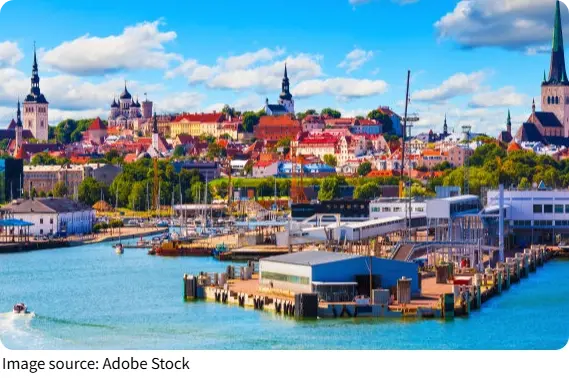
1. Estonia: Best All-Round Choice
Estonia combines strong digital infrastructure, relatively manageable costs and government services designed around online access.
Tallinn is the obvious base for coworking spaces, cafés and international networking, while Tartu offers a quieter atmosphere and generally lower expenses.
Estonia also provides a route for remote workers through its long-stay D visa. Applicants need to prove sufficient income, currently calculated at €132 per day, or €3,960 per month.
The country is also known for e-Residency, but this does not provide the right to live in Estonia. It is mainly a digital identity that allows people to manage an Estonian company online.
Best base: Tallinn for networking, Tartu for a calmer stay.
Daily budget: around €45–70 excluding accommodation.
2. Iceland: Excellent but Expensive
Iceland performs well for internet connectivity, safety and remote-working infrastructure, but costs are the major drawback.
Reykjavík has coworking spaces, reliable internet and plenty of cafés, yet accommodation, restaurants and groceries can quickly become expensive.
Its strongest advantage is lifestyle. Weekends can be spent exploring waterfalls, geothermal landscapes and volcanic scenery that few other destinations can match.
It is therefore better suited to remote workers with higher incomes who value nature and stability more than keeping expenses low.
Best base: Reykjavík.
Daily budget: roughly €80–120 excluding accommodation.
3. Portugal: Best for Community
Portugal remains one of Europe’s most established destinations for remote work.
Lisbon has the largest international community and extensive coworking options, although rising housing costs make it less attractive for tighter budgets. Porto offers a slightly calmer city experience, while Madeira has developed its own remote-working scene.
English is commonly used in areas popular with international visitors, public transport is practical in major cities and the climate makes outdoor life possible during much of the year.
Portugal works particularly well for people who want networking, social events and an established nomad community rather than simply a quiet place with good internet.
Best bases: Lisbon for networking, Porto for a smaller-city atmosphere, Madeira for island life.
Daily budget: around €50–80 excluding accommodation.
4. Montenegro: Best for Long Stays
Montenegro is particularly interesting for remote workers who want to remain close to the EU without necessarily living inside it.
The country has an official digital-nomad residence programme. A permit can be granted for up to two years and extended for up to another two years, making it one of the more generous long-stay options in the region.
Podgorica is the most practical year-round base, with coworking spaces and lower seasonal pressure. Kotor and Budva offer far more dramatic scenery but become noticeably busier and more expensive during summer.
Entry requirements should always be checked according to nationality before travelling.
Best bases: Podgorica for work, Kotor for scenery.
Daily budget: roughly €35–60 excluding accommodation.
5. Croatia: Coast and Infrastructure
Croatia combines Adriatic living with established infrastructure and a formal residence category for digital nomads.
Qualifying third-country nationals can receive temporary digital-nomad residence for up to 18 months.
Split and Dubrovnik are attractive but can become expensive during peak summer. Zagreb offers better year-round value, while Zadar provides a useful compromise between coastal life and lower costs.
Because Croatia belongs to the Schengen Area, anyone planning a longer stay should understand how residence permission interacts with normal Schengen short-stay rules rather than relying on tourist status alone.
Best bases: Zagreb for year-round living, Split or Zadar for the coast.
Daily budget: around €45–75 excluding accommodation.
Croatia
Other Strong Options
Slovenia, Czechia, Spain, Lithuania and Romania also ranked highly.
Spain offers large international communities but higher costs in cities such as Barcelona and Madrid. Lithuania combines strong digital infrastructure with relatively moderate expenses, while Romania can provide excellent value in Bucharest, Cluj-Napoca and Brașov.
The right choice depends less on whether a country ranks sixth or ninth and more on what you actually want from everyday life.

Why Some Countries Rank Lower
Ireland, Switzerland, Belarus, Bosnia and Herzegovina and France appeared near the bottom of the comparison, but this does not automatically mean they are poor remote-work destinations.
In several cases, the lower result reflects the lack of a dedicated digital-nomad visa rather than weak infrastructure.
Switzerland, for example, offers excellent connectivity but high living costs and no simple nomad route. France has strong transport, healthcare and internet infrastructure but no dedicated visa marketed specifically for this type of worker.
A country can therefore be excellent for remote work while remaining inconvenient for a long-term move.
Before booking an apartment for several months, start with immigration rules.
Check whether your nationality qualifies, how much income you need to prove, what health insurance is required and whether your stay may create tax obligations.
Then compare rent outside peak season, coworking memberships, climate, flight connections and whether you would genuinely enjoy living in that city for months rather than visiting for a weekend.
Estonia offers one of the strongest overall packages, Portugal stands out for community, Montenegro for longer stays and Croatia for combining formal remote-work residence with coastal living.
The best destination is not necessarily the cheapest. It is the one where visa rules, budget and everyday lifestyle fit together.