Senior Blood Pressure Guide

Elena Rossi
| 21-08-2026
 · News team
Regular blood pressure checks are an important part of healthcare for older adults.
High blood pressure often causes no noticeable symptoms, so routine measurements can help identify changes early and provide useful information for healthcare decisions.
Learning how to measure blood pressure correctly can also make home readings more consistent and useful.
Understanding Blood Pressure
Blood pressure measures the force of blood against the walls of the arteries. A reading contains two numbers:
- Systolic pressure: the top number, measured when the heart contracts.
- Diastolic pressure: the bottom number, measured when the heart relaxes between beats.
A blood pressure reading should be considered in context. Healthcare professionals may look at previous measurements, overall health, medications, and other individual factors rather than relying on one reading alone.
Why Regular Checks Matter
Blood pressure can change over time and may vary with activity, stress, illness, medications, and other everyday factors. Regular measurements can help reveal patterns and provide a clearer picture of blood pressure management.
“Measuring your blood pressure is the only way to know whether you have high blood pressure.” — Centers for Disease Control and Prevention.
For older adults who monitor at home, keeping organized records can also provide useful information during healthcare appointments.
Preparing for an Accurate Reading
Small changes in preparation and body position can affect a blood pressure measurement. For a more reliable reading:
- Rest quietly for at least five minutes beforehand.
- Sit with your back supported and feet flat on the floor.
- Keep your legs uncrossed.
- Support your arm on a flat surface with the upper arm at heart level.
- Place the cuff on bare skin rather than over clothing.
- Use a cuff that fits correctly.
- Avoid talking or moving during the measurement.
- Avoid exercise and caffeinated drinks for at least 30 minutes beforehand.
- Empty your bladder before measuring.
Take two readings at least one minute apart and record the results. Using the same technique each time can make it easier to compare measurements over time.

Monitoring Blood Pressure at Home
Some older adults may be advised to monitor their blood pressure at home. A validated upper-arm monitor can provide useful measurements when it is used according to its instructions and with proper positioning.
Keep a simple record that includes the date, time, and readings. Follow the monitoring schedule recommended by a healthcare professional rather than checking randomly or changing the schedule based on individual readings.
It can also be useful to bring the home monitor to a healthcare appointment so its measurements can be compared with clinical equipment.
How Often Should Seniors Check?
There is no single schedule that applies to every senior. Some people may only need blood pressure measurements during routine healthcare visits, while others may be advised to monitor at home more regularly.
The appropriate frequency depends on individual circumstances, including previous readings, medications, and healthcare needs. Following a healthcare professional's recommended schedule helps ensure that monitoring is appropriate for each person.
When to Seek Medical Advice
One elevated reading does not necessarily mean that blood pressure is consistently high. If a reading is higher than 180/120 mm Hg, wait at least one minute and measure it again.
If the second reading remains above 180/120 mm Hg without concerning symptoms, contact a healthcare professional promptly for guidance.
If a reading above 180/120 mm Hg is accompanied by chest pain, shortness of breath, back pain, numbness, weakness, vision changes, or difficulty speaking, seek emergency medical attention.
Do not stop, skip, or change prescribed blood pressure medication because of a home reading. Any treatment changes should be discussed with a healthcare professional.
Making Monitoring Easier
A simple routine can make blood pressure monitoring easier to maintain. Keep the monitor somewhere convenient, use the same measurement technique, and record results immediately after checking.
Looking at several readings over time can provide more useful information than focusing on a single measurement. Bringing organized records to healthcare appointments can also help support informed discussions about ongoing care.
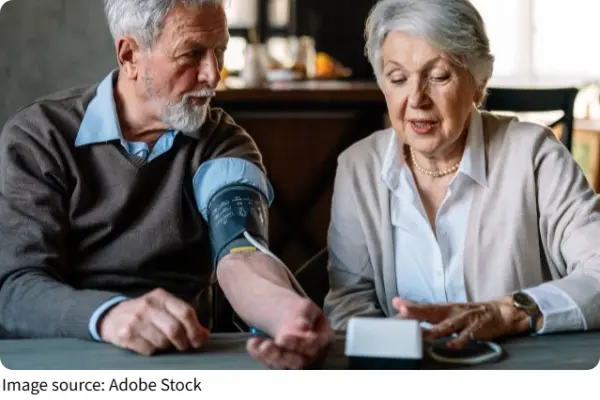
Regular blood pressure checks can be a simple part of healthy aging. Accurate preparation, consistent measurement, appropriate home monitoring, and professional guidance can help older adults better understand their readings and support effective long-term blood pressure management.