Kids’ Dental Care Guide

Mariana Silva
| 21-08-2026
 · News team
A well-planned kids’ dental care routine helps children establish daily habits that support healthy teeth and gums as they grow.
Regular brushing, appropriate fluoride toothpaste, effective technique, and routine dental visits provide a practical foundation for preventive care.
When these practices become part of a predictable schedule, children can gradually develop the skills and confidence needed to care for their teeth independently.
Why Children’s Dental Hygiene Matters
Tooth decay can develop after the first teeth appear. Consistent brushing with fluoride toothpaste helps remove plaque and provides fluoride protection that reduces the risk of cavities. Early dental care also gives dental professionals an opportunity to monitor development and provide personalized preventive guidance.
Step 1: Choose a Suitable Toothbrush
Select a toothbrush with soft bristles and a small head designed to fit comfortably in the child’s mouth. Both manual and powered toothbrushes can be effective when used correctly.
Replace the toothbrush approximately every three to four months, or sooner if the bristles become worn or frayed.
Step 2: Use the Correct Amount of Fluoride Toothpaste
The amount of toothpaste should be appropriate for the child’s age:
- Under age 3: Apply a smear approximately the size of a grain of rice.
- Ages 3–6: Use no more than a pea-sized amount.
- Children who are still learning to brush: Supervise brushing and encourage them to spit out excess toothpaste rather than swallow it.
- Children younger than 2: Follow individualized advice from a dentist or doctor regarding fluoride toothpaste.
Using the recommended amount provides fluoride benefits while helping limit unnecessary swallowing.
Step 3: Brush Twice a Day
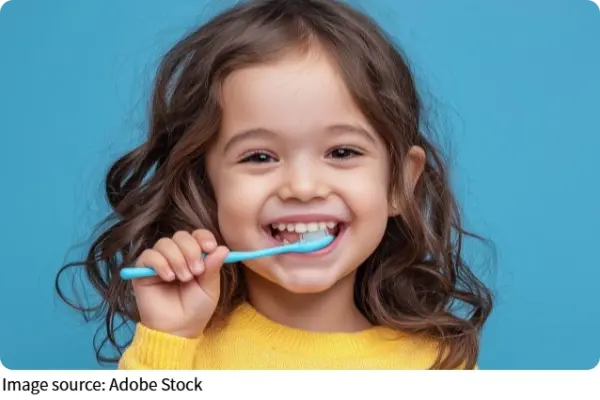
Children should brush twice daily for two minutes, preferably once in the morning and once before bedtime. Keeping brushing at consistent times helps establish a predictable routine.
“The consensus recommendation is for people to brush their teeth for two minutes twice a day with a toothbrush that has soft bristles.” — American Dental Association.
This recommendation directly supports the article’s guidance on brushing frequency, duration, and toothbrush selection.
Step 4: Teach Thorough Brushing
Children should learn to clean all tooth surfaces, including the outer, inner, and chewing surfaces. Encourage gentle movements and careful attention along the gumline.
A two-minute timer can help children understand the recommended brushing duration. Dividing the mouth into sections can also make it easier to clean each area systematically.
Step 5: Provide Assistance Until Skills Develop
Young children may want to brush independently, but effective brushing requires coordination and practice. Encourage children to participate while a parent or caregiver provides assistance when necessary.
Children should receive help until they can brush thoroughly on their own. Younger children should also be supervised while brushing.
Making Dental Care Positive
A calm, consistent approach can help children become comfortable with daily brushing. Parents and caregivers can:
- Let children select an age-appropriate toothbrush.
- Use a simple two-minute timer.
- Keep brushing at consistent times.
- Demonstrate proper brushing techniques.
- Offer positive encouragement for consistent effort.
These strategies can make the routine easier to follow while helping children gradually develop independence.
Cleaning Between Teeth and Regular Dental Visits
When two teeth touch each other, cleaning between them can help remove plaque from areas a toothbrush cannot adequately reach. A dental professional can recommend an appropriate method according to the child’s age and individual needs.
Regular dental visits provide opportunities to monitor dental health and receive preventive guidance. A child should have a first dental visit by the first birthday or within six months after the first tooth appears.
When to Seek Professional Advice
Parents and caregivers should consult a dental professional when a child has persistent tooth discomfort, visible damage, swelling, unusual sensitivity, or other changes affecting the teeth or gums.
Professional guidance is also valuable for children who have an increased risk of cavities or require personalized recommendations regarding fluoride or daily dental care.
An effective kids’ dental care routine is built on a few consistent practices: brushing twice a day with the appropriate amount of fluoride toothpaste, using gentle and thorough techniques, providing assistance while skills develop, cleaning between touching teeth, and maintaining regular dental visits. Establishing these habits early can help children develop the knowledge and confidence to take greater responsibility for their dental health as they grow.