Dolomites, Simply

Nolan O'Connor
| 22-10-2026
 · Travel team
Hello there, readers. You might picture the Dolomites as a postcard: jagged pale rock, green valleys, a cable car gliding up.
And sure, that's there. But the real trick to this place is that you don't need to be a climber or a skier to feel like you've earned it.
You just need a good pair of boots and a willingness to walk uphill for an hour.
The mountains sit in northeastern Italy, straddling the border with Austria, and they're famous for a reason. The rock here is dolomite, a mineral that makes the peaks glow pink at sunset, a show locals call enrosadira. You'll see it best from a high ridge at dusk, when the whole range looks like it's on fire. People build entire trips around that moment, and you should too.
Why visit beyond the photo stops
Most visitors hit the same three spots: Tre Cime di Lavaredo, Lago di Braies, and the Seceda ridgeline. Those are stunning, no question. But they're also packed by 9 a.m., and you'll spend more time queuing for parking than staring at rock. Instead, base yourself in a smaller valley like Val di Funes, where the chapel of Santa Maddalena sits against the Odle peaks. You get the same postcard view with maybe ten other people around, not two hundred.
The real draw is the hut system. Rifugios dot every trail, serving strudel, hearty stew, and chilled refreshment at 2,500 meters. You can walk for days without carrying a tent, just a light pack and a reservation book. That changes everything about how you travel here. You're not fighting the terrain; you're moving through it at a pace that actually lets you look up.
Plan your arrival and first day
Fly into Venice or Verona, then rent a car. The drive from Venice takes about two and a half hours to Cortina d'Ampezzo, and the last stretch winds through a pass called Passo Tre Croci. It's a good introduction: you'll see the Sorapiss massif before you even unpack. Public buses do run, but they're slow and infrequent between valleys. A car is worth the rental cost, around 40 euros a day, just for the flexibility.
Start with an easy warm-up on your first day. Take the chairlift from Colfosco up to the Puez-Odle plateau, then walk the loop back down. It's about 3 hours of gentle descent, and you'll pass the Rifugio Puez with views of the Sella group. If the weather's clear, you'll see why people call this the most walkable mountain range in Europe. The paths are graded, well-marked, and you're never more than an hour from a hut with a toilet and a warm meal.
Dolomites
The classic loop that delivers
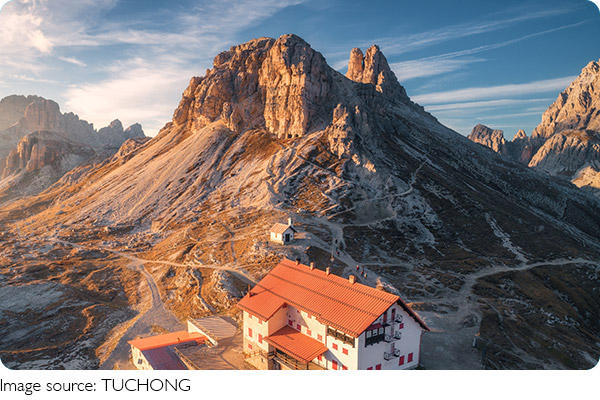
The single best route for a first-time visitor is the Tre Cime circuit, but with a twist. Most people start at the Rifugio Auronzo parking lot and walk clockwise, which means you're always in the shadow of the peaks. Instead, go counterclockwise, starting early, and you'll catch the morning light on the north faces. The full loop is about 10 kilometers and takes 4 to 5 hours, with one short scramble near the Forcella Col di Mezzo. Nothing technical, just a chain to hold onto for a few meters.
You'll pass three huts along the way, so you can travel light. Pack water, a rain shell, and a sandwich; buy lunch at Rifugio Locatelli, where the terrace faces the north wall of Tre Cime directly. That's the moment most people photograph, and for good reason. The rock towers above you, and you're standing in a bowl of scree and alpine flowers, with the sound of wind and the occasional bell from grazing cows below.
Costs and timing that matter
The season runs from mid-June to late September, and that's your window. July and August bring the crowds, but also the most reliable weather. September is the sweet spot: cooler temps, fewer people, and the larches turning gold. A night in a rifugio runs about 60 to 80 euros per person with dinner and breakfast, and you should book months ahead for the popular ones. The cable cars cost 20 to 30 euros per ride, and parking at Tre Cime runs 30 euros per car. Budget around 150 euros a day per person for a comfortable trip, all in.
One practical tip: check the weather the night before and be flexible. Afternoon thunderstorms roll in almost daily in summer, so start every hike by 8 a.m. and plan to be off the ridge by 2 p.m. The locals know this, and you'll see the difference in how smoothly your day goes. A rain jacket is non-negotiable, even when the forecast says clear.
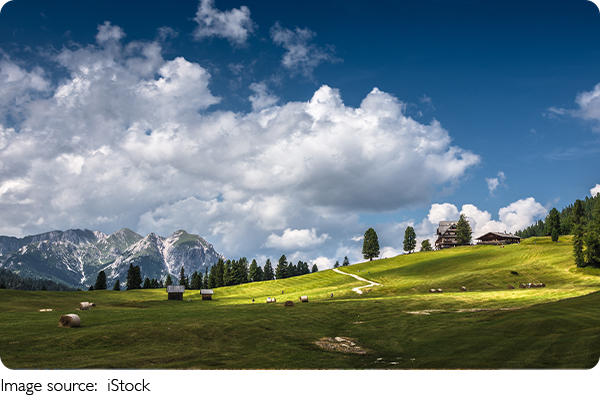
The Dolomites reward you for slowing down. You don't need to conquer anything; you just need to show up, walk a few hours, and let the pale walls do the rest. So next time you're scrolling for a mountain escape, skip the Alps and point your car toward Cortina. The views will still be there, and now you'll know exactly where to stand.