Europe’s Autumn Escapes

Claire
| 10-09-2026
 · Travel team
Autumn can be one of the most rewarding times to travel across Europe. Summer crowds thin out, temperatures become more comfortable and harvest season transforms both landscapes and menus.
Whether you want late sunshine, mountain walks, food festivals or quieter cities, these destinations offer very different reasons to travel between September and November.
Tenerife and the Dodecanese
Tenerife remains one of Europe’s strongest options for autumn sun, with average daytime temperatures around 24°C even in November. Beyond the beaches, walkers can explore the Anaga Mountains, Masca Gorge and Mount Teide, Spain’s highest peak at 3,718m. A return ticket on the Teide cable car currently starts at €42 for non-resident adults.
Greece’s Dodecanese islands are another good choice in early autumn, when the sea remains warm but visitor numbers drop. Rhodes makes the easiest starting point, while Symi, Tilos, Karpathos and Astypalea offer quieter alternatives. Inter-island ferries continue to operate, although services become less frequent as November approaches.
Latvia and Montenegro
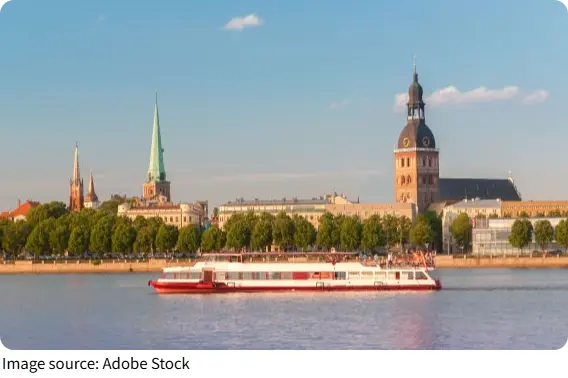
For autumn colour, Latvia is particularly attractive in October. Gauja National Park combines golden forests, river trails and medieval castles, while Ķemeri National Park offers distinctive bog landscapes and excellent seasonal birdwatching.
Montenegro suits travellers who want to keep hiking into late autumn. Durmitor National Park has 48 peaks above 2,000m, while Biogradska Gora combines mountain trails with ancient woodland. Coastal mountains such as Lovćen also offer sweeping Adriatic views, and the sea can remain pleasant for swimming well into October.
Latvia
Seville, Umbria and Burgundy
Seville stays remarkably warm in October, when daytime highs can reach around 26°C. Cooler autumn weather makes exploring the Real Alcázar, cathedral and historic streets far more comfortable than in midsummer. General admission to the Real Alcázar is €15.50, and from October to March it is open from 9:30am to 5pm.
In Umbria, autumn brings mushrooms, chestnuts, lentils, saffron, black truffles and newly pressed olive oil. Towns such as Orvieto, Amelia and Narni are quieter, while Perugia hosts Eurochocolate in November. Staying at an agriturismo is an atmospheric way to experience the harvest season.
Burgundy, meanwhile, combines grape harvests with cycling. The Tour de Bourgogne includes around 800km of greenways, canal paths and quiet roads. A shorter option is the 22km Voie des Vignes between Beaune and Santenay.
Copenhagen, Scotland and Malta
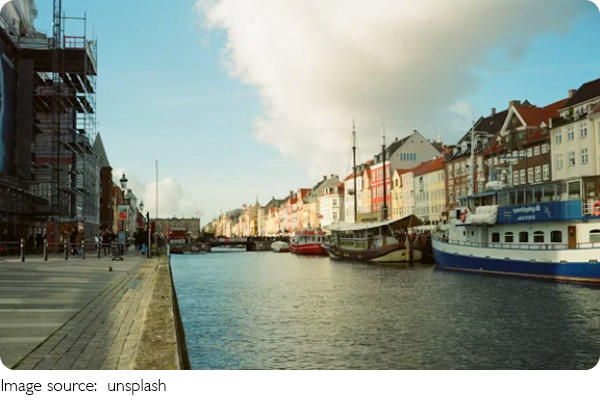
Copenhagen is ideal for autumn food and culture, from Torvehallerne market to museums and seasonal restaurants. Travellers should expect higher costs than in southern Europe, but much of the centre is easily explored on foot or by public transport.
The Scottish Highlands offer misty landscapes, changing foliage and the dramatic red deer rut. Some attractions reduce their hours after September, so checking opening dates in advance is essential.
For a warmer finale, Malta remains around 21°C in November. Valletta, Mdina, Gozo and Comino can be combined with prehistoric sites such as the Ħal Saflieni Hypogeum, where adults admission costs €35 and advance booking is strongly recommended.
Autumn travel in Europe is less about finding one perfect destination than choosing the season you want: lingering Mediterranean warmth, golden forests, mountain trails or harvest-driven food culture. With fewer visitors and more comfortable temperatures, it is often the continent at its most enjoyable.