Rainy Road Safety

Hana
| 09-09-2026
 · Automobile team
When heavy rain arrives, even a familiar road can become difficult to judge. Puddles may hide uneven surfaces, while moving vehicles can create waves that make conditions harder to predict.
For us drivers, the safest approach is not simply to move slowly, but to assess the road carefully and choose a route that reduces unnecessary risk. Lykkers, if we encounter standing water during a journey, a few calm decisions can make a meaningful difference.
Judge the Water Depth
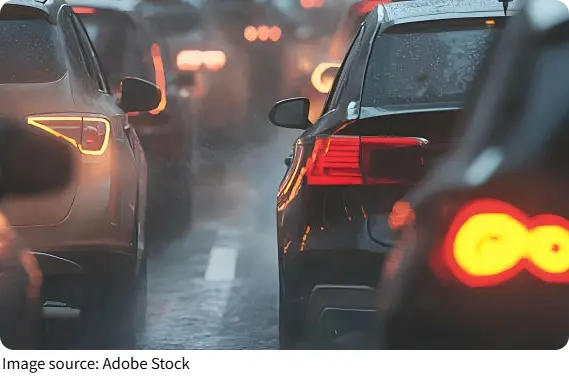
Before entering a flooded section, we should first consider whether it is suitable to cross at all. Water near the lower part of the vehicle can already affect driving stability, while deeper water can reach important mechanical and electrical components.
If the water appears to reach the bumper or around two-thirds of the wheel height, we should avoid entering whenever another route is available. Depth can also be difficult to estimate because submerged potholes, drains, or changes in the road surface may be hidden beneath the water.
Choose a Safe Speed
Speed matters greatly when we drive through standing water. Moving quickly can push a larger amount of water around the vehicle, reducing stability and making it easier for water to reach areas that should remain dry.
A slow, steady pace gives us more time to respond to changes in the road. We should avoid sudden acceleration and abrupt braking. Smooth control helps keep the vehicle predictable and reduces unnecessary movement through the water.
Keep the Vehicle Steady
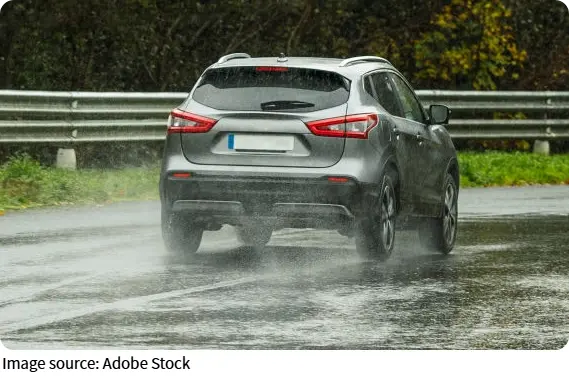
Once we enter shallow standing water, consistency is important. We should maintain a controlled speed rather than making frequent changes to the accelerator or attempting unnecessary gear changes.
If the road is partly covered with water, extra care is needed. When only one side of the vehicle passes through a deeper section, the two sides may have different levels of grip. This imbalance can make the vehicle pull or slide unexpectedly.
For this reason, we should avoid entering water at an angle whenever possible and choose the clearest, most even path available.
Give Larger Vehicles Space
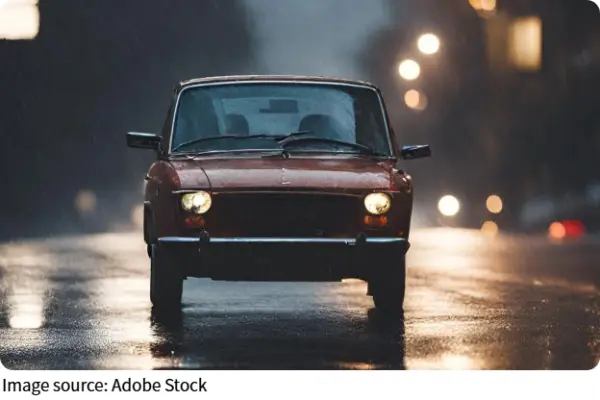
Another vehicle can change the conditions around us in an instant. Larger vehicles may push substantial amounts of water outward as they pass through flooded sections. The resulting waves can reach our vehicle and make visibility and control more difficult.
We should therefore leave plenty of space rather than following closely. If a large vehicle is approaching while we are near standing water, slowing down and allowing it to pass can give us a more comfortable safety margin.
What If the Vehicle Stops?
If the vehicle loses power and stops while crossing water, we should stay calm and avoid trying to restart it repeatedly. Restarting a vehicle after water has entered sensitive mechanical areas can create additional problems.
Instead, we should focus on getting to a safe position and seeking appropriate assistance. If the water level is rising, personal safety should take priority over attempting to protect the vehicle.
Check the Brakes Afterward
Leaving the flooded section does not mean the journey immediately returns to normal. Water may remain on braking components, temporarily reducing braking response.
Once we are on a safer section of road, we can gently apply the brakes several times while maintaining appropriate control. This helps remove moisture and allows us to confirm that braking feels normal again.
We should also pay attention to unusual sounds, warning indicators, or changes in steering and braking. If something feels different, stopping in a safe location for inspection is a sensible choice.
Plan Before Heavy Rain
The best way to handle flooded roads is often to avoid them altogether. Before setting out during periods of intense rainfall, we should check the expected conditions and consider alternative routes.
Low-lying roads, underpasses, bridges, and other areas known to collect water deserve particular attention. If a road has been closed or restricted, we should follow the available directions and choose another route rather than attempting to continue.
Final Thoughts
Driving through standing water requires patience, observation, and smooth control. We should assess water depth, reduce speed, maintain a steady path, leave space around larger vehicles, and avoid unnecessary risks. When conditions become severe, postponing a nonessential journey may be the safest decision.
For us, safe driving in heavy rain is less about getting through quickly and more about recognizing when to slow down, when to stop, and when another route is the better choice.