Thick Oil Wins

Samir
| 11-09-2026
 · Automobile team
Hello, Lykkers! If you own a retro sedan, you already know that keeping it running smoothly takes a little extra care. One of the most important decisions you will make is choosing the right engine oil. Older engines were designed around different oil formulations, and using the wrong product can quietly accelerate wear on critical components.
The good news is that once you understand a few basic principles, the decision becomes much simpler. This guide walks you through what matters most and highlights some reputable brands that cater specifically to classic vehicles.
Why Retro Sedans Need Different Oil
Engines built before the mid-1980s often use flat-tappet camshafts. In this design, lifters slide directly across the camshaft lobes, creating intense friction at a small contact point.
To survive this, these engines rely on an anti-wear additive called ZDDP (zinc dialkyldithiophosphate) to form a protective barrier between metal surfaces. The problem is that modern oils have far less ZDDP than they once did. Emissions regulations introduced limits on zinc and phosphorus because these additives can damage catalytic converters. By the early 2000s, many standard oils contained only around 800 ppm of ZDDP, while older flat-tappet engines were designed for levels closer to 1,200–1,500 ppm. Using a low-ZDDP oil in a classic engine can lead to premature camshaft wear, sometimes without obvious warning until significant damage occurs.
Understanding Viscosity
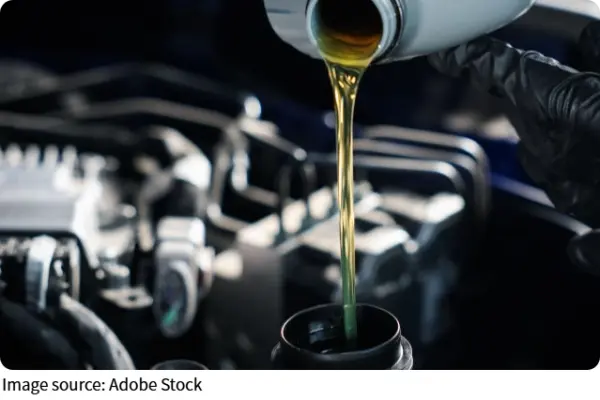
Viscosity refers to how thick or thin the oil is, and it is one of the most important factors in protecting older engines. Classic sedans typically require heavier oils than modern vehicles because their engines have larger clearances and rely more on splash lubrication.
A 20W-50 multigrade oil is a common recommendation for many classic cars built between the 1950s and 1980s. It flows well enough for cold starts while providing a thick protective film at operating temperatures. For older vehicles from the pre-1950s era, monograde oils such as SAE 30 or SAE 40 may be more appropriate.
Always check your owner's manual or consult a specialist if you are unsure. The wrong viscosity can lead to poor oil pressure, increased consumption, or inadequate protection.
Mineral vs. Synthetic
Many classic car owners prefer mineral oils for older engines. These oils are refined from crude oil and contain fewer detergents than modern synthetic blends. High-detergent synthetics can gradually remove built-up residues that older engines have come to rely on for sealing and lubrication, potentially causing leaks or increased wear.
That said, some semi-synthetic options exist for owners who want improved cold-start protection while maintaining compatibility with older engine designs. The key is to choose an oil specifically formulated for classic vehicles rather than a general-purpose modern product.
Recommended Brands
Several reputable brands offer oils designed specifically for classic and vintage engines. Here are some worth considering:
Castrol Classic offers a range of period-correct formulations. Their GTX Classic 10W-40 suits vehicles from 1978 to 1993, while Classic XL20W-50 is ideal for pre-1980 models. Castrol also produces GTX Classic 20W-50 with high zinc content for flat-tappet engines.
Valvoline VR1 Racing Motor Oil is formulated with elevated ZDDP levels, making it a popular choice for classic muscle cars and other vehicles with flat-tappet camshafts.
Motul Classic 20W-50 is a premium mineral oil designed for engines built between 1950 and 1970. It meets period-appropriate specifications while incorporating modern additive technology.
Millers Oils Vintage & Classic range provides period-correct formulations with high ZDDP levels to protect flat-tappet camshafts. Their products are designed to ensure smooth cold starts and protect against corrosion during storage.
Kendall GT-1 Competition oil in 20W-50 includes boosted ZDDP levels and is recommended for high-performance engines with flat-tappet camshafts, including turbocharged applications.
Rock Oil Classic monograde oils in SAE 30, 40, and 50 are formulated with reduced detergent levels to avoid damaging older seal materials while still holding contaminants in suspension.
What About Modern Oils?
Some recent testing suggests that certain high-quality modern oils with API SP or SQ ratings can perform well in older engines, particularly if the flat-tappet camshaft has already been properly broken in. Pennzoil Ultra Platinum and Mobil 1 Classic are examples that have shown good results in independent testing.
However, these options may not suit every engine, especially those with aggressive cam profiles or higher valve spring pressures. If you are unsure, sticking with a dedicated classic oil is the safer choice.

Final Thoughts
Choosing engine oil for your retro sedan comes down to understanding what your engine was designed to use. Prioritize oils with sufficient ZDDP for flat-tappet protection, match the viscosity to your vehicle's specifications, and consider mineral-based formulas over high-detergent synthetics. Brands like Castrol, Valvoline, Motul, Millers Oils, and Kendall offer products tailored to classic vehicles, giving you reliable options without guesswork. When in doubt, consult a specialist who knows your specific model.