Motorcycle Winglets

Darius
| 22-09-2026
 · Automobile team
Motorcycle winglets have become a prominent feature of modern performance-oriented motorcycles.
These aerodynamic surfaces are designed to manipulate airflow around the motorcycle and generate controlled aerodynamic forces.
Their effectiveness depends on factors including speed, geometry, mounting position, riding attitude, and the interaction between the winglets and the motorcycle's other aerodynamic surfaces. As motorcycle engineering places greater emphasis on airflow management, winglets have become an important element of aerodynamic design.
What Are Motorcycle Winglets?
Winglets are small aerodynamic surfaces attached to or integrated into a motorcycle's fairing. Their purpose is to influence airflow and pressure distribution around the machine.
As air passes over a winglet, aerodynamic forces are generated. Depending on its shape and orientation, a winglet can produce additional downward load, particularly around the front of the motorcycle. This can influence the motorcycle's aerodynamic balance during acceleration, braking, and high-speed riding.
The effectiveness of a winglet depends on its complete design rather than its appearance alone. Shape, angle, size, and placement all contribute to its aerodynamic behavior.
How Motorcycle Aerodynamics Works
Aerodynamic forces become increasingly important as speed increases. The motorcycle, rider, fairing, wheels, suspension components, and other surfaces all interact with the surrounding airflow.
Engineers therefore consider several factors together, including lift, downforce, drag, airflow separation, and the distribution of aerodynamic forces between the front and rear.
Winglets primarily modify airflow around the front section, but their behavior is closely connected to the fairing, rider position, chassis characteristics, and overall aerodynamic configuration.
Downforce and Front-End Control
A key purpose of a winglet is to generate downforce. This creates additional aerodynamic load as speed increases and can influence the behavior of the front section.
During strong acceleration, aerodynamic load can help manage the tendency of the front wheel to become lighter. The effect varies according to speed, motorcycle geometry, winglet design, and aerodynamic balance.
This makes aerodynamic development particularly important for motorcycles designed to operate at high speeds, where relatively small changes in airflow can produce measurable differences in aerodynamic forces.
Balancing Downforce With Drag
Aerodynamic development involves more than generating downward load. The same surfaces that influence airflow can also affect drag.
Engineers therefore seek an effective balance between aerodynamic load and the resistance created by the airflow. Increasing the size or angle of a winglet may change its aerodynamic output, but it can also influence drag and the overall airflow pattern.
The goal is to develop a configuration that works effectively with the motorcycle's complete aerodynamic package rather than maximizing one aerodynamic characteristic in isolation.
Why Winglet Shape and Position Matter
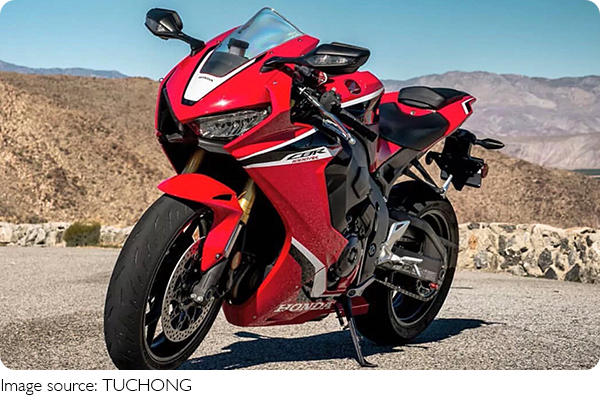
Winglet geometry has a direct influence on airflow. Changes to the profile, angle, dimensions, or surface arrangement can alter pressure distribution and aerodynamic forces.
Mounting position is equally important. A winglet positioned near the front of the fairing interacts with airflow generated by the motorcycle's bodywork and other components. Even winglets with similar dimensions can therefore produce different aerodynamic results when their placement or geometry changes.
For this reason, aerodynamic design treats the winglet as part of a larger system rather than an independent component.
Aerodynamics While Cornering
Motorcycles introduce an additional aerodynamic challenge because they operate at substantial lean angles during cornering.
When the motorcycle changes its roll angle, the winglets encounter a different airflow orientation. Their aerodynamic characteristics can therefore change compared with upright riding.
Engineers evaluate these conditions through testing and simulation to understand how aerodynamic forces behave across different riding attitudes. This helps create an aerodynamic package that remains consistent across a broader range of motorcycle operation.
From Racing to Production Motorcycles
High-performance racing has played an important role in the development of motorcycle aerodynamics. Controlled environments allow engineers to study winglet shapes, fairing designs, airflow channels, and other aerodynamic solutions.
Modern aerodynamic development extends beyond external winglets. Fairing channels, diffusers, surface contours, and other components can work together to guide airflow around the motorcycle.
Some concepts developed through advanced testing can later influence production motorcycle design, although road-going motorcycles must accommodate a wider variety of speeds, conditions, and riding situations.
Do Bigger Winglets Work Better?
A larger winglet does not automatically produce a better aerodynamic result.
Increasing surface area can affect downforce, drag, pressure distribution, and the overall balance of the motorcycle. A smaller winglet with carefully optimized geometry may therefore provide a more suitable aerodynamic balance than a larger design.
Engineers consider dimensions alongside mounting position, fairing design, speed, motorcycle geometry, and riding attitude when developing the final configuration.
Testing and Simulation
Motorcycle aerodynamic development relies on both computational analysis and physical testing.
Computational fluid dynamics can be used to examine airflow patterns, pressure distribution, aerodynamic forces, and changes between different designs. Physical testing provides another method for measuring airflow and aerodynamic behavior under controlled conditions.
Using these methods together allows engineers to refine winglet geometry and evaluate how individual changes affect the complete motorcycle.
The Future of Motorcycle Aerodynamics
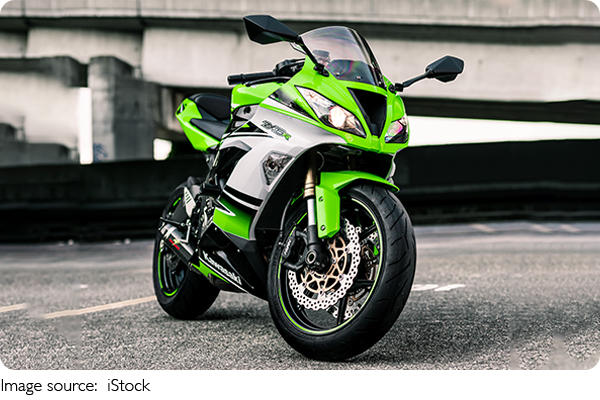
Motorcycle aerodynamics is becoming increasingly integrated into overall vehicle development. Instead of treating winglets as separate additions, engineers can design them alongside fairings, airflow channels, and other surfaces as one coordinated aerodynamic system.
Advances in computational modeling and testing can allow increasingly precise control of aerodynamic forces across different speeds and riding attitudes.
Motorcycle winglets therefore represent a broader evolution in motorcycle design: using carefully engineered airflow to influence aerodynamic load, drag, and overall high-speed behavior while integrating the solution into the motorcycle's complete design.