Uyuni Salt Mirror

Matteo
| 24-09-2026
 · Travel team
Have you ever imagined walking across a landscape where the ground seems to stretch endlessly toward the horizon? Salar de Uyuni in southwestern Bolivia offers exactly this unusual experience.
The huge salt flat is known for its bright white surface, geometric patterns, distant mountains and remarkable mirror effect after rain.
Let’s plan our visit with practical prices, transport details, opening information, accommodation choices and food costs, so we can enjoy this extraordinary landscape without unnecessary surprises.
Uyuni Salt Flat
Where is Salar de Uyuni?
Uyuni town is the main starting point for visits to the salt flats.
• From La Paz by bus: Approx. $8–$30, with a journey of around 10–13 hours.
• From La Paz by plane: Approx. $65–$155, with a flight of about 50–70 minutes.
• From Potosí by bus: Approx. $8–$15, taking around 4 hours.
• From Sucre by bus: Approx. $15–$25, taking around 8 hours.
• Local taxi in Uyuni: Approx. $6–$16.
Once we arrive in Uyuni, joining a 4WD tour is the most practical way to cross the remote salt plain.
Tickets and Opening Hours
Salar de Uyuni does not have one standard entrance gate with fixed daily hours. Most visitors enter as part of an organized tour, so departure times depend on the selected company, route and weather.
• One-day shared tour: Approx. $35–$60 per person.
• Isla Incahuasi entrance: Approx. $4–$5 per person.
• Train Cemetery: Free to visit.
• Colchani village: Generally free to explore.
Most excursions operate during daylight, commonly beginning around 10:00 AM and returning before sunset. Routes can change when rain affects the salt surface, so we should confirm the schedule locally.
Best Time to Visit
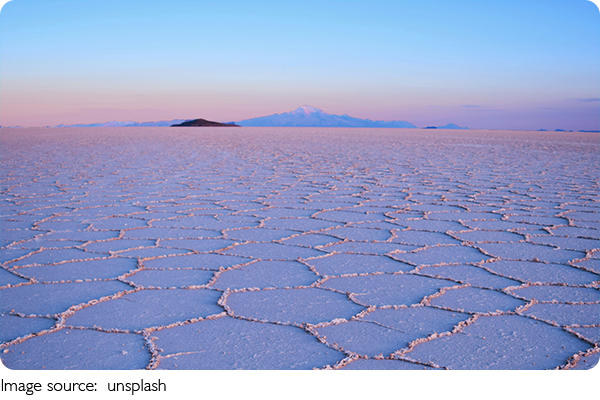
The dry season from May to October offers the classic white landscape and clear polygon-shaped salt patterns. June to August can be particularly busy.
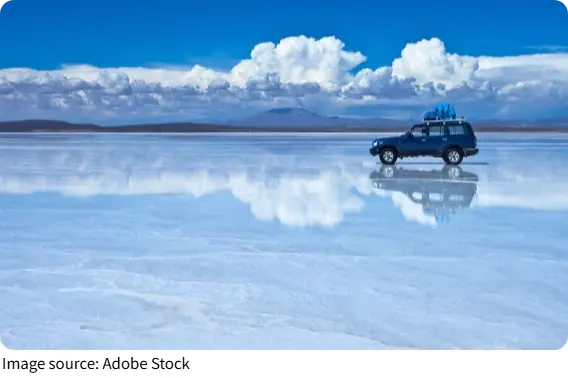
The rainy period from December to April can create the famous mirror effect when a thin layer of water covers the surface. However, reflections depend on rainfall, wind and cloud conditions, and some routes may become unavailable.
Temperatures change quickly. Cold nights can fall below -10°C (14°F), while daytime temperatures often reach 15–20°C (59–68°F). Warm layers are useful even on sunny days.
What Can We See?
Isla Incahuasi is one of the most memorable stops. This rocky island rises from the salt plain and is covered with enormous cacti. A short uphill walk gives us a wide view across the surrounding white landscape.
During dry months, the salt surface develops regular hexagonal patterns. During the rainy period, shallow water can reflect the sky and clouds, creating the famous mirror scene. The Train Cemetery near Uyuni is another popular stop, while Colchani offers small shops selling local salt crafts.
Accommodation Budget Guide
Uyuni town has the widest choice of places to stay.
• Hostel bed: Approx. $9–$16 per night.
• Basic private room: Approx. $22–$55.
• Comfortable boutique hotel: Approx. $77–$165.
• Salt-themed hotel: Approx. $90–$260, depending on the room and season.
Staying one night before the tour is useful if we arrive by bus. For a longer excursion, some tour packages include overnight accommodation outside Uyuni.
Dining Prices
Food in Uyuni is fairly manageable for different budgets.
• Simple local meal: Approx. $4–$10.
• Casual restaurant meal: Approx. $10–$20.
• Breakfast: Approx. $3–$8.
• Coffee or a simple drink: Approx. $2–$5.
• Snacks for a day trip: Approx. $3–$8.
Some multi-day tours include meals, but we should check the package details before booking. Carrying extra snacks and water is useful once we leave town.
Travel Tips
• Bring warm layers, sunglasses and sun protection.
• Carry enough water for long drives.
• Protect cameras and phones during mirror-season visits.
• Keep some cash for small purchases and local fees.
• Check whether meals, accommodation and entrance fees are included in the tour.
• Allow extra time for bus journeys because schedules can change.
• A one-day visit is enough for the main salt landscape, while two or three days allow a slower trip with more highland scenery.
Why Visit Salar de Uyuni?
Salar de Uyuni gives us two very different landscapes depending on the season: crisp geometric salt patterns during dry months and possible sky reflections after rain. With practical planning, we can enjoy the main sights without rushing.
So, Lykkers, would we choose the bright white salt patterns or wait for the mirror effect? Either way, comfortable clothing, enough water and a well-planned tour will help us enjoy this remarkable landscape from start to finish.
Salar de Uyuni: The World's BIGGEST Mirror
Video by Everything Explained