Dolphin Meal Shortcut!

Sophie
| 23-09-2026
 · Animal team
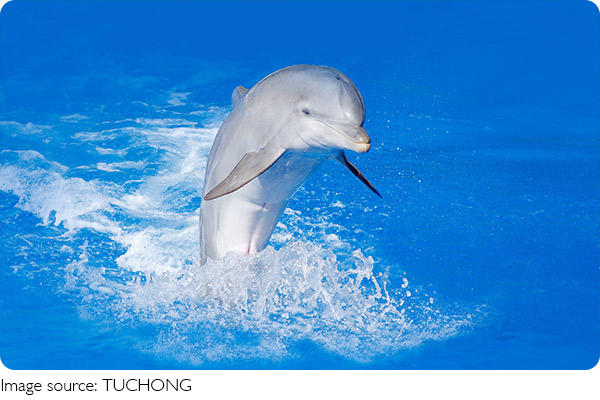
A bottlenose dolphin named Bubbles has caught researchers' attention with an unusual way of finding food. Rather than always pursuing prey directly, the dolphin has repeatedly targeted fish and taken advantage of what happens when they become stressed.
Observations collected over several years suggest the behavior may be a learned and energy-saving feeding strategy rather than a one-time event.
A Rare Feeding Strategy
Researchers from the University of the Sunshine Coast documented Bubbles near Lady Elliot Island, an area within the southern part of the Great Barrier Reef. Between 2021 and 2025, the team recorded the dolphin using the same unusual approach on 11 occasions.
The behavior is an example of kleptoparasitism, a term scientists use when one animal obtains food that another animal has already captured or collected. Although food stealing occurs across the animal world, detailed observations of this behavior among marine mammals are uncommon. The repeated sightings therefore provide an unusual opportunity to examine how an individual dolphin can develop a specialized way of feeding.
How Bubbles Gets His Meal
The strategy begins when Bubbles approaches a group of bigeye trevally. Researchers observed the dolphin select an individual fish and pursue it through the water. The chase appears to create enough stress for the fish to release recently consumed food. Bubbles then moves in and consumes what has been expelled. Instead of spending the same amount of effort catching fast-moving prey himself, the dolphin takes advantage of food that has already been obtained by another animal.
This sequence was seen repeatedly, which makes the observations particularly interesting. The researchers suggest Bubbles may have learned to recognize which fish are likely to provide a more rewarding opportunity, potentially focusing on individuals carrying more food. However, the available observations do not establish exactly how the dolphin identifies those fish.
Why the Behavior Matters
Foraging requires energy, especially when an animal is pursuing quick-moving prey. Bubbles was consistently observed searching for food alone, even though common bottlenose dolphins can also forage in groups.
The research team proposed that this specialized behavior could reduce the energy required to obtain a meal. Instead of relying entirely on direct pursuit, Bubbles appears to exploit an interaction between another fish's behavior and the food it has already consumed. That possibility could help explain why the tactic has been repeated over several years.
The researchers also proposed that repeated clicking and low-frequency vocal sounds may contribute to the interaction by increasing the fish's stress. This remains a hypothesis rather than a confirmed explanation, so further observations are needed to determine exactly what role the sounds play.
Evidence of Individual Flexibility
One of the most interesting aspects of the discovery is what it suggests about behavioral flexibility. Animals do not always rely on a single feeding method throughout their lives. Experience can influence how they respond to their surroundings and how they exploit available opportunities.
In Bubbles' case, researchers observed the same general strategy multiple times across several years. That pattern raises the possibility that the dolphin has developed a specialized technique through experience. Still, the study focuses on one individual, so the observations cannot establish how widespread the behavior is among bottlenose dolphins.
The researchers believe similar behavior could be overlooked elsewhere. Marine animals spend much of their lives underwater, making detailed, long-term observation difficult. A behavior that happens only occasionally may therefore escape researchers unless an individual is monitored for extended periods.
Technology Could Reveal More
Long-term underwater observation is challenging, particularly when animals move through large areas. The researchers suggested that combining underwater surveys with technologies such as drones could make it easier to document unusual feeding techniques.
Such methods could help scientists determine whether food stealing is limited to a small number of individuals or appears more frequently than current records suggest. More observations would also help clarify whether dolphins learn these techniques independently or whether similar behaviors can spread through social learning.
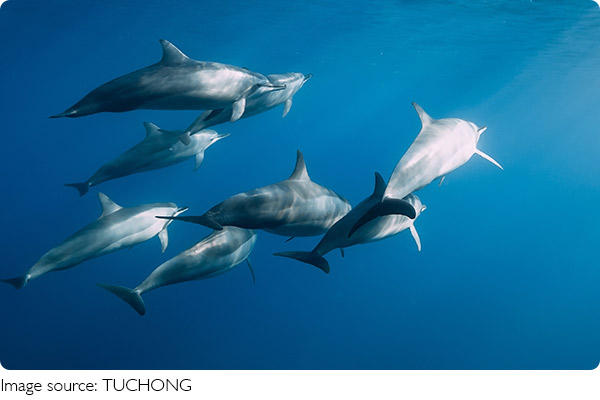
Bubbles' behavior offers a fascinating example of how wildlife can use flexible strategies to find food. Eleven documented observations do not prove that every bottlenose dolphin behaves this way, but they provide reason to investigate unusual feeding methods more closely. The study also highlights the value of patient, long-term observation, since some of the most revealing behaviors may only become visible after researchers watch the same animals repeatedly.