Finding the Carved Turn
Simone
| 23-09-2026
 · Sport team
Good to see you, snow riders! A clean snowboard carve begins with calm balance and progressive edge control, not a dramatic lean toward the snow. In a carved turn, the board's tail follows nearly the same path as its nose, leaving a narrow track instead of a wide skid.
That precision comes after controlled stopping and linked turns are reliable. A lesson with a qualified instructor is the clearest way to match these ideas to terrain, snow conditions, and individual ability.
Begin With a Quiet Stance
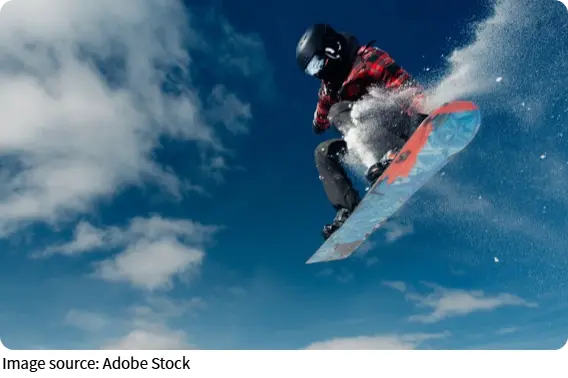
Stand centered between the bindings with ankles, knees, and hips comfortably flexed. Keep the upper body relaxed and aligned with the board rather than twisting downhill. Look toward the direction of travel, not directly at the nose. A quiet stance gives the legs room to manage the board while the head and torso remain steady enough for clear balance.
Check binding setup and boot fit before moving onto a run. Heels should stay secure without painful pressure, and straps should close evenly. Practice sliding and stopping on very gentle terrain first. A certified helmet belongs in the setup, and wrist protection designed for snowboarding may be worth discussing with an instructor or equipment specialist.
Feel Both Edges Slowly
Edge control starts with small movements. On a gentle slope, practice traversing across the hill on the heel-side edge, then repeat on the toe-side edge. Adjust the board by flexing at the ankles and knees rather than folding sharply at the waist. The aim is to feel how a gradual tilt changes grip without throwing balance inside the turn.
Use side slipping to learn how less edge allows movement and more edge slows it. Then add controlled diagonal slipping so the board travels across the slope. These drills may not resemble carving, but they build the release and engagement needed for linked turns. Keep the movement smooth; suddenly setting an edge can disturb balance and produce an abrupt change in direction.
Shape Turns Before Carving
A rounded turn helps control speed by directing the board across the hill. Learn to finish each turn before rushing into the next one, especially on terrain where acceleration feels unfamiliar. Guide the board with the legs while keeping the upper body composed. When linked turns become predictable, reduce unnecessary pivoting and allow the board's curved sidecut to shape more of the path.
Choose a wide, uncrowded beginner run with consistent snow. Start with large arcs and modest edge angles, giving yourself time to sense the board's response. If the tail slides outward, return to slower linked turns and check whether the body is rotating or the edge is being engaged too late. A clean track is feedback, not a reason to accelerate.
Add Pressure With Patience
Pressure changes throughout a turn as the legs flex and extend. Move smoothly into the new edge, stay centered as the board enters the fall line, and allow the legs to manage building force through the shaping phase. Avoid sitting back over the tail. A centered position helps the front of the board enter the arc and keeps steering options available.
Carving on the toe side often feels different from the heel side. Rather than forcing both turns to look identical, seek similar control and timing. Ask an instructor to watch from a safe position or record a short run where permitted. What feels centered may appear rearward on video, and one useful observation can be more valuable than many unsupervised repetitions.
Keep Practice Controlled
Stay within terrain where you can stop or change direction around other people and objects. Look uphill before starting or merging, give downhill riders space, obey signs, and stop only where you remain visible from above. Fatigue weakens balance and timing, so take a break before technique unravels. Conditions can change during the day as snow becomes firmer or more uneven.
Practice one cue at a time: quiet torso, gradual edge, centered pressure, or round turn shape. Several short, focused runs are easier to evaluate than one long session filled with corrections. End with familiar turns at a comfortable pace. That final controlled run reinforces sound movement and gives you a clear starting point for the next lesson.
Carving develops when balance, edge angle, pressure, and turn shape become consistent. Focus on one cue per short run, and return to controlled linked turns whenever the board begins to skid widely.