Sports Car Dynamics

Eleanor
| 28-09-2026
 · Automobile team
A sports car is engineered around the precise interaction between the vehicle and its driver.
Rather than relying on a single performance characteristic, its driving behavior results from the coordinated operation of the powertrain, steering, brakes, suspension, tires, and chassis.
Every major input influences the vehicle's movement. Accelerator application affects propulsion, steering changes direction, and braking controls deceleration. The way these systems respond and interact determines how naturally the driver can guide the vehicle through different driving situations.
Power Delivery and Acceleration
Power delivery determines how effectively the vehicle responds when the accelerator is applied. The powertrain generates propulsion, while the transmission and gearing determine how that output reaches the driven wheels.
A well-calibrated accelerator provides a progressive relationship between pedal movement and vehicle response. This allows the driver to make precise adjustments to speed rather than relying solely on maximum output.
The drivetrain and tires also influence how effectively available power is transferred to the road. Their combined characteristics affect acceleration, traction, and the overall character of the vehicle.
Steering and Directional Control
Steering establishes the primary connection between the driver's hands and the vehicle's direction. Steering ratio, suspension geometry, tire characteristics, and chassis design all contribute to the way the vehicle responds to steering input.
A shorter steering ratio can require less steering-wheel movement for a given change in wheel angle, while suspension geometry determines how the wheels maintain their intended orientation as the vehicle moves.
These engineering factors influence steering accuracy, effort, and response. Together, they determine how faithfully the vehicle follows the driver's intended path.
Braking and Deceleration
Braking transforms the vehicle's kinetic energy into controlled deceleration. The brake system, tires, suspension, weight distribution, and electronic controls all contribute to braking performance.
Brake pedal calibration is particularly important because it determines how easily the driver can regulate braking force. A consistent pedal response allows gradual changes in deceleration and supports precise speed control.
Braking also changes the distribution of load across the vehicle. As weight shifts toward the front axle, the suspension and tires must accommodate the resulting change in loading while maintaining effective road contact.

Cornering and Lateral Control
Cornering requires the vehicle to generate and manage forces in several directions. The tires provide the forces needed to change direction, while the suspension and chassis control how those forces are transmitted through the vehicle.
During a turn, steering angle, speed, braking, acceleration, tire characteristics, and weight distribution influence the vehicle's behavior. Changes in acceleration or braking can alter the load carried by each tire, affecting the available grip at each corner of the vehicle.
Chassis tuning aims to make these changes progressive and manageable. This allows the driver to maintain a consistent line while making controlled steering and speed adjustments.
Weight and Mass Distribution
Vehicle mass has a direct influence on acceleration, braking, and directional changes. Lower mass generally requires less energy to accelerate and can reduce the forces involved when the vehicle changes speed or direction.
However, mass distribution is equally significant. Engineers consider the vehicle's center of mass, front-to-rear weight distribution, wheelbase, and track width when developing its dynamic characteristics.
The position of mass affects how load moves between the tires during acceleration, braking, and cornering. Careful distribution can therefore influence traction, steering behavior, and chassis balance.
Suspension and Tire Performance
Suspension engineering determines how the wheels move relative to the chassis and how effectively the tires remain connected to the road. Springs support the vehicle, while dampers control suspension movement and help regulate changes in load.
Suspension geometry also determines how wheel alignment changes as the suspension moves. Factors such as camber, toe, and wheel movement can influence tire loading and the vehicle's response during steering and cornering.
Tires provide the final physical interface with the road. Their construction, compound, dimensions, and operating conditions influence traction, braking, steering, and cornering performance.
Electronic Control Systems
Modern sports cars can combine mechanical engineering with electronic control systems that monitor and manage vehicle behavior. Traction control, stability control, and electronically controlled braking systems can respond to information collected from various vehicle sensors.
These systems can regulate braking force or power delivery according to vehicle movement and available tire traction. Their purpose is to complement the mechanical characteristics of the vehicle rather than replace them.
The integration of electronic controls with the powertrain, brakes, steering, suspension, and tires has become an important part of modern vehicle dynamics.
Driver Input and Vehicle Behavior
The driver's inputs determine how the vehicle's dynamic characteristics are used. Steering controls direction, the accelerator regulates propulsion, and the brake pedal controls deceleration.
The timing, magnitude, and smoothness of these inputs affect how vehicle load is distributed and how the tires respond to changing forces. Progressive inputs allow the driver to manage these changes with greater precision.
Understanding the relationship between each control and the vehicle's response is therefore an important part of the sports-car experience.
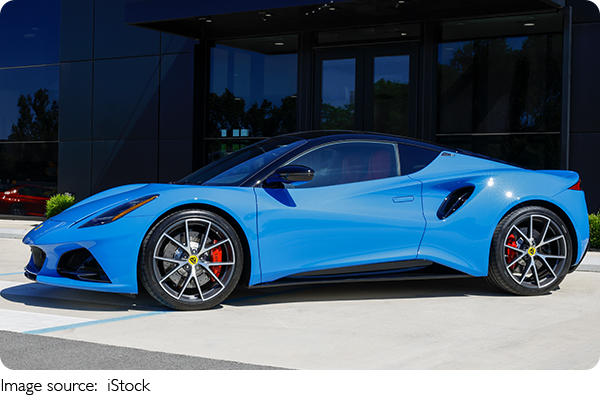
A sports car's character is created by the relationship between its engineering and the driver's inputs. Power delivery, steering, braking, suspension, tires, chassis design, and electronic controls each serve a distinct function while contributing to the vehicle's overall behavior.
When these elements are carefully calibrated as a unified system, the result is a driving experience defined by precision, responsiveness, and control. This integrated approach is what gives a sports car its distinctive character on the road.