The Moving Zodiac

Chandan Singh
| 02-10-2026
 · Travel team
Your zodiac sign may feel like a permanent part of who you are, something written in the sky at the moment you were born.
Yet the zodiac is not a fixed picture. It is a measurement based on Earth’s movement around the Sun, and that relationship changes as our planet continues its endless journey through space.
What we call a zodiac sign is actually a snapshot of Earth’s position against a constantly shifting cosmic background.
The sky is a moving backdrop
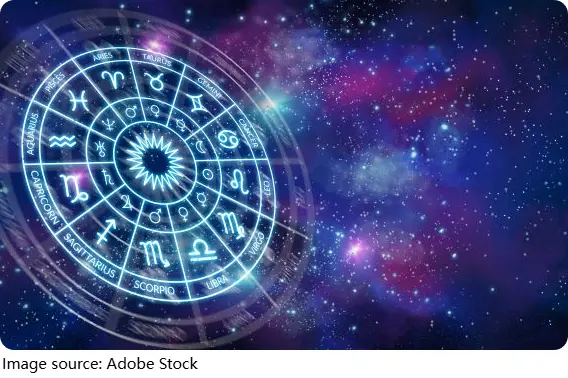
The zodiac begins with Earth’s orbit around the Sun. As our planet travels through space, the Sun appears to move across the background stars at roughly one degree each day. Over the course of a year, this creates a complete 360-degree journey along the path known as the ecliptic.
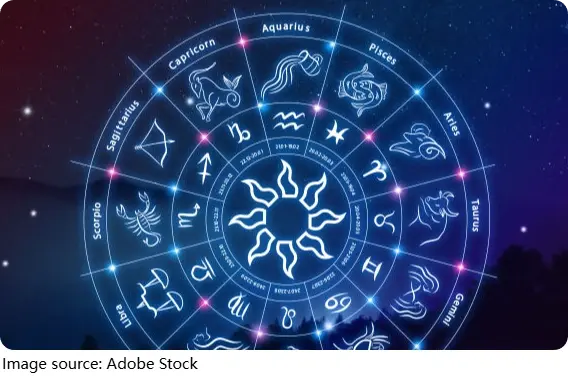
Ancient astronomers divided this path into twelve equal sections of 30 degrees each, creating the traditional zodiac signs. These sections were named after constellations that appeared along the same path in the sky. When people say the Sun is “in Leo,” for example, it means the Sun appears in that area of the sky from Earth’s perspective. It is a measurement of position, not a physical connection between the Sun and a constellation.
The quiet changes behind familiar signs
The zodiac feels familiar because its symbols have been passed down for thousands of years. However, the sky behind those symbols has continued to move. Earth’s axis slowly wobbles in a motion called precession, completing one cycle in about 25,800 years.
This gradual shift changes the relationship between calendar dates and the actual positions of the constellations. A person born on a certain date may be given one zodiac sign in the traditional system, while the Sun may now appear in front of a different constellation in the real sky.
The meaning people attach to zodiac signs comes from tradition and interpretation, while the stars themselves continue following their own natural movement.
A shared language built around the stars
For generations, zodiac signs have provided people with a symbolic way to talk about identity, personality, and connection. Families, friends, and communities often use these signs as a cultural language for understanding themselves and each other.
Yet behind these familiar conversations is a reminder that the universe is always changing. The zodiac we recognize today reflects an ancient system created by observing the sky, while the actual positions of the stars and constellations continue to shift over time.
The symbolism of a changing sky
The deeper meaning of the zodiac can be found in its connection to cycles and movement. The signs were created from humanity’s attempt to organize the patterns seen in the heavens, turning the changing sky into a system of symbols.
Astronomers now recognize thirteen constellations along the Sun’s actual path, including Ophiuchus, which the traditional zodiac does not include. The Sun passes through this constellation for about eighteen days each year. The decision to use twelve signs came from dividing the circle evenly, creating a practical structure rather than a complete map of every constellation.
Understanding the motion behind the symbols
The greatest lesson of the zodiac may be that change is always present. Earth’s orbit is not perfectly circular, and its distance from the Sun varies throughout the year. Our planet moves faster when it is closer to the Sun and slower when it is farther away, creating a slightly uneven journey through space.
These details do not change traditional zodiac signs, but they reveal the complexity behind the simple symbols people recognize. The zodiac is not a frozen picture of the universe; it is a reflection of Earth’s movement and humanity’s effort to understand the sky.
Final Advice For You
The next time you read your zodiac sign, remember that it represents more than a fixed label. It is part of a much larger story about Earth’s path through space, the changing position of the stars, and the way humans have searched for meaning in the night sky. The zodiac becomes even more fascinating when seen not as something permanent, but as a moving picture of our journey around the Sun.
This content is for entertainment and general insight only and does not constitute professional advice.