Only Two Cars Ace Tests

Mei
| 07-10-2026
 · Automobile team
Choosing a family vehicle involves more than checking passenger space, cargo capacity, or comfort. For families using child-safety seats, the way those seats fit and how easily they can be secured can make a major difference in everyday driving.
A 2026 evaluation of 56 vehicles found that only two achieved the highest possible results across every car-seat category, highlighting how difficult it can be for vehicles to deliver an especially convenient setup.
Two Vehicles Stand Above the Rest
The 2026 evaluation covered model-year 2025 and 2026 vehicles from several categories, including SUVs, sedans, minivans, pickup trucks, hybrids and electric vehicles. Testing took place over a 12-month period and focused specifically on how well different child-safety seats worked with each vehicle.
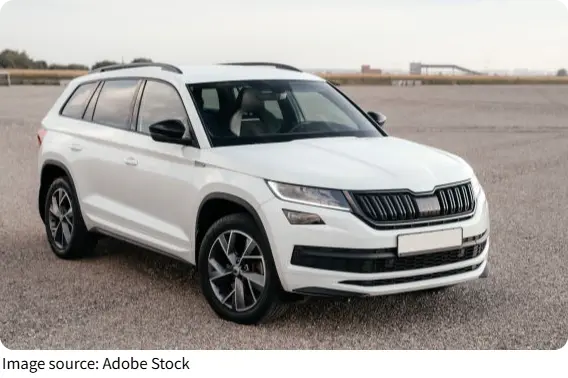
Only the 2025 Mercedes-Benz GLS580 and 2026 Volkswagen Tiguan received straight-A results across all evaluated categories. The Mercedes-Benz GLS580 stood out for its accommodating interior and accessible anchor points. The three-row SUV was tested with second-row captain’s chairs, creating seating for six people. A configuration with a second-row bench is also available for buyers who need space for seven occupants.
The Volkswagen Tiguan earned the same top distinction despite being a smaller SUV. Its rear seating area provided enough room for the tested seats, while its anchor points were considered straightforward to locate and use.
What the Testing Examined
The evaluation was more detailed than simply checking whether a child-safety seat could be placed inside a vehicle. Certified child passenger safety technicians installed three different types of seats: an infant seat, a convertible seat and a high-back booster.
Each setup was assessed for fit and ease of use. The testing also examined the vehicle's Latch system, which is designed to make securing compatible child-safety seats easier. For a vehicle to earn an A in a category, the seat needed to fit appropriately without creating unnecessary problems for front-seat occupants.
The Latch anchors also needed to be reasonably easy to identify and operate. In addition, seat-belt buckles were evaluated for accessibility, including whether children could potentially use them independently when appropriate. This approach gives families information that ordinary specifications may not reveal. A vehicle can have a spacious rear cabin yet still present challenges when a seat needs to be positioned, attached, or removed.
Ten More Vehicles Came Close
Although only two vehicles earned perfect results, another 10 were recognized as Top Finishers. These vehicles received A grades in all but one category. The group included the 2025 Acura ADX, 2025 and 2026 Chevrolet Blazer EV, 2026 Honda CR-V Hybrid, 2026 Honda Passport, 2026 Hyundai Tucson Hybrid, 2025 Jeep Wagoneer S, 2026 Kia Sportage Hybrid, 2025 Lexus LX 700h, 2026 Subaru Outback and 2026 Volkswagen Atlas.
The variety of vehicles on this list is notable. It includes compact and midsize SUVs, larger family-oriented models, hybrid vehicles and an electric SUV. That means strong car-seat performance is not limited to one particular vehicle class.
Why Car-Seat Fit Matters
For families, car-seat compatibility can become an everyday concern. A difficult installation may mean spending extra time adjusting anchors or repositioning a seat. Limited rear-seat space can also affect how comfortably front passengers can sit.
The evaluation is particularly useful because different families have different priorities. A household with several children may need enough room for multiple seats across one row. Another family may place greater importance on access to a third row or straightforward anchor locations.
More Than a Perfect Score
A straight-A result is useful, but it does not automatically mean one vehicle will be ideal for every family. Child-safety seats come in different designs and sizes, while families have varying seating arrangements and space requirements. The 2026 results therefore work best as a starting point rather than the only factor in a buying decision. Families can consider how a particular vehicle accommodates the type and number of seats they actually use.
The 2026 evaluation makes one point clear: impressive car-seat compatibility is not guaranteed, even among modern family vehicles. Only the Mercedes-Benz GLS580 and Volkswagen Tiguan achieved top marks in every tested category, while 10 others came close.
For families shopping for a new vehicle, the findings reinforce the value of looking beyond general cabin space. Anchor accessibility, seat fit, buckle placement and room for other passengers can all shape the daily experience. A vehicle that performs well in these areas can make routine family travel considerably easier.