Uluru's New Great Walk

Darius
| 16-10-2026
 · Travel team
Australia’s Red Centre is famous for its vast desert scenery and the striking silhouette of Uluru. While many visitors admire this landmark from nearby viewing areas, a new multi-day walking experience offers a slower way to appreciate the landscape.
The Uluru Kakararra Trail takes hikers across approximately 34 miles of desert terrain, ending near the base of the iconic rock formation.
Begin Among the Peaks of Kata Tjuta
The journey begins at Kata Tjuta, a collection of rounded rock formations rising dramatically above the surrounding plains. Its name means “many heads” in the Pitjantjatjara language. Unlike Uluru’s single massive form, Kata Tjuta features numerous domes, narrow valleys, and sheltered spaces where vegetation can thrive.
Walking through the area reveals waterholes, river red gums, native grasses, and birds moving through the vegetation. The landscape also offers insight into the region’s geological history. Uluru and Kata Tjuta formed from ancient sediments and were shaped over millions of years by geological forces. Local Anangu guides help visitors understand the cultural significance of the landscape. Their knowledge adds depth to the journey, while certain traditional stories and cultural practices remain private and should be respected.
Uluru
Watch Uluru Change with the Light
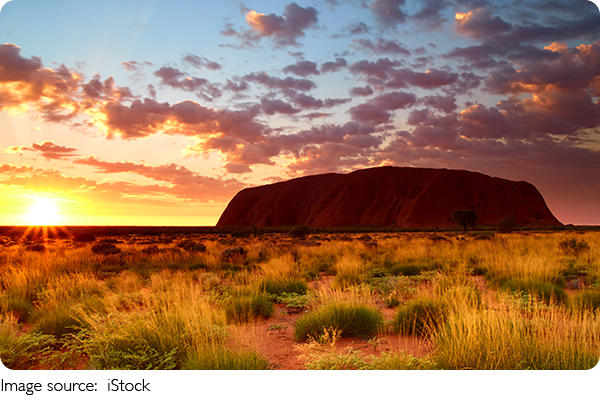
Over several days, hikers cross sandy ridges, open plains, and woodland areas as Uluru gradually grows larger on the horizon. The changing distance creates a different experience from seeing the landmark during a brief sightseeing stop.
Light transforms the rock throughout the day. Before sunrise, it can appear dark against the sky. As dawn approaches, softer shades emerge before the surface takes on its familiar reddish glow. The surrounding desert also reveals more detail when explored slowly, including lizards’ tracks in the sand, birds circling overhead, and grasses moving in the breeze.
The route provides an opportunity to appreciate the desert as a living ecosystem rather than an empty expanse. Travelers should prepare for strong sunlight, dry conditions, and temperature differences between early mornings and afternoons.
Learn from Anangu Knowledge
The trail’s cultural component is an important part of the experience. Anangu guides share perspectives on caring for Country, a concept that connects the land with ancestry, community, knowledge, and responsibility for the natural world.
Visitors may learn about native plants, traditional uses of local resources, and the importance of protecting the surrounding environment. Listening respectfully and following guidance about photography, restricted areas, and cultural information helps preserve the integrity of the experience.
At the journey’s conclusion, hikers approach Uluru and gain a closer appreciation of its scale and significance. Visitors should follow established pathways and avoid climbing the rock, respecting its cultural importance to the Anangu people.
How Much Does the Walk Cost?
The five-day Uluru-Kata Tjuta Signature Walk is listed from approximately US$3,600 per person, based on the source price of A$5,395 and an indicative exchange rate. The package includes accommodation, meals, and stays at eco-camps, with the final two nights at a bush lodge overlooking Uluru. Confirm the current price, inclusions, and exchange rate before booking.
Additional expenses may include flights, airport transfers, travel insurance, personal equipment, and extra nights near Uluru. Set aside a separate budget for these costs, as the final amount depends on travel dates and arrangements.
When to Visit and How to Get There
Departures for the walking experience generally run from April through September, when the season is more suitable for multi-day desert hiking. Availability can vary, so early reservations are advisable. Ayers Rock Airport serves the Uluru area, with flights available from major Australian cities, including Sydney and Melbourne. From the airport, travelers need to arrange transportation to their accommodation or tour departure point.
Pack sturdy walking shoes, sun protection, a hat, and layers for cooler mornings. Following the guide’s instructions and carrying the recommended supplies will help make the journey more comfortable.

The Uluru Kakararra Trail offers a distinctive way to experience Australia’s Red Centre. Its combination of desert walking, changing scenery, wildlife, and Anangu knowledge creates a deeper connection with the landscape. For travelers prepared for several days on foot, the journey offers much more than a photograph of Uluru. It provides time to appreciate the natural environment and the cultural significance of this remarkable place.