Catalonia's Secret

Isla
| 23-10-2026
 · Travel team
Hello, Lykkers! Catalonia packs an unusual amount into one region. You can walk Roman walls in the morning, stand in a thousand-year-old mountain chapel by lunch, and end the day on a coastal path above the Mediterranean.
The trick is choosing stops that work together without turning your trip into a race.
These six places each offer something concrete to see or do, with the practical details that matter when you are actually building an itinerary.
La Vall de Boí: Romanesque Chapels in the Pyrenees
This valley holds nine chapels and hermitages built between the 11th and 13th centuries, together a UNESCO World Heritage site.
The star is Sant Climent de Taüll, where a video mapping projection recreates the original painted interior. A combined ticket covers five of the chapels that are open to the public, valid for more than one day, so you can spread your visits across a slower schedule.
The standard rate is around $13 USD (cost may vary), with a reduced rate near $10 USD for students, seniors, and larger families. The valley sits about three and a half to four hours from Barcelona, so plan an overnight rather than a day trip.
Tarragona: Roman Ruins by the Sea
Tarragona was the Roman city of Tarraco, and the archaeological ensemble is UNESCO-listed. The amphitheater overlooking the sea is the headline, but the wider Roman route includes walls, a circus, and the Els Munts villa outside town. A combined MNAT ticket covers several sites for about $8 USD (cost may vary).
Tarragona works well as a base for the Costa Daurada, and it is about an hour by train from Barcelona. Give it a full day if you want both the Roman sites and the medieval old town without rushing.
Montserrat: The Mountain and the Monastery
Montserrat is a dramatic serrated mountain about an hour from Barcelona. The practical detail that matters most is the ticket. The Trans Montserrat combined ticket covers the metro, train, rack railway or cable car up, the mountain funiculars, and entry to the audiovisual area, starting around $54 USD (cost may vary).
Decide in advance whether you want the cable car or the rack railway, because you cannot mix them on the same ticket. The mountain has walking trails with views across Catalonia, and most visitors spend three to five hours. Go early to avoid the tour bus crowds.
Montserrat
The Costa Brava's Camí de Ronda
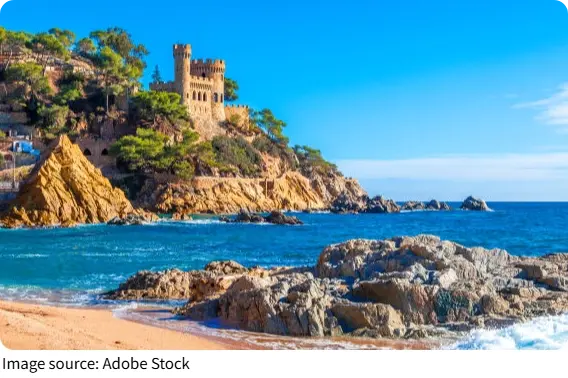
The Camí de Ronda is a coastal path that hugs the shoreline between pine trees and small coves. The section from Llafranc to Tamariu is accessible and suitable for a relaxed half-day, while the route toward the Sant Sebastià lighthouse is more demanding but ends at one of the coast's best viewpoints. These walks are free (cost may vary).
The main planning consideration is timing: start early or walk late in the day, because many stretches have little shade. Wear proper shoes rather than sandals, since the path mixes dirt, rock, and steep steps.
Girona and Besalú: Medieval Streets and a Fortified Bridge
Girona's old town has a well-preserved medieval core and a walkable center that works as a day trip or an overnight from Barcelona. Besalú, about 30 minutes away, is entered through an 11th-century fortified bridge and is small enough to explore in two hours. Combining the two makes a full day without feeling rushed.
A guided day trip covering both runs around $88 USD (cost may vary), while exploring independently keeps costs low since walking the old towns is free. Girona rewards a longer afternoon if you want to wander without a schedule.
Besalú
The Dalí Triangle: Figueres and the Empordà
Figueres is home to the Dalí Theatre-Museum, a building the artist designed himself. Standard admission starts around $20 USD (cost may vary), with reduced rates for students, seniors, and young visitors, and free entry for children under 8. The museum sits about 140 kilometers from Barcelona, reachable by high-speed train in under an hour, followed by a short taxi ride or a 25-minute walk from the station.
Book tickets online in advance, especially in peak season. The surrounding Empordà region includes coastal villages and small coves, so consider staying a night in the area rather than rushing back to the city.
Final Thoughts
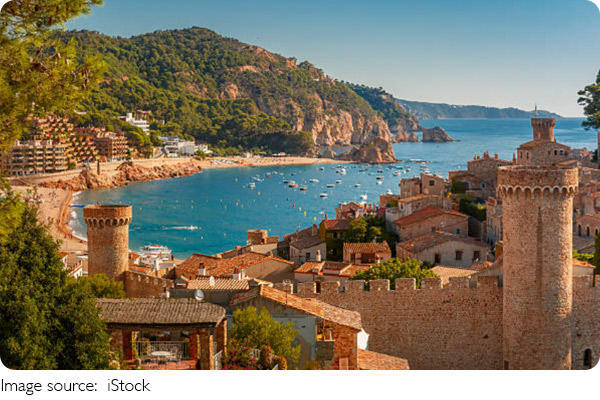
Catalonia rewards a mix of coast, city, and mountain. The Vall de Boí and Montserrat give you altitude and art, Tarragona and Girona give you history, and the Costa Brava paths give you the Mediterranean without the resort crowds. Build each day around one major site and one smaller stop, and leave room for the drives between them. That is where the region shows its character. Safe travels, Lykkers.