Atacama Desert Travel Guide

Mason O'Donnell
| 23-10-2026
 · Travel team
Hello, friends. The Atacama Desert has a reputation as a barren, lifeless stretch of sand, but the reality is very different.
It's a high-altitude plateau in northern Chile packed with salt flats, geysers, flamingo lagoons, and some of the clearest night skies on the planet.
You don't come here for beaches or nightlife. You come for landscapes that look genuinely otherworldly, and you come prepared.
Why this desert earns the trip
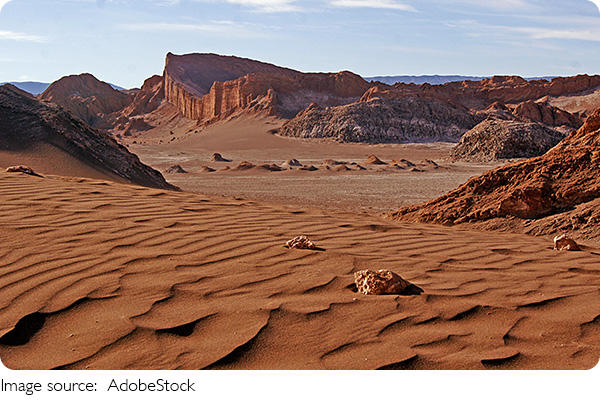
The Atacama is the driest nonpolar desert on Earth, with some weather stations recording almost no rainfall in decades. That dryness is exactly what makes it worth the journey. The Valle de la Luna, just outside San Pedro de Atacama, has salt caves and ridge lines you can walk at sunset. The El Tatio geysers sit at around 4,300 meters and erupt most actively between 6 and 7 in the morning, so you'll be leaving town around 4 a.m. to catch them.
And the night sky here draws astronomers from around the world because the air is thin, dry, and largely free of light pollution.
Atacama Desert
Getting there and getting around
Most travelers fly into Calama's El Loa Airport, then take a shuttle or bus the roughly 100 kilometers to San Pedro de Atacama, which takes about an hour and a half. San Pedro is the base for nearly everything. You don't rent a car and wander freely, because many roads are rough and unmarked.
Instead, you book tours through local operators in town, and prices are usually quoted in USD, with half-day trips running around $30 to $50 per person and full-day excursions to the geysers or the altiplano lagoons closer to $60 to $90. Bring cash for park entrance fees, which are separate and typically $10 to $15 at places like El Tatio and the Valle de la Luna.
What to see beyond the postcards
The Salar de Atacama is the third-largest salt flat in the world and the place to see flamingos at the Chaxa Lagoon. The Miscanti and Miñiques lagoons sit above 4,000 meters and are reached on a full-day tour from San Pedro. For something quieter, the town of Toconao has a small square and a place of worship built from local volcanic stone. If you want the sky, book a stargazing session with one of the astronomy outfits outside town, where telescopes are set up and guides walk you through the southern constellations.
Timing, altitude, and practical tips
Book your tours a day or two ahead in San Pedro, especially in peak season from December through February, when accommodations fill up and prices climb. Altitude is the real issue here. San Pedro sits at about 2,400 meters, and many excursions push past 4,000. Give yourself a full day to acclimatize before the geysers, drink more water than you think you need, and go easy on the first night. Pack layers, because days can hit the high 20s Celsius while nights drop close to freezing, and bring sunscreen and a hat since the UV at this elevation is intense.
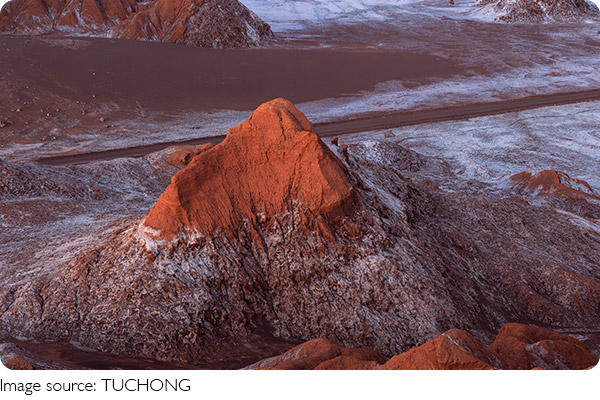
The Atacama rewards people who plan around altitude and tour logistics rather than treating it as a quick stop. Build in a slow first day, book your key excursions early, and let the landscape do the rest. You'll come back with photos that don't look real, and a new respect for thin air.