Lake Louise, Done Right

Arjun
| 23-10-2026
 · Travel team
Welcome to today's article. Lake Louise looks simple on a postcard: one green lake, one grand hotel, one wall of mountains.
Then you arrive and find a parking lot that fills before sunrise, a shoreline packed shoulder to shoulder by mid morning, and a web of trails that can take you somewhere quiet or somewhere crowded depending on a single turn.
Get the logistics right and this place rewards you far more than the photo suggests.

Why the early start pays
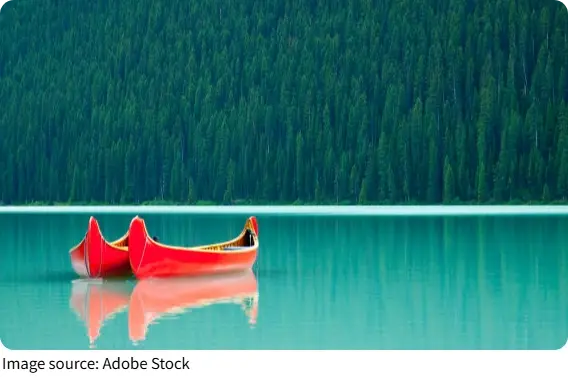
The lakeshore itself is free to walk, and the flat path along the water takes about 30 to 45 minutes at an easy pace. Do it before 8am. By 10am in summer the same path is a slow-moving line, and the famous view from the boathouse rocks is mostly elbows. Canoe rentals run roughly CAD 115 to 135 per hour for a three-seat boat, and the line builds fast, so book the first slot if paddling on that opaque turquoise water matters to you.
The color comes from rock flour, fine glacial sediment suspended in the meltwater, and it scatters blue-green light back at you. No filter needed, and none will help later anyway.
Getting there without the parking fight
You have two real options. Drive and arrive before 7am, or take the Parks Canada shuttle from the Lake Louise Ski Resort lot, which runs on a reservation system and costs a small fee per person. The shuttle drops you at the lakeshore and removes the entire parking question.
If you're coming from Banff, the drive is about 45 minutes on the Trans-Canada Highway, and the turnoff at Lake Louise village is well signed. From the village itself it's another 5 km up a steady road to the lake. Taxis and rideshares from the village exist but are limited, so don't count on one at 6am.
The trail most people skip
Everyone walks the lakeshore. Far fewer take the Lake Agnes Tea House trail, a 3.5 km climb with about 400 m of elevation gain that starts just past the boathouse. It's steep in sections and takes most people 1.5 to 2 hours up. At the top sits a small tea house that has been serving hikers since 1905, cash only, no running water, supplies flown in by helicopter a few times a season. Order the tea and a scone, sit on the bench outside, and you'll understand why people repeat this hike. Continue another 20 minutes to the Big Beehive for a view straight down onto Lake Louise that reframes the whole valley.
Costs and timing to plan around
Budget for a Parks Canada Discovery Pass if you're staying several days, around CAD 72 for a grown-up annual pass, which covers entry to Banff, Yoho, and Jasper. Day passes run about CAD 11 per grown-up. The Moraine Lake road is closed to private vehicles, so if you want that lake too, it's shuttle or the Parks Canada connector from the Lake Louise lakeshore, and you need a separate reservation.
Snow lingers on the high trails into June, and larches turn gold in late September, which is when the crowds thin and the light gets interesting.
What to bring and what to leave
Layers, always. The lakeshore can be 20°C and sunny while the Lake Agnes trail is windy and 8°C at the top. Bring cash for the tea house, water for the climb, and shoes with actual tread, because the upper trail is rocky and root-crossed. Leave the drone at home, it's banned in the national park. And don't plan on a quick swim, that water sits near 4°C even in August.
The single thing worth remembering: the lake is the headline, but the trails above it are the actual trip, and a 7am start buys you both. Set the alarm, book the shuttle, and give yourself the morning before the buses roll in.