Europe's Car Value Shifts

Kai
| 20-10-2026
 · Automobile team
Buying a car involves more than comparing its purchase price. The amount a vehicle can be sold for several years later also matters, especially for drivers who plan to upgrade regularly.
Across Europe, used-car values continued to face pressure in September 2026, but the decline was not equal across every powertrain.
Why Used-Car Values Are Falling
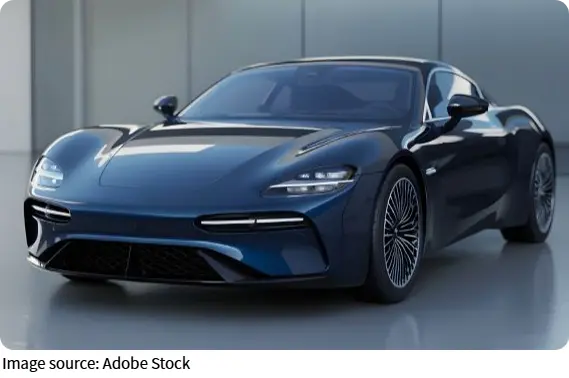
Data from JD Power Europe and Australia shows that the value of three-year-old vehicles with 60,000 kilometres on the odometer declined across several major European markets compared with September 2025. France, Germany, Italy, Spain, Switzerland, and the United Kingdom recorded lower values in both monetary terms and as a percentage of the original list price. Austria was the exception, with overall monetary values remaining broadly stable year over year.
Part of the decline reflects a return to more normal market conditions. During the pandemic, new-car production slowed significantly, limiting the number of vehicles entering the second-hand market. Strong demand and limited supply pushed used-car prices upward.
Hybrid Cars Continue to Hold Their Value
Full hybrid vehicles remained among the strongest performers in several European markets. In Austria, they retained 48.6% of their original list price after three years and 60,000 kilometres. In Germany, their retention rate reached 47.9%, placing them ahead of petrol and diesel vehicles.
Switzerland showed a similar pattern, with full hybrids retaining 45.2% of their original list price. Their performance suggests that used-car buyers continue to appreciate the balance between fuel efficiency and convenience offered by this technology.
Petrol and Diesel Show Different Results
Petrol-powered cars experienced value pressure in several markets. In Austria, they retained 48% of their original list price after three years, while the German figure stood at 47%. In Switzerland, petrol vehicles retained 42.4%.
Despite these declines, petrol cars remain relevant in the used market because they are widely available and familiar to many drivers. Their relatively accessible purchase prices can also attract buyers looking for practical transportation.
Diesel vehicles present a more complicated picture. In Germany, they retained 46.9% of their original list price, while the figure in Switzerland was 40.3%. Italy recorded a stronger retention rate of 47%, although diesel values there were also under downward pressure.
Fewer new diesel models are being produced, which can limit the supply of newer used examples. This scarcity may support prices in certain markets. However, changing buyer preferences and concerns about fuel expenses can weaken demand, meaning limited supply does not automatically guarantee stronger resale values.
Electric Cars Still Face Depreciation Challenges
Battery-electric vehicles continued to record some of the lowest resale-value percentages among the main powertrain categories. In September, they retained 39.2% of their original list price in Germany and 36.4% in Switzerland. France also reported comparatively weak retention for electric models.
Several factors help explain the gap. Electric vehicle technology is developing quickly, with newer models offering improvements in driving range and charging speed. Buyers comparing a used electric car with a newer version may consider those improvements when deciding how much to pay.
New-car prices also affect resale calculations. A vehicle that initially carried a high list price can show a low retention percentage even when its second-hand selling price remains substantial.
Nevertheless, electric-car demand is showing encouraging signs in some markets. In Germany, used battery-electric vehicles were the fastest-selling powertrain in September, taking an average of 44.1 days to sell. In the UK, they also sold faster than other powertrain categories, averaging 27.8 days.
Plug-In Hybrids Attract Buyers Too
Plug-in hybrids combine an engine with a rechargeable battery, allowing electric driving for suitable journeys while retaining the option of using conventional fuel. Their flexibility can appeal to drivers who want electric capability without relying entirely on charging. During September, plug-in hybrids recorded the highest absolute trade values in five of the seven major European markets covered by the report.
Their relatively high selling prices do not necessarily translate into the strongest percentage retention. In France, plug-in hybrids retained 46.8% of their original list price, while Switzerland recorded 39.4%. The growing supply of used plug-in hybrids, including vehicles previously used by company fleets, can put pressure on prices when available stock exceeds buyer demand.
For prospective buyers, resale value should be considered alongside purchase price, running expenses, vehicle condition, and expected ownership period. No powertrain guarantees the best financial outcome in every country. The most sensible choice depends on local demand and how well a particular vehicle fits everyday needs.